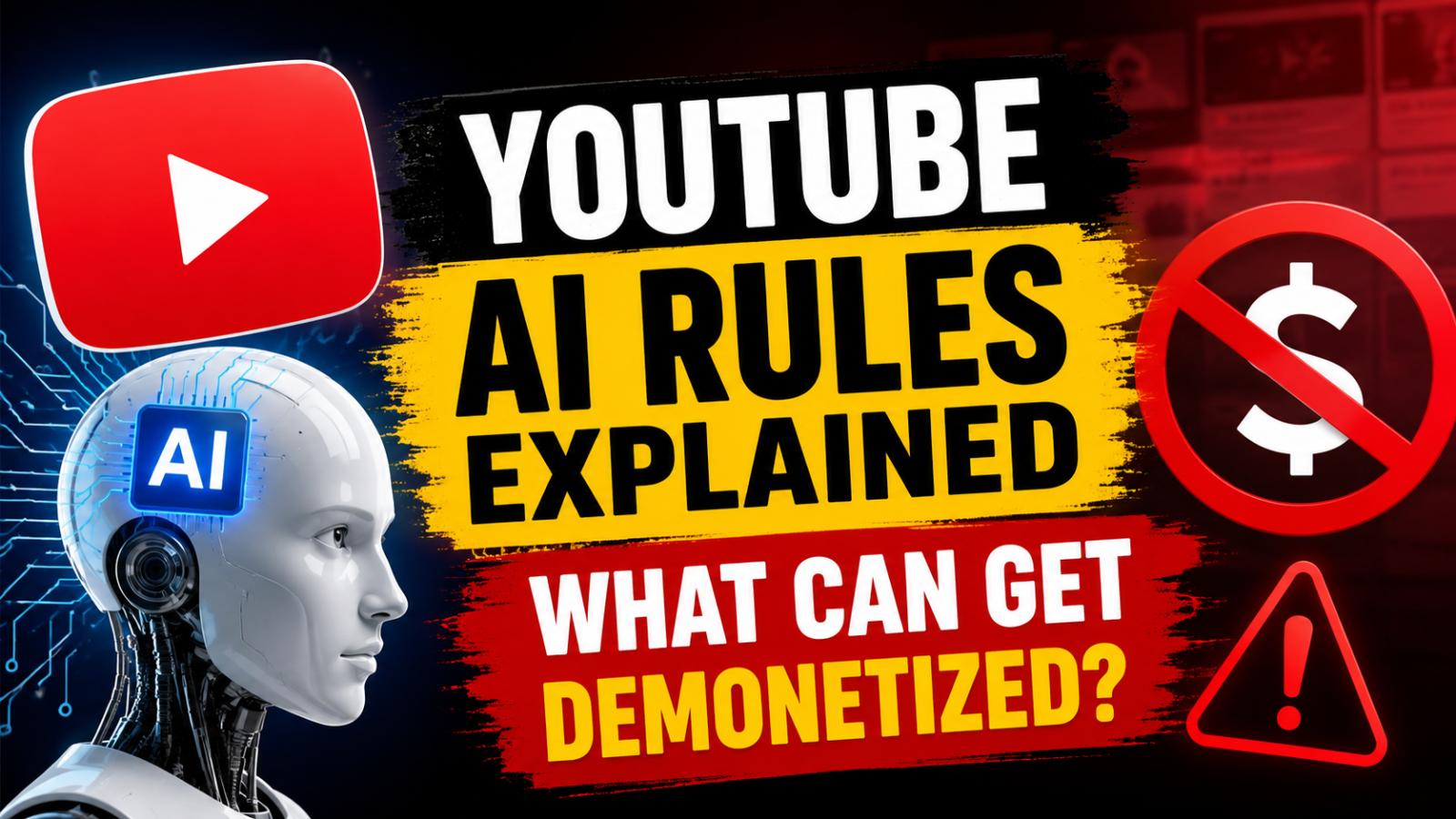
YouTube’s AI monetization policy does not ban creators from using artificial intelligence. Instead, it targets repetitive, mass-produced and low-value videos that offer little original contribution. Creators can still use AI voices, scripts, editing tools and visuals when the finished video provides genuine value.
YouTube Inauthentic Content Policy
YouTube clarified its Channel Monetization Policies on July 15, 2025, by renaming its existing “repetitious content” rule as the “inauthentic content” policy. The company said the change was a clarification rather than a completely new restriction on AI-generated videos.
Under the YouTube Partner Program, monetized content must be original and authentic. Videos produced through templates, uploaded repeatedly with limited variation or created mainly to collect views may not qualify for advertising revenue. The policy applies whether a creator uses AI, traditional editing software or another production method.
This means channels are more likely to face problems when they publish large numbers of nearly identical videos featuring recycled scripts, stock images, automated narration and minimal commentary. A slideshow channel that changes only a few names, pictures or headlines between uploads may be considered mass-produced even when every video is technically new.
AI Videos That May Be Demonetized
YouTube may reject or remove monetization from channels dominated by repetitive formats that viewers can easily recognise as interchangeable. Examples may include automatically generated news summaries, celebrity stories, motivational videos or list-based content that follows the same script and visual template across dozens of uploads.
AI avatars and synthetic voices are not automatically prohibited. However, a virtual presenter repeatedly offering generic medical, financial, legal or political advice without credible research, meaningful explanation or clear human oversight creates substantial monetization and trust risks.
Creators should also avoid copying articles, social posts or videos and converting them into AI narration without adding reporting, analysis or personal expertise. Changing the voice, background footage or wording does not necessarily transform reused information into original content.
YouTube separately requires videos to follow its advertiser-friendly guidelines. A video may therefore meet the originality requirement but still receive limited or no advertising if it contains harmful, shocking, misleading or unsuitable material.
AI Content That Can Still Earn Revenue
Creators can continue using AI to research ideas, improve scripts, generate graphics, translate narration, create animation, remove background noise or assist with editing. The important issue is whether the creator contributes a clear point of view, careful editing, reliable information and a satisfying viewing experience.
An educational video supported by AI illustrations may qualify when the creator provides original teaching, examples and narration. A documentary-style video can also use synthetic reconstruction when it adds context and clearly distinguishes generated scenes from real footage.
Creators should treat AI as a production tool rather than a substitute for judgment. Human-written commentary, original interviews, first-hand demonstrations, expert analysis and distinctive storytelling provide stronger evidence that a channel offers genuine value.
YouTube AI Disclosure Requirements
YouTube requires creators to disclose realistic content that has been meaningfully altered or synthetically generated. Disclosure may be necessary when a video makes a real person appear to say something they never said, alters footage of an actual event or creates a realistic scene that viewers could mistake for reality.
Creators can select the altered or synthetic content option in YouTube Studio. YouTube may then display a “Made with AI” or similar information label. The presence of this label does not automatically make a video ineligible for monetization.
Minor production assistance, unrealistic animation and clearly fictional visual effects may not always require disclosure. Repeated failure to disclose realistic synthetic material, however, can lead YouTube to apply a label itself and may result in additional penalties.
What Creators Should Do Next
Creators should review their entire channel rather than judging one video in isolation. YouTube evaluates recurring formats, production patterns and the overall level of originality when reviewing channels for the Partner Program.
Channels using AI should reduce template-driven uploads, verify factual claims, disclose realistic synthetic scenes and add meaningful human narration or analysis. Publishing fewer strong videos is safer than flooding the platform with interchangeable content.
The real dividing line is not AI versus human production. It is valuable, original work versus repetitive content designed primarily to exploit recommendations and advertising. Creators who use AI transparently while maintaining editorial control are in a much stronger position to retain monetization.