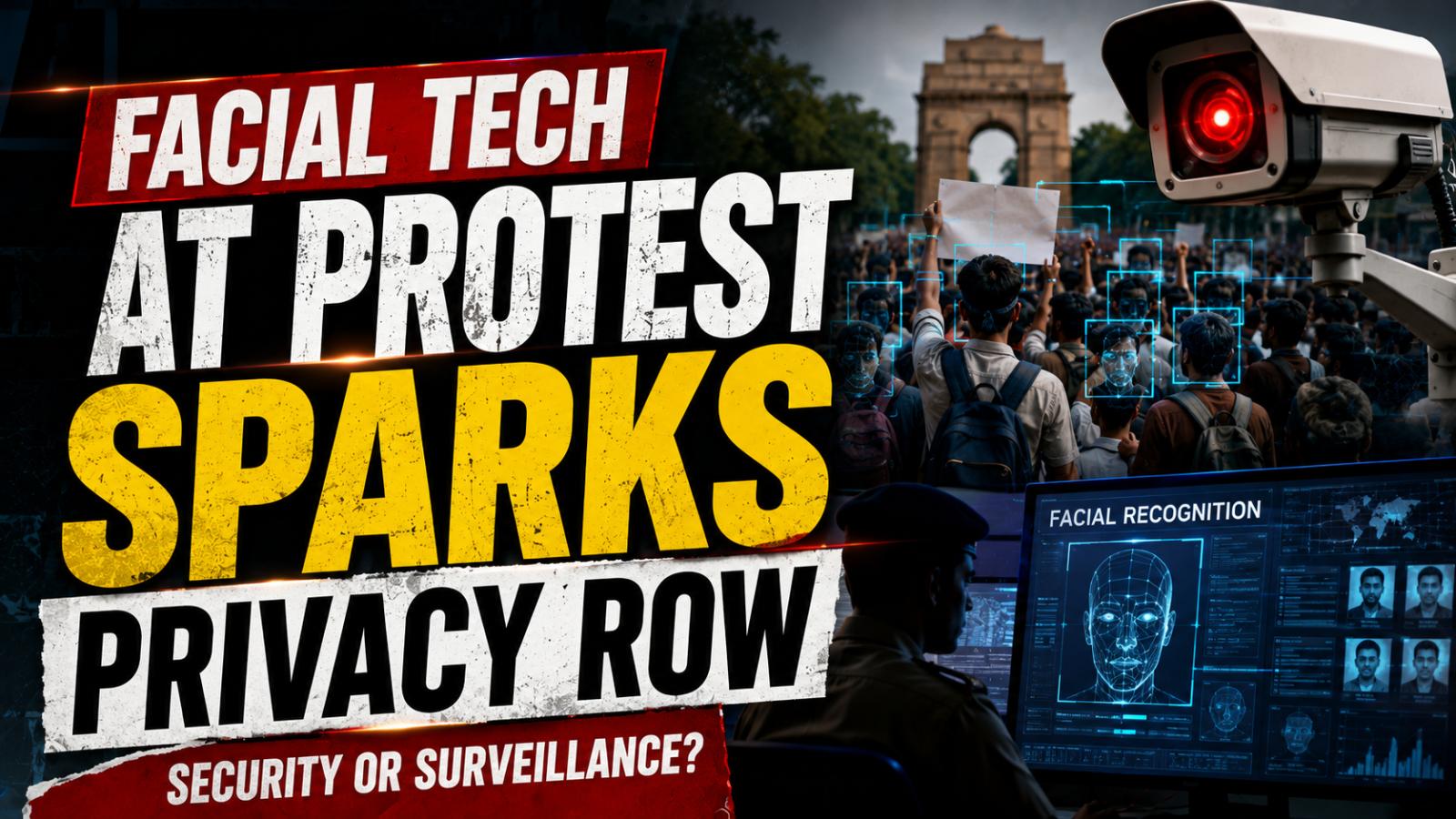
Delhi Police’s facial recognition deployment during the July 20 student protest has triggered a debate over surveillance, privacy and peaceful assembly.
Delhi Protest Facial Recognition Triggers Privacy Debate
Delhi Police’s use of facial recognition technology during the July 20 student demonstration has triggered a growing debate over the limits of technology-driven policing at public protests. Student organisations and digital-rights advocates have questioned whether scanning participants without clear safeguards could discourage citizens from exercising their right to peaceful assembly.
Police reportedly deployed AI-enabled Facial Recognition System cameras, DP-Drishti equipment, Ikshana surveillance vans and mobile command vehicles around the protest area. Officials said the systems helped identify more than 2,500 people whose details allegedly matched criminal databases and prevented suspected troublemakers from entering sensitive areas.
Delhi Police Defends AI Surveillance Deployment
Delhi Police has defended the deployment, saying facial recognition was used for public safety and the identification of wanted suspects rather than for indiscriminate monitoring. Police officials have maintained that the technology compares captured images against existing records and that further verification is required before action is taken against an individual.
The department has also said that technology-assisted monitoring helped officers manage the large gathering and assess potential security threats. However, critics argue that the reported identification of thousands of individuals raises questions about the databases used, the accuracy of matches, retention of facial images and whether protesters were informed that biometric scanning was taking place.
Digital Rights Groups Demand Legal Safeguards
The Internet Freedom Foundation said it sent a representation to the Delhi Police Commissioner on July 24 seeking an immediate halt to live facial recognition at peaceful demonstrations and filed information requests about the technology’s operation. A recent examination of the programme also noted that India does not have a dedicated law specifically regulating facial recognition and that Delhi Police relies partly on an internal order issued in 2022.
Rights advocates warn that incorrect matches could expose innocent people to questioning or investigation. They are demanding information about system accuracy, watchlist creation, independent audits, data deletion, human review and avenues available to citizens who believe they were wrongly identified.
Protest Investigation Continues Amid Force Allegations
The surveillance controversy has developed alongside allegations that excessive force, including pellet weapons, was used during the July 20 clashes. The Rapid Action Force reportedly began an internal verification of its personnel’s conduct and whether crowd-control procedures were followed. Human Rights Watch also called for an impartial investigation into the security response.
Reported injury figures have varied. One police account cited about 65 injured students and 130 police personnel, while international reports placed the total number of people injured at approximately 180.
Delhi Police is reportedly continuing to examine CCTV footage, digital material, mobile records and witness statements to determine who planned or participated in the violence. The dispute has intensified demands for transparent rules that balance legitimate security needs with privacy, free expression and the constitutional right to peaceful protest.