France is preparing to introduce a social media age ban for children under 15, aiming to improve teen safety and reduce cyberbullying. While the proposal has gained political backing, officials still face major challenges in implementing secure, privacy-friendly age verification systems.
France Social Media Age Ban Nears Approval but Age Verification Remains a Major Challenge
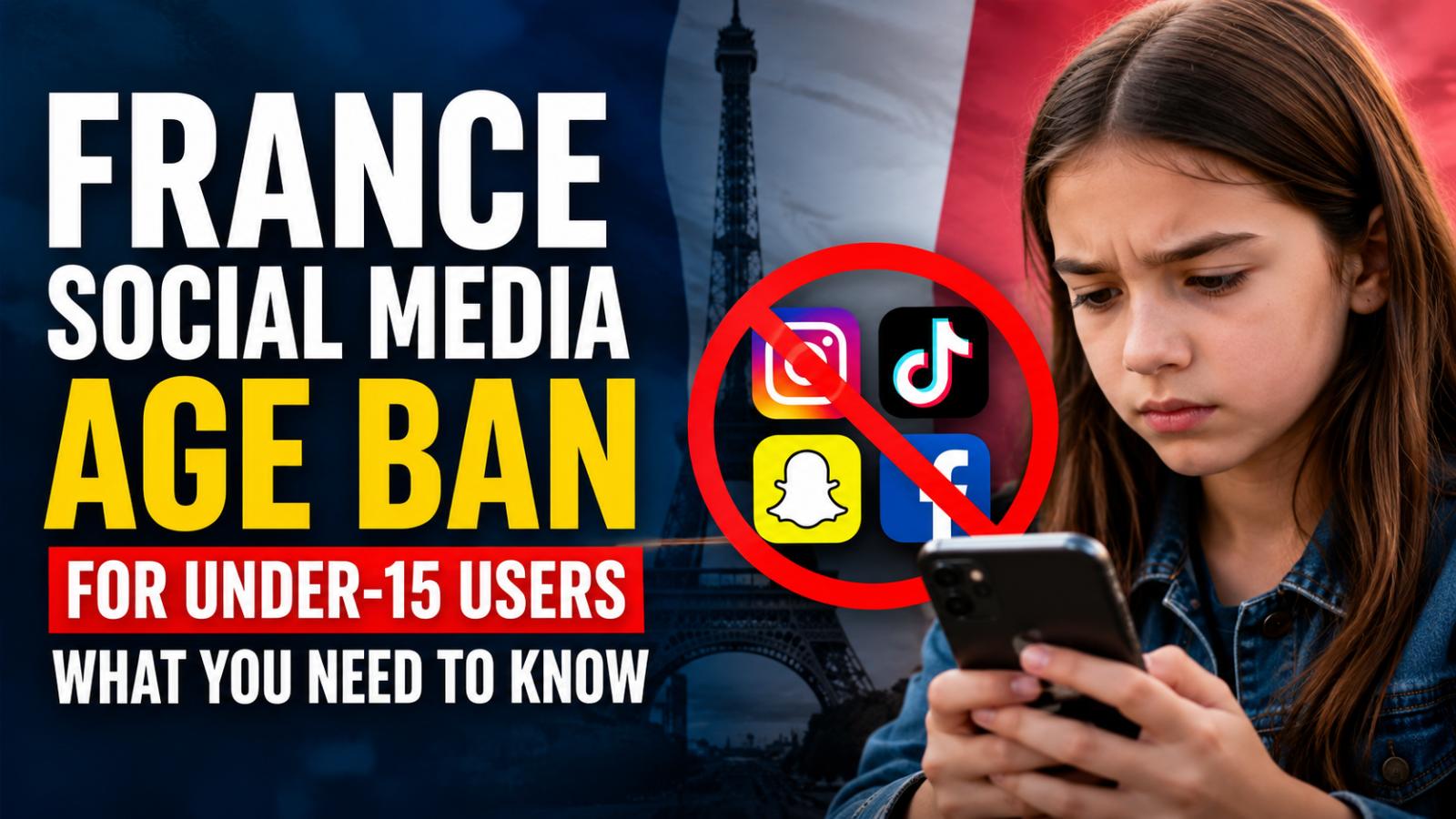
France is moving closer to introducing a nationwide social media age ban for children under 15, joining countries such as Australia and Indonesia in tightening online protections for minors. Backed by President Emmanuel Macron, the proposed legislation is designed to improve adolescent mental health, reduce cyberbullying and limit young users' exposure to harmful online content. While lawmakers are finalising the legislation, the biggest obstacle remains finding a reliable way to verify users' ages without compromising privacy.
Under-15 Social Media Ban
Under the proposed rollout, social media platforms would be prevented from allowing new users under the age of 15 to create accounts starting in September. Existing accounts believed to belong to underage users could then face suspension beginning in January 2027 unless age requirements are met. The proposal places responsibility on major platforms including TikTok, Instagram and Snapchat to implement approved verification methods while complying with European privacy standards.
Age Verification Challenges
Verifying a person's age online has proven far more difficult than drafting the legislation itself. One option is requiring users to upload government-issued identification such as passports or driver's licenses. While this offers a high level of accuracy, privacy experts warn that storing sensitive identification increases cybersecurity risks and creates attractive targets for hackers. Authorities also acknowledge that determined teenagers could bypass the system by using identification documents belonging to parents, siblings or older friends.
Australia encountered similar concerns while introducing its own restrictions and chose not to require government-issued identification because of privacy implications. France is carefully studying these experiences as it develops its own regulatory framework.
Biometric Age Estimation
Another option being considered involves biometric age estimation using facial analysis technology. These systems estimate a person's age without permanently storing identity documents, potentially reducing some privacy concerns. However, experts caution that facial recognition tools can produce inconsistent results for teenagers whose physical appearance changes rapidly during adolescence.
The technology must also comply with the European Union's strict data protection regulations, making large-scale deployment more complex. Questions remain about accuracy, transparency and public acceptance before biometric verification could become a standard solution.
Digital Identity Solutions
French lawmakers are also examining third-party digital identity services that could verify age without sharing personal information directly with social media companies. The European Commission is developing an age-verification framework that could eventually provide a common solution across EU member states.
According to French lawmaker Laure Miller and digital authorities, platforms will have flexibility to integrate approved verification technologies rather than being forced to adopt a single system. However, differences in digital infrastructure across Europe mean widespread implementation may take time.
France's proposed legislation reflects a growing international effort to make social media safer for young users. Yet the success of the reform will depend not only on passing the law but also on creating an age verification system that balances child protection, privacy rights and practical enforcement. Until a secure and widely accepted solution is available, France's ambitious digital safety initiative will continue to face significant technical and regulatory challenges.
According to statements from French lawmakers, government officials and ongoing European Commission digital identity initiatives, further implementation details are expected before the first phase begins later this year.