Louvre Apollo Gallery Reopens After 2025 Jewel Heist
Apollo Gallery Reopening Marks a New Chapter The Louvre Museum's Apollo Gallery is set to reopen on July 22, nearly a year after the shocking 2025 jewel heist that stunned the art world. While visitors will once again be able to enter one of the museum's most celebrated galleries, they will notice one major change. The priceless royal jewels that once defined the co
Louvre Apollo Gallery Reopens After 2025 Jewel Heist
Apollo Gallery Reopening Marks a New Chapter The Louvre Museum's Apollo Gallery is set to reopen on July 22, nearly a year after the shocking 2025 jewel heist that stunned the art world. While visitors will once again be able to enter one of the museum's most celebrated galleries, they will notice one major change. The priceless royal jewels that once defined the co
France Social Media Age Ban for Under-15 Users Explained
France is preparing to introduce a social media age ban for children under 15, aiming to improve teen safety and reduce cyberbullying. While the proposal has gained political backing, officials still face major challenges in implementing secure, privacy-friendly age verification systems. France Social Media Age Ban Nears Approval but Age Verification Remains
France Social Media Age Ban for Under-15 Users Explained
France is preparing to introduce a social media age ban for children under 15, aiming to improve teen safety and reduce cyberbullying. While the proposal has gained political backing, officials still face major challenges in implementing secure, privacy-friendly age verification systems. France Social Media Age Ban Nears Approval but Age Verification Remains
France Lets Ukraine Produce SCALP and Aster Missiles
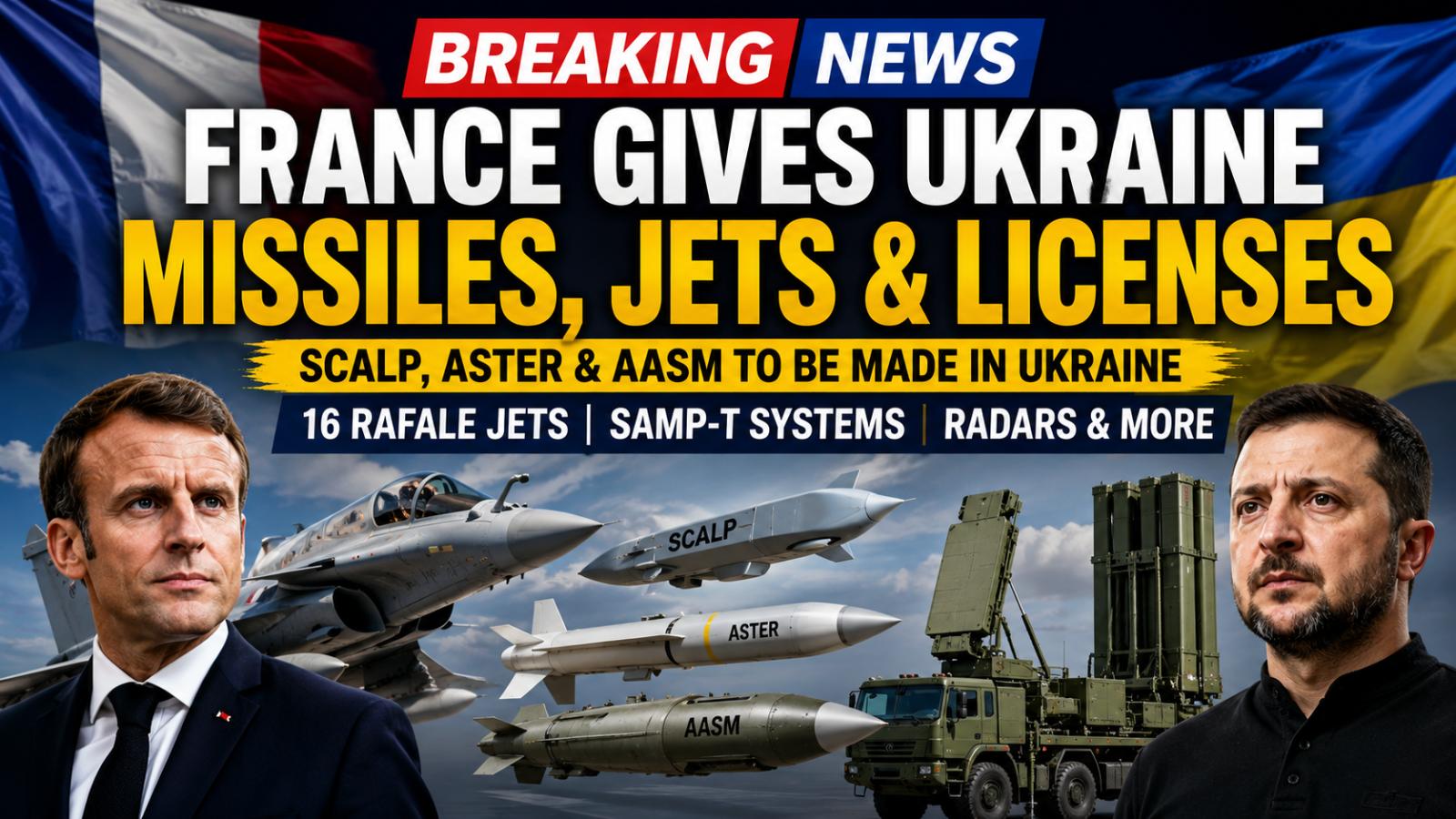
France will allow Ukraine to manufacture French-designed missiles and precision-guided bombs under a new bilateral defence roadmap. The agreement also covers radars, next-generation SAMP-T air defence systems and 16 Rafale fighter jets, significantly expanding Paris’ long-term military partnership with Kyiv. France grants Ukraine missile production licences French President Emmanuel Macron announced the roadmap after meeting Ukrainian President Volodymyr Zelenskyy during a gathering of Ukraine’s allies in Paris on Monday, July 13. Macron said the plan would implement defence commitments agreed in principle between the two countries in November. Under the arrangement, Ukraine will receive licences to produce SCALP long-range cruise missiles, Aster air defence interceptor missiles and AASM Hammer precision-guided air-to-ground bombs. It marks the first time France has authorised the production of these weapons inside Ukraine. Local production could help Ukraine rebuild weapons stocks more quickly and reduce its reliance on deliveries from foreign factories. However, the agreement’s impact will depend on financing, industrial capacity, component supplies and the security of Ukrainian manufacturing sites. Rafale jets and SAMP-T systems strengthen air power Macron confirmed that Ukraine had ordered 16 Rafale fighter jets, with the aircraft expected to become operational between 2028 and 2029. Training for Ukrainian pilots and technical personnel is expected to begin before the jets enter service. The Rafale acquisition will support Ukraine’s longer-term effort to modernise its air force alongside existing Western aircraft. The delivery schedule means the jets are primarily intended to strengthen Ukraine’s future defence structure rather than provide an immediate battlefield solution. Kyiv has also ordered next-generation SAMP-T air defence systems. France plans to complete deliveries of the current version before supplying the upgraded systems and additional Aster interceptor missiles. France to transfer radars and air defence technology The defence roadmap includes the transfer of radar systems designed to improve Ukraine’s ability to detect incoming aircraft, drones and missiles. These systems will complement the SAMP-T network and other air defence platforms already used by Ukrainian forces. The new arrangement shifts French support beyond direct weapons deliveries toward licensed production, technical cooperation and domestic defence manufacturing. Ukraine could gain greater control over maintenance and replenishment, while French companies deepen their role in rebuilding the country’s military industry. Allies plan exercises near Ukraine Macron also said Ukraine’s allies would begin military exercises in neighbouring countries. The drills are intended to prepare forces that could support a proposed multinational security mission after a ceasefire with Russia takes effect. At the Paris meeting, Ukraine and nine European countries also announced a coalition aimed at developing stronger protection against ballistic missiles. The initiative seeks to combine Ukraine’s battlefield experience with European defence technology and industrial resources. The latest commitments show France moving from short-term military assistance toward a broader strategy involving production licences, aircraft, missile defence and future force development. Their success will depend on whether the roadmap produces weapons and operational capability quickly enough to meet Ukraine’s evolving security needs.
France Lets Ukraine Produce SCALP and Aster Missiles
France will allow Ukraine to manufacture French-designed missiles and precision-guided bombs under a new bilateral defence roadmap. The agreement also covers radars, next-generation SAMP-T air defence systems and 16 Rafale fighter jets, significantly expanding Paris’ long-term military partnership with Kyiv. France grants Ukraine missile production licences French President Emmanuel Macron announced the roadmap after meeting Ukrainian President Volodymyr Zelenskyy during a gathering of Ukraine’s allies in Paris on Monday, July 13. Macron said the plan would implement defence commitments agreed in principle between the two countries in November. Under the arrangement, Ukraine will receive licences to produce SCALP long-range cruise missiles, Aster air defence interceptor missiles and AASM Hammer precision-guided air-to-ground bombs. It marks the first time France has authorised the production of these weapons inside Ukraine. Local production could help Ukraine rebuild weapons stocks more quickly and reduce its reliance on deliveries from foreign factories. However, the agreement’s impact will depend on financing, industrial capacity, component supplies and the security of Ukrainian manufacturing sites. Rafale jets and SAMP-T systems strengthen air power Macron confirmed that Ukraine had ordered 16 Rafale fighter jets, with the aircraft expected to become operational between 2028 and 2029. Training for Ukrainian pilots and technical personnel is expected to begin before the jets enter service. The Rafale acquisition will support Ukraine’s longer-term effort to modernise its air force alongside existing Western aircraft. The delivery schedule means the jets are primarily intended to strengthen Ukraine’s future defence structure rather than provide an immediate battlefield solution. Kyiv has also ordered next-generation SAMP-T air defence systems. France plans to complete deliveries of the current version before supplying the upgraded systems and additional Aster interceptor missiles. France to transfer radars and air defence technology The defence roadmap includes the transfer of radar systems designed to improve Ukraine’s ability to detect incoming aircraft, drones and missiles. These systems will complement the SAMP-T network and other air defence platforms already used by Ukrainian forces. The new arrangement shifts French support beyond direct weapons deliveries toward licensed production, technical cooperation and domestic defence manufacturing. Ukraine could gain greater control over maintenance and replenishment, while French companies deepen their role in rebuilding the country’s military industry. Allies plan exercises near Ukraine Macron also said Ukraine’s allies would begin military exercises in neighbouring countries. The drills are intended to prepare forces that could support a proposed multinational security mission after a ceasefire with Russia takes effect. At the Paris meeting, Ukraine and nine European countries also announced a coalition aimed at developing stronger protection against ballistic missiles. The initiative seeks to combine Ukraine’s battlefield experience with European defence technology and industrial resources. The latest commitments show France moving from short-term military assistance toward a broader strategy involving production licences, aircraft, missile defence and future force development. Their success will depend on whether the roadmap produces weapons and operational capability quickly enough to meet Ukraine’s evolving security needs.
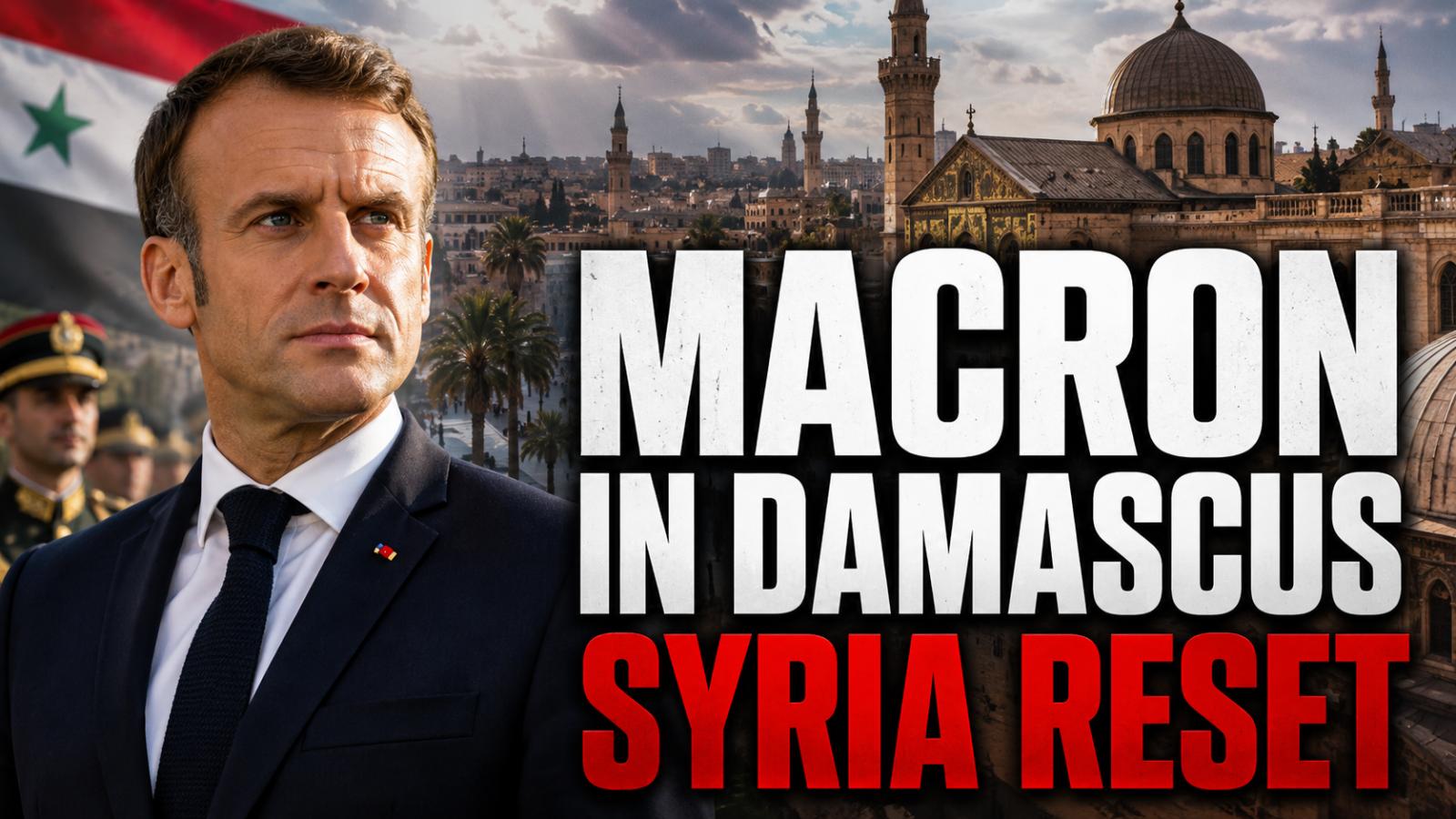
Macron safe after Damascus blasts during Syria visit
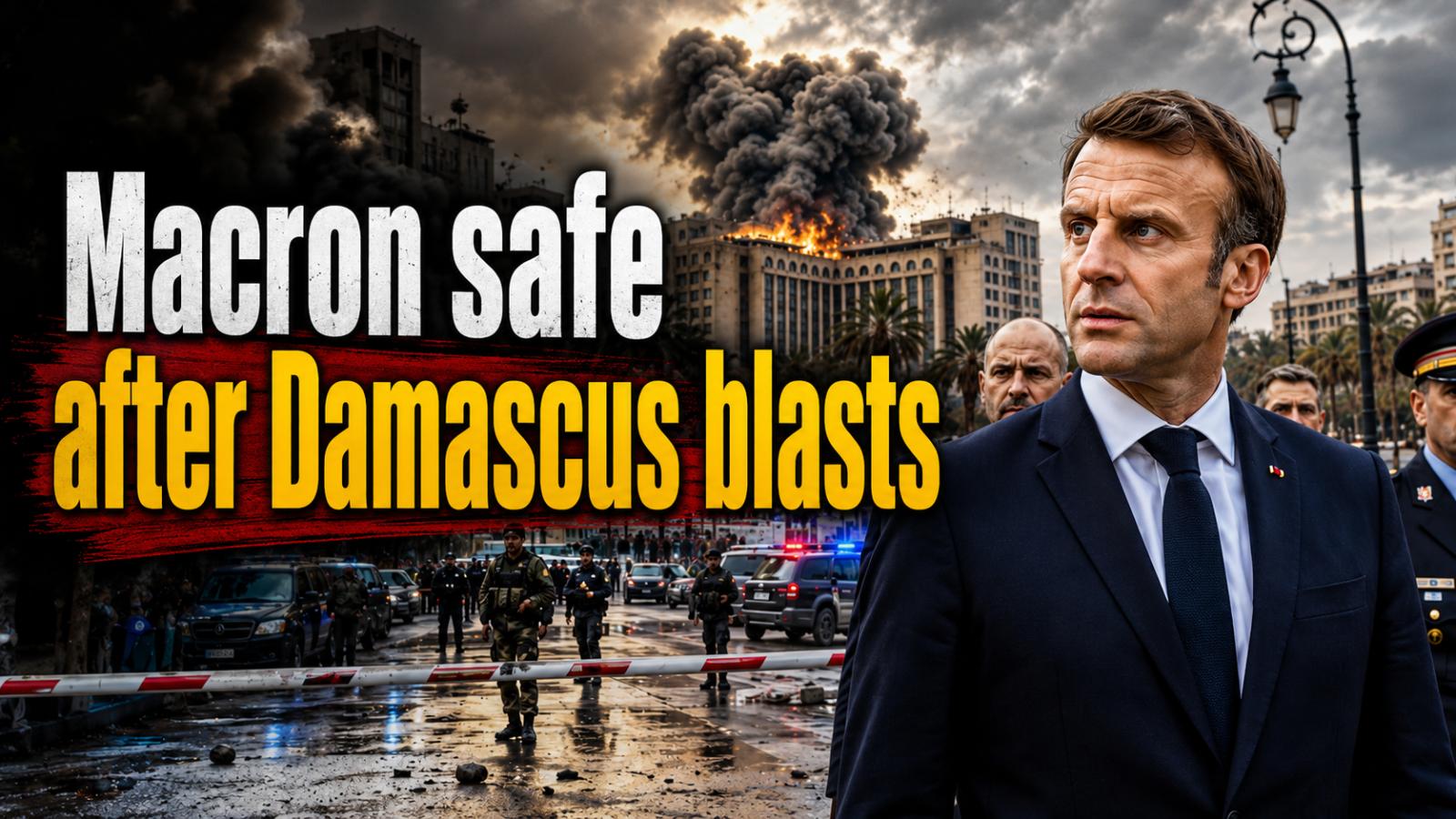
French President Emmanuel Macron was reported safe after explosions were heard in central Damascus during his visit to Syria on Tuesday, July 7. The blasts took place as Macron was in the capital for talks with Syrian President Ahmad al-Sharaa, turning a high-profile diplomatic visit into a major security concern. The explosions were reported near the Four Seasons Damascus area, where Macron was said to be staying during the trip. Smoke wa
Macron safe after Damascus blasts during Syria visit
French President Emmanuel Macron was reported safe after explosions were heard in central Damascus during his visit to Syria on Tuesday, July 7. The blasts took place as Macron was in the capital for talks with Syrian President Ahmad al-Sharaa, turning a high-profile diplomatic visit into a major security concern. The explosions were reported near the Four Seasons Damascus area, where Macron was said to be staying during the trip. Smoke wa
Macron visits Syria after Assad government falls
Macron’s Damascus trip marks diplomatic turning point French President Emmanuel Macron arrived in Damascus on Monday, July 6, becoming the first Western head of state to visit Syria since the fall of Bashar al-Assad’s government in December 2024. His two-day trip marks a significant diplomatic moment as Syria seeks to rebuild international ties after years of isola
Macron visits Syria after Assad government falls
Macron’s Damascus trip marks diplomatic turning point French President Emmanuel Macron arrived in Damascus on Monday, July 6, becoming the first Western head of state to visit Syria since the fall of Bashar al-Assad’s government in December 2024. His two-day trip marks a significant diplomatic moment as Syria seeks to rebuild international ties after years of isola
World Cup Quarterfinals: France-Morocco, Norway-England Set
World Cup quarterfinals are taking shape, with France, Morocco, Norway and England confirmed in the last eight as the knockout stage moves closer to the semifinals. The confirmed World Cup quarterfinals include France vs. Morocco and Norway vs. England, while four remaining last-16 matchups will decide the other two places in the bracket. World Cup quarterfinals: France vs. Morocco confirmed France will face Morocco in one of the first confirme
World Cup Quarterfinals: France-Morocco, Norway-England Set
World Cup quarterfinals are taking shape, with France, Morocco, Norway and England confirmed in the last eight as the knockout stage moves closer to the semifinals. The confirmed World Cup quarterfinals include France vs. Morocco and Norway vs. England, while four remaining last-16 matchups will decide the other two places in the bracket. World Cup quarterfinals: France vs. Morocco confirmed France will face Morocco in one of the first confirme
Lalique Museum burglary: Crystal jewels stolen in France
A burglary at the Lalique Museum in Wingen-sur-Moder, France, has drawn fresh attention to the security of cultural sites after masked thieves escaped with valuable crystal jewellery. The break-in reportedly happened early Sunday morning, when the suspects entered the museum, damaged several display cases and fled before police arrived. Investigators are reviewing CCTV footage and checking the museum’s alarm response to understand how the thieves managed to carry out the burglary so quickly. The stolen items are believed to include nearly twenty Lalique jewellery pieces, with early estimates placing the loss at several million euros. Valuable crystal jewellery taken from collection The museum is dedicated to René Lalique, the French artist, jeweller and glassmaker known for his Art Nouveau jewellery, Art Deco glasswork and luxury crystal creations. Because of that legacy, the stolen pieces are not only financially valuable but also culturally important. Unlike gold or silver jewellery, crystal pieces cannot easily be melted down for resale. However, their rarity, design value and connection to the Lalique name make them attractive to specialist collectors and organised theft networks. Police are expected to examine whether the stolen items were targeted for private buyers or wider illegal art markets. Alarm response under investigation The museum’s alarm reportedly activated during the break-in, but questions have emerged over how quickly the response was handled. A cleaning worker is said to have discovered signs of the burglary and alerted police after reaching the site. Local concern has now shifted toward whether security procedures were strong enough for a museum holding high-value art and jewellery. Officials are expected to review the role of the security company, the timing of the alert and whether police were informed without delay. Museum closed as police continue probe The Lalique Museum, opened in 2011 near the brand’s historic production site, displays hundreds of works linked to René Lalique and the development of French glass and crystal design. Its collection includes jewellery, decorative objects, Art Deco pieces and modern crystal works. Following the burglary, the museum is expected to remain closed while investigators continue their work and staff assess the damage. For Wingen-sur-Moder, a small town near Strasbourg, the theft is a major cultural blow and a warning that even smaller museums can become targets when rare and valuable collections are on display. France museum theft renews wider debate The incident has added to a wider debate about museum security in France, especially after other high-profile cultural thefts raised questions about how valuable collections are protected. While major museums often receive more public attention, smaller regional institutions may also hold rare pieces that attract professional thieves. The Lalique Museum burglary shows that alarms alone may not be enough if response systems are slow or unclear. As police continue the CCTV probe, the case is likely to increase pressure on museums to review security staffing, emergency procedures and protection for valuable display items.
Lalique Museum burglary: Crystal jewels stolen in France
A burglary at the Lalique Museum in Wingen-sur-Moder, France, has drawn fresh attention to the security of cultural sites after masked thieves escaped with valuable crystal jewellery. The break-in reportedly happened early Sunday morning, when the suspects entered the museum, damaged several display cases and fled before police arrived. Investigators are reviewing CCTV footage and checking the museum’s alarm response to understand how the thieves managed to carry out the burglary so quickly. The stolen items are believed to include nearly twenty Lalique jewellery pieces, with early estimates placing the loss at several million euros. Valuable crystal jewellery taken from collection The museum is dedicated to René Lalique, the French artist, jeweller and glassmaker known for his Art Nouveau jewellery, Art Deco glasswork and luxury crystal creations. Because of that legacy, the stolen pieces are not only financially valuable but also culturally important. Unlike gold or silver jewellery, crystal pieces cannot easily be melted down for resale. However, their rarity, design value and connection to the Lalique name make them attractive to specialist collectors and organised theft networks. Police are expected to examine whether the stolen items were targeted for private buyers or wider illegal art markets. Alarm response under investigation The museum’s alarm reportedly activated during the break-in, but questions have emerged over how quickly the response was handled. A cleaning worker is said to have discovered signs of the burglary and alerted police after reaching the site. Local concern has now shifted toward whether security procedures were strong enough for a museum holding high-value art and jewellery. Officials are expected to review the role of the security company, the timing of the alert and whether police were informed without delay. Museum closed as police continue probe The Lalique Museum, opened in 2011 near the brand’s historic production site, displays hundreds of works linked to René Lalique and the development of French glass and crystal design. Its collection includes jewellery, decorative objects, Art Deco pieces and modern crystal works. Following the burglary, the museum is expected to remain closed while investigators continue their work and staff assess the damage. For Wingen-sur-Moder, a small town near Strasbourg, the theft is a major cultural blow and a warning that even smaller museums can become targets when rare and valuable collections are on display. France museum theft renews wider debate The incident has added to a wider debate about museum security in France, especially after other high-profile cultural thefts raised questions about how valuable collections are protected. While major museums often receive more public attention, smaller regional institutions may also hold rare pieces that attract professional thieves. The Lalique Museum burglary shows that alarms alone may not be enough if response systems are slow or unclear. As police continue the CCTV probe, the case is likely to increase pressure on museums to review security staffing, emergency procedures and protection for valuable display items.
Mbappe's four-word post follows France win over Paraguay
Mbappe's four-word post follows France win over Paraguay France booked their place in the FIFA World Cup 2026 quarter-finals after battling past Paraguay 1-0 in a tightly contested Round of 16 encounter. Kylian Mbappe once again proved to be the difference, converting a second-half penalty before sharing a simple four-word message on social media that quickly went viral: "A day at work." The victory was far fro
Mbappe's four-word post follows France win over Paraguay
Mbappe's four-word post follows France win over Paraguay France booked their place in the FIFA World Cup 2026 quarter-finals after battling past Paraguay 1-0 in a tightly contested Round of 16 encounter. Kylian Mbappe once again proved to be the difference, converting a second-half penalty before sharing a simple four-word message on social media that quickly went viral: "A day at work." The victory was far fro
World Cup 2026 Round of 16 Set After Argentina Survives Cape Verde
The World Cup 2026 Round of 16 field is complete after Argentina survived a major scare against Cape Verde, Egypt advanced on penalties and Colombia claimed the final knockout spot. Argentina, the defending world champion, defeated Cape Verde 3-2 after extra time in Miami on Friday, July 3, 2026, in one of the tournament’s most dramatic matches so far. Cape Verde twice fought back to level the game before an own goal by Diney Borges in the 111th minute sent Argent
World Cup 2026 Round of 16 Set After Argentina Survives Cape Verde
The World Cup 2026 Round of 16 field is complete after Argentina survived a major scare against Cape Verde, Egypt advanced on penalties and Colombia claimed the final knockout spot. Argentina, the defending world champion, defeated Cape Verde 3-2 after extra time in Miami on Friday, July 3, 2026, in one of the tournament’s most dramatic matches so far. Cape Verde twice fought back to level the game before an own goal by Diney Borges in the 111th minute sent Argent
France deploys mine assets to support Hormuz security
France adjusts regional maritime deployment France has deployed mine countermeasures assets to West Asia as part of efforts to support safe navigation through the Strait of Hormuz, one of the world’s most important maritime routes. President Emmanuel Macron said the deployment includes two minehunters, supported by two frigates and a maritime patrol aircraft, with t
France deploys mine assets to support Hormuz security
France adjusts regional maritime deployment France has deployed mine countermeasures assets to West Asia as part of efforts to support safe navigation through the Strait of Hormuz, one of the world’s most important maritime routes. President Emmanuel Macron said the deployment includes two minehunters, supported by two frigates and a maritime patrol aircraft, with t
Iran says expert delegation to visit Doha for MoU talks with US
Iran clarifies Doha engagement plan Iran has confirmed that an expert delegation will travel to Doha later this week to discuss the implementation of a memorandum of understanding signed earlier this month with the United States. However, Iranian officials firmly denied that any direct meeting with US representatives has been scheduled, stressing that the current phase remains limited to technical discussions on agreed clauses rather than pol
Iran says expert delegation to visit Doha for MoU talks with US
Iran clarifies Doha engagement plan Iran has confirmed that an expert delegation will travel to Doha later this week to discuss the implementation of a memorandum of understanding signed earlier this month with the United States. However, Iranian officials firmly denied that any direct meeting with US representatives has been scheduled, stressing that the current phase remains limited to technical discussions on agreed clauses rather than pol
Europe omega block heatwave drives deadly temperature surge
Europe is currently experiencing a severe heatwave driven by a trapped atmospheric system known as an omega block. This Europe omega block heatwave is preventing normal weather movement, locking hot air over large parts of the continent for days. As a result, temperatures are rising sharply, affecting daily life, health systems, and infrastructure across multiple countries. What is driving this extreme heat The main reason behind the heat buildup is a stalled jet stream pattern. In this pattern, high pressure sits over Europe in a shape that blocks cooler air from entering. Instead of changing weather systems, the same hot air remains in place and continues to intensify under strong summer sunlight. This creates repeated days of extreme heat rather than short-term spikes. Nights also remain warm, giving the human body little time to recover from daytime heat exposure. Countries facing the strongest impact The heatwave is affecting a wide region including France, Germany, Italy, Spain, Switzerland, the United Kingdom, Poland, Czechia, Hungary, and parts of the Balkans. Several areas in Central and Eastern Europe have recorded temperatures above 40°C, with some locations reaching historic highs. The heat is spreading gradually eastward as the trapped system shifts across the continent. Why some regions are more exposed Southern Europe is directly exposed to hot air moving from North Africa and the Mediterranean. Countries such as Spain, Italy, and France experience intense surface heating due to prolonged sunlight and dry conditions. In Central and Eastern Europe, countries like Germany, Poland, Czechia, and Hungary face heat accumulation over landlocked regions, where hot air remains trapped for longer periods. Impact on health and daily life Health systems are under growing pressure as heat-related illnesses increase. Conditions such as dehydration, heatstroke, and cardiovascular stress are rising, particularly among older adults, outdoor workers, and people without cooling access. Reports from multiple regions indicate excess deaths above normal levels during the heatwave period, highlighting the seriousness of prolonged exposure to extreme temperatures. Transport systems are also affected. Railway lines expand under heat, causing delays, while road surfaces soften and become unstable. Energy demand increases as cooling systems are used more widely, putting pressure on national grids. Agriculture is also suffering due to dry soil conditions, reduced crop yields, and falling river levels. In some regions, water availability is becoming a growing concern for both farming and urban supply. Public response and risk outlook Authorities across Europe are advising people to stay hydrated, avoid outdoor activity during peak heat hours, and check on vulnerable individuals. Hospitals remain alert as heat-related admissions continue to rise. Experts warn that the full impact of this heatwave may take time to appear, as excess mortality data is still being compiled. The situation highlights how extreme weather patterns are becoming more persistent and widespread, with the omega block heatwave showing how atmospheric conditions can directly affect health, infrastructure, and daily life across Europe.



Europe omega block heatwave drives deadly temperature surge
Europe is currently experiencing a severe heatwave driven by a trapped atmospheric system known as an omega block. This Europe omega block heatwave is preventing normal weather movement, locking hot air over large parts of the continent for days. As a result, temperatures are rising sharply, affecting daily life, health systems, and infrastructure across multiple countries. What is driving this extreme heat The main reason behind the heat buildup is a stalled jet stream pattern. In this pattern, high pressure sits over Europe in a shape that blocks cooler air from entering. Instead of changing weather systems, the same hot air remains in place and continues to intensify under strong summer sunlight. This creates repeated days of extreme heat rather than short-term spikes. Nights also remain warm, giving the human body little time to recover from daytime heat exposure. Countries facing the strongest impact The heatwave is affecting a wide region including France, Germany, Italy, Spain, Switzerland, the United Kingdom, Poland, Czechia, Hungary, and parts of the Balkans. Several areas in Central and Eastern Europe have recorded temperatures above 40°C, with some locations reaching historic highs. The heat is spreading gradually eastward as the trapped system shifts across the continent. Why some regions are more exposed Southern Europe is directly exposed to hot air moving from North Africa and the Mediterranean. Countries such as Spain, Italy, and France experience intense surface heating due to prolonged sunlight and dry conditions. In Central and Eastern Europe, countries like Germany, Poland, Czechia, and Hungary face heat accumulation over landlocked regions, where hot air remains trapped for longer periods. Impact on health and daily life Health systems are under growing pressure as heat-related illnesses increase. Conditions such as dehydration, heatstroke, and cardiovascular stress are rising, particularly among older adults, outdoor workers, and people without cooling access. Reports from multiple regions indicate excess deaths above normal levels during the heatwave period, highlighting the seriousness of prolonged exposure to extreme temperatures. Transport systems are also affected. Railway lines expand under heat, causing delays, while road surfaces soften and become unstable. Energy demand increases as cooling systems are used more widely, putting pressure on national grids. Agriculture is also suffering due to dry soil conditions, reduced crop yields, and falling river levels. In some regions, water availability is becoming a growing concern for both farming and urban supply. Public response and risk outlook Authorities across Europe are advising people to stay hydrated, avoid outdoor activity during peak heat hours, and check on vulnerable individuals. Hospitals remain alert as heat-related admissions continue to rise. Experts warn that the full impact of this heatwave may take time to appear, as excess mortality data is still being compiled. The situation highlights how extreme weather patterns are becoming more persistent and widespread, with the omega block heatwave showing how atmospheric conditions can directly affect health, infrastructure, and daily life across Europe.
WHO says Europe heatwave linked to over 1,300 excess deaths
Heatwave raises health concerns across Europe More than 1,300 excess deaths have been recorded in Europe since June 21 as a severe heatwave continues to affect large parts of the continent, according to the World Health Organization. The warning came as millions of people faced another weekend of extreme temperatures, with the intense weather system gradually moving eastward and placing growing pressure on public health services. WHO chief Tedros Adhanom Gh
WHO says Europe heatwave linked to over 1,300 excess deaths
Heatwave raises health concerns across Europe More than 1,300 excess deaths have been recorded in Europe since June 21 as a severe heatwave continues to affect large parts of the continent, according to the World Health Organization. The warning came as millions of people faced another weekend of extreme temperatures, with the intense weather system gradually moving eastward and placing growing pressure on public health services. WHO chief Tedros Adhanom Gh
Europe heatwave intensifies as blocking system traps hot air
A strong and slow-moving atmospheric pattern is keeping large parts of Europe locked under unusually hot and dry conditions. The system is preventing cooler Atlantic air from entering the region, allowing heat to build up day after day. As a result, temperatures are climbing far above seasonal averages across Western and Central Europe, with multiple countries reporting prolonged heat stress rather than short heat spikes.
Europe heatwave intensifies as blocking system traps hot air
A strong and slow-moving atmospheric pattern is keeping large parts of Europe locked under unusually hot and dry conditions. The system is preventing cooler Atlantic air from entering the region, allowing heat to build up day after day. As a result, temperatures are climbing far above seasonal averages across Western and Central Europe, with multiple countries reporting prolonged heat stress rather than short heat spikes.
US NATO Tensions Rise as Trump Demands Loyalty From Allies
Trump Raises Concerns Over NATO Support During Iran Conflict US President Donald Trump has expressed strong criticism of several NATO allies, stating that they failed to adequately support the United States during its recent military confrontation involving Iran. Speaking during a meeting with NATO Secretary General Mark Rutte at the White House, Trump said he was dis
US NATO Tensions Rise as Trump Demands Loyalty From Allies
Trump Raises Concerns Over NATO Support During Iran Conflict US President Donald Trump has expressed strong criticism of several NATO allies, stating that they failed to adequately support the United States during its recent military confrontation involving Iran. Speaking during a meeting with NATO Secretary General Mark Rutte at the White House, Trump said he was dis
France heatwave shuts landmarks as tourism faces disruption
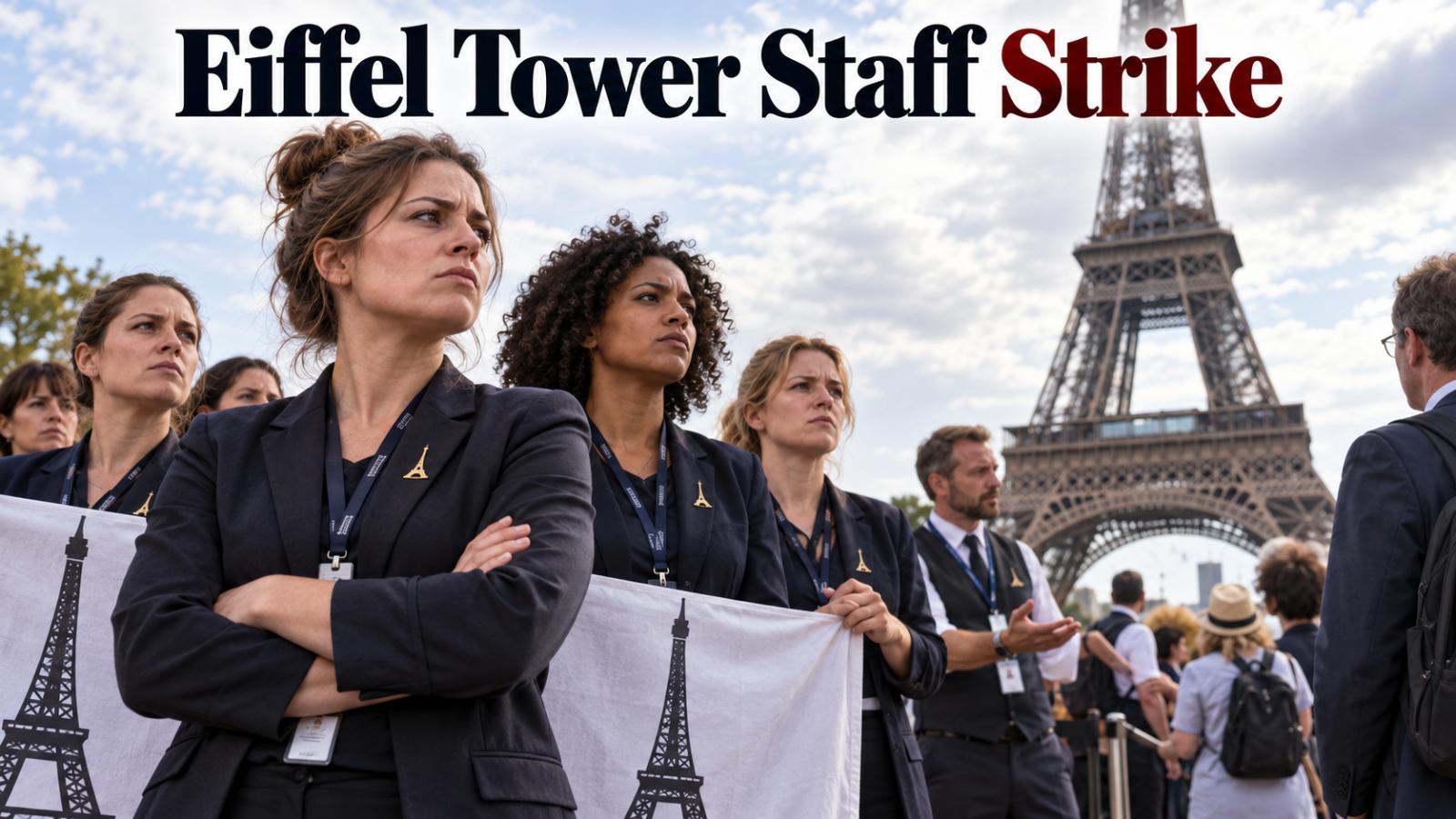
France is experiencing an intense heat surge that has pushed temperatures across several regions to dangerous levels, placing large parts of the country under the highest weather alert category. Authorities have warned that the current conditions are among the most severe in recent years, with urban areas like Paris feeling the strongest impact due to dense infrastructure and limited night-time cooling. Paris tourism slows as conditions become unsafe Tourist activity in Paris has taken a noticeable hit as extreme heat makes outdoor movement difficult during peak hours. Visitors are shortening itineraries, avoiding long walking routes, and shifting to indoor attractions wherever possible. Public spaces remain crowded, but activity is largely concentrated in shaded areas and air-conditioned venues as people try to avoid prolonged exposure. Major landmarks adjust operations due to heat stress Several iconic sites have been forced to modify schedules in response to the heat conditions. The Eiffel Tower has adjusted operating hours, closing earlier than usual to reduce visitor risk during peak temperatures. The Louvre Museum has also shifted to reduced visiting hours, prioritizing safety for both staff and tourists. Other regional attractions have issued advisories urging travelers to delay or reschedule visits until conditions improve. Weather pattern driving the extreme temperatures Meteorologists attribute the heat surge to a stalled atmospheric pattern that is trapping warm air over Western Europe. This system is reinforced by hot air moving in from North Africa, intensifying the temperature spike across France. Combined with stagnant wind conditions, the heat is persisting longer than typical summer peaks, limiting overnight cooling and increasing strain on infrastructure. Climate trend raising frequency of extreme heat events Experts note that Europe is warming faster than many other regions globally, contributing to more frequent and intense heat episodes. France is increasingly experiencing prolonged summer heat events that disrupt transport, tourism, and daily routines. The current situation highlights how rising baseline temperatures are turning what were once rare extremes into recurring seasonal challenges.
France heatwave shuts landmarks as tourism faces disruption
France is experiencing an intense heat surge that has pushed temperatures across several regions to dangerous levels, placing large parts of the country under the highest weather alert category. Authorities have warned that the current conditions are among the most severe in recent years, with urban areas like Paris feeling the strongest impact due to dense infrastructure and limited night-time cooling. Paris tourism slows as conditions become unsafe Tourist activity in Paris has taken a noticeable hit as extreme heat makes outdoor movement difficult during peak hours. Visitors are shortening itineraries, avoiding long walking routes, and shifting to indoor attractions wherever possible. Public spaces remain crowded, but activity is largely concentrated in shaded areas and air-conditioned venues as people try to avoid prolonged exposure. Major landmarks adjust operations due to heat stress Several iconic sites have been forced to modify schedules in response to the heat conditions. The Eiffel Tower has adjusted operating hours, closing earlier than usual to reduce visitor risk during peak temperatures. The Louvre Museum has also shifted to reduced visiting hours, prioritizing safety for both staff and tourists. Other regional attractions have issued advisories urging travelers to delay or reschedule visits until conditions improve. Weather pattern driving the extreme temperatures Meteorologists attribute the heat surge to a stalled atmospheric pattern that is trapping warm air over Western Europe. This system is reinforced by hot air moving in from North Africa, intensifying the temperature spike across France. Combined with stagnant wind conditions, the heat is persisting longer than typical summer peaks, limiting overnight cooling and increasing strain on infrastructure. Climate trend raising frequency of extreme heat events Experts note that Europe is warming faster than many other regions globally, contributing to more frequent and intense heat episodes. France is increasingly experiencing prolonged summer heat events that disrupt transport, tourism, and daily routines. The current situation highlights how rising baseline temperatures are turning what were once rare extremes into recurring seasonal challenges.
Us Iran diplomatic framework signed at Versailles sparks debate
A high-level diplomatic engagement involving the United States and Iran, held in Versailles, has triggered widespread discussion across international policy circles. The meeting, attended by senior representatives including Donald Trump and Emmanuel Macron, focused on a proposed framework addressing Iran’s nuclear activities, sanctions policy, and regional stability concerns. Rather than being presented as a finalized agreement, officials described the discussions as an early-stag
Us Iran diplomatic framework signed at Versailles sparks debate
A high-level diplomatic engagement involving the United States and Iran, held in Versailles, has triggered widespread discussion across international policy circles. The meeting, attended by senior representatives including Donald Trump and Emmanuel Macron, focused on a proposed framework addressing Iran’s nuclear activities, sanctions policy, and regional stability concerns. Rather than being presented as a finalized agreement, officials described the discussions as an early-stag
Macron sends Hindi farewell message to PM Modi
Macron’s Hindi message draws attention French President Emmanuel Macron ended Prime Minister Narendra Modi’s visit to France with a personal farewell message in Hindi, adding a warm diplomatic touch to the high-profile engagement between the two leaders. The message was shared after Modi’s visit and quickly drew attention because of Macron’s effort to address the Indian Prime Minister in Hindi. In the v
Macron sends Hindi farewell message to PM Modi
Macron’s Hindi message draws attention French President Emmanuel Macron ended Prime Minister Narendra Modi’s visit to France with a personal farewell message in Hindi, adding a warm diplomatic touch to the high-profile engagement between the two leaders. The message was shared after Modi’s visit and quickly drew attention because of Macron’s effort to address the Indian Prime Minister in Hindi. In the v
France's longest land border surprisingly connects to Brazil
Introduction Many people assume that France’s longest border lies somewhere in Europe. When asked to name the country that shares the most extensive land connection with France, guesses often point to neighboring nations such as Germany, Spain, or Belgium. This assumption, while understandable, is entirely incorrect. The Surprising Answer In reality, France’s longest land border is with Brazil. The reason for this unexpected fact l
France's longest land border surprisingly connects to Brazil
Introduction Many people assume that France’s longest border lies somewhere in Europe. When asked to name the country that shares the most extensive land connection with France, guesses often point to neighboring nations such as Germany, Spain, or Belgium. This assumption, while understandable, is entirely incorrect. The Surprising Answer In reality, France’s longest land border is with Brazil. The reason for this unexpected fact l
PM Modi strengthens India global ties at G7 Summit in France 2026
Modi’s G7 Visit Highlights India’s Expanding Global Role Prime Minister Narendra Modi’s participation in the 2026 G7 Summit in Évian-les-Bains, France marked a significant moment in India’s global diplomacy, with discussions focusing on economic cooperation, emerging technologies, maritime security and global governance. India positioned itself as a key voice for the Global South while engaging clos
PM Modi strengthens India global ties at G7 Summit in France 2026
Modi’s G7 Visit Highlights India’s Expanding Global Role Prime Minister Narendra Modi’s participation in the 2026 G7 Summit in Évian-les-Bains, France marked a significant moment in India’s global diplomacy, with discussions focusing on economic cooperation, emerging technologies, maritime security and global governance. India positioned itself as a key voice for the Global South while engaging clos