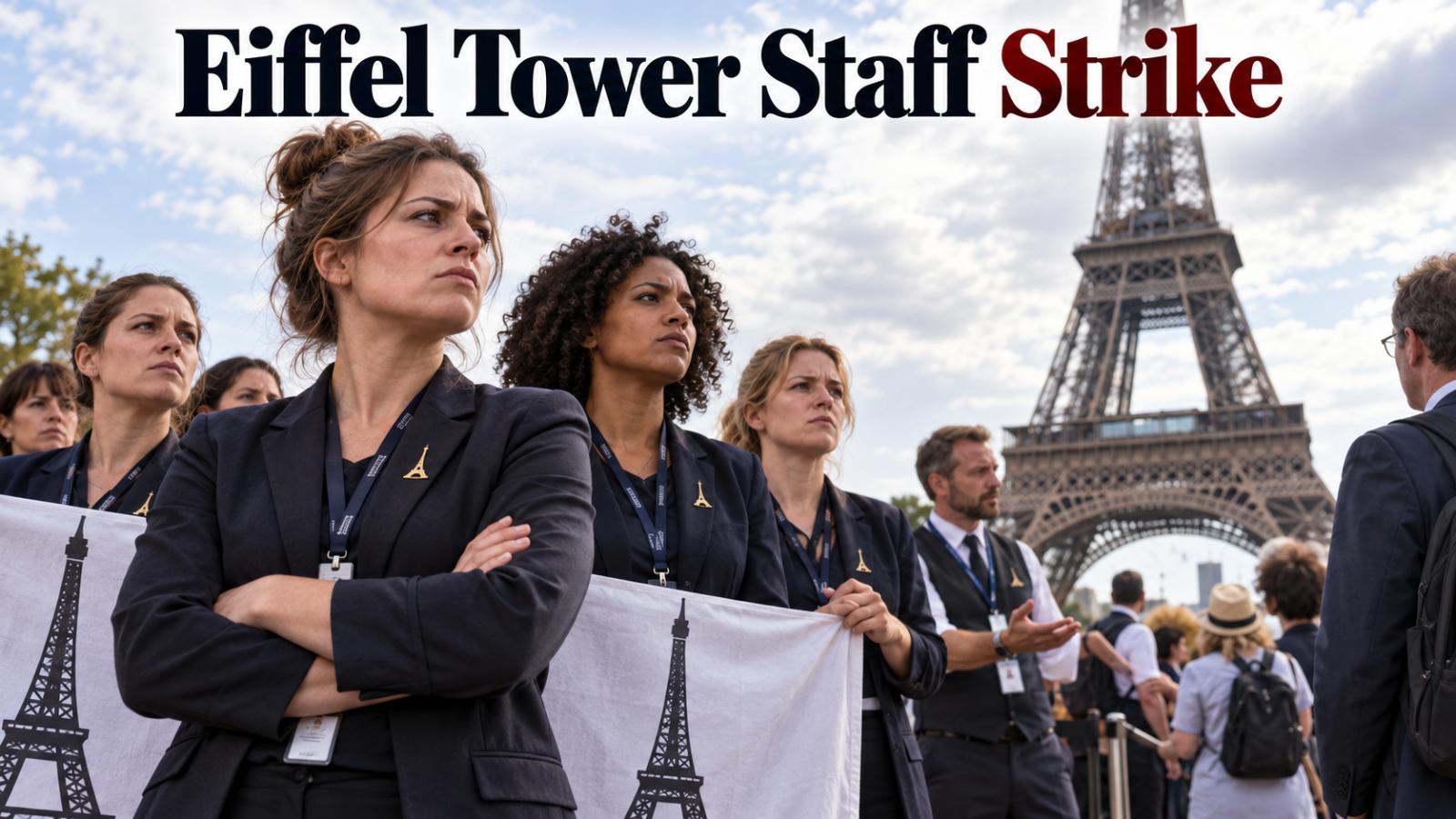
Female employees at the Eiffel Tower launched strike action on Monday after women were allegedly removed from their work positions and replaced by male employees during the weekend visit of an Indian religious delegation. The Eiffel Tower staff strike has since raised concerns over workplace equality, while the BAPS visit, SETE response and Paris probe have placed the incident under greater scrutiny.
BAPS Visit Raises Concerns at Eiffel Tower
Nearly 100 people associated with the Bochasanwasi Akshar Purushottam Swaminarayan Sanstha, commonly known as BAPS, visited the Eiffel Tower on Saturday. The delegation was in France in connection with the inauguration of a Hindu temple in the Paris suburbs.
Staff union representative Diane Davoine said female employees were instructed to leave their regular workstations before the group arrived, with male colleagues assigned to those positions instead. Management later apologised to employees affected by the decision.
Women Removed From Work Positions
Female employees said they were asked to stay out of sight during the delegation's visit. The reported instruction caused particular anger because staff members believed they were being excluded from their normal professional roles solely because they were women.
Davoine said the incident left several employees feeling humiliated. Staff later met to discuss the matter and began strike action, seeking assurances that women would not face similar treatment during future visits.
SETE Reply Condemns Handling of Request
The Société d'Exploitation de la Tour Eiffel, or SETE, acknowledged that the conditions surrounding the visit should not have been accepted. The company said the situation did not reflect its values or the principle of equality between women and men.
SETE President Ariel Weil described the practice as unacceptable and reaffirmed the Eiffel Tower's commitment to republican principles and gender equality. SETE's own employment policy also identifies gender equality and diversity among its workplace priorities.
Paris Probe Announced After Staff Protest
Paris Mayor Emmanuel Gregoire announced an investigation into how the situation was handled. The inquiry is expected to examine why such an arrangement was approved and whether established workplace standards were followed.
The controversy has moved beyond an internal employment dispute because the Eiffel Tower is both a major public attraction and one of France's most recognisable national symbols. The treatment of workers at the monument has therefore drawn broader attention to how visitor requests should be balanced against employee rights.
Gender Row Draws Response From French Officials
French Equality Minister Aurore Berge strongly criticised the reported treatment of the female employees. She stressed that women should not be expected to disappear from professional or public spaces because of religious requirements and said French law must remain paramount.
The dispute has renewed debate over religious accommodation, gender equality and workplace protections in public-facing institutions. At the centre of the controversy is a straightforward question: how far should an organisation accommodate a visitor's preferences when those requests conflict with its responsibility to treat employees equally?
The Eiffel Tower incident has now become a test of how institutions handle such demands while protecting workers from discrimination and maintaining consistent workplace standards.