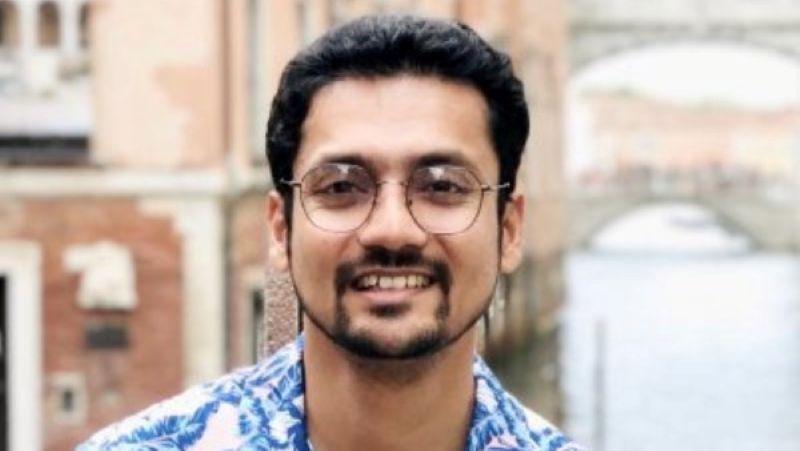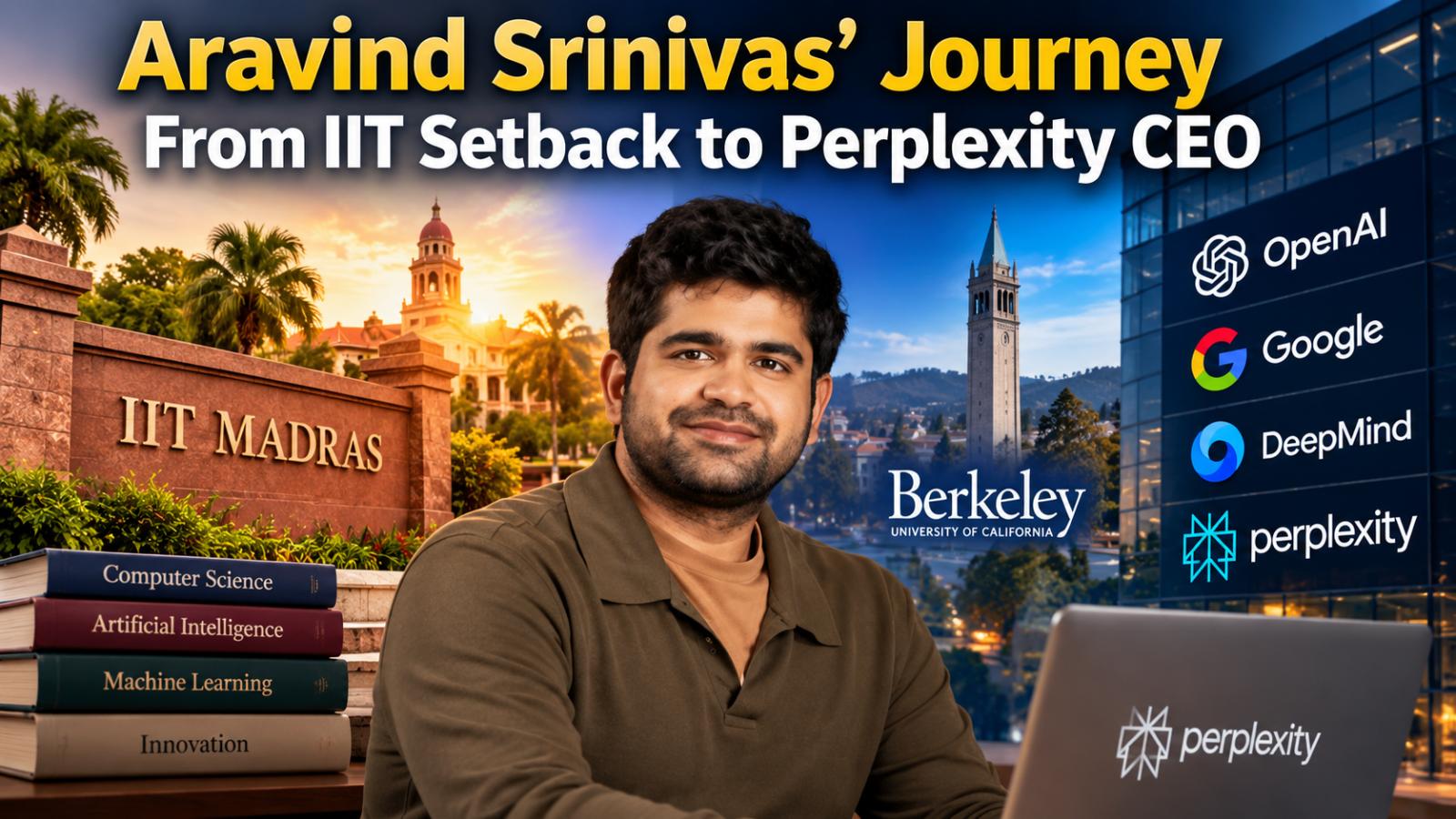
Aravind Srinivas has become one of the most recognised Indian-origin leaders in the global artificial intelligence industry, but his path to the top was far from straightforward.
Growing up in Chennai, Srinivas entered IIT Madras in Electrical Engineering even though Computer Science was his preferred choice. He later tried to change his branch but narrowly missed the required cutoff. Instead of allowing the setback to define his future, he started teaching himself computer science and machine learning.
That decision became an important turning point. Srinivas later applied to MIT for a PhD but was rejected. He eventually joined UC Berkeley, where he entered a much larger AI research ecosystem and gained exposure to some of the organisations and people shaping the modern artificial intelligence industry.
His academic and professional journey later brought him into contact with OpenAI, Google and DeepMind before he moved towards building his own company. These experiences helped shape his ideas not only about AI technology but also about research, education, startups and the importance of asking better questions.
Perplexity AI CEO built his career around curiosity
Srinivas co-founded Perplexity in 2022 with Denis Yarats, Johnny Ho and Andy Konwinski. The company was built around a different approach to internet search: users ask a question, receive a direct answer and can see the sources behind that response.
Srinivas has described Perplexity as more than a traditional search engine. His idea is that an answer should not end a user’s search. Instead, it should encourage the person to ask another question and explore a topic more deeply.
That philosophy connects closely with one of his strongest beliefs about artificial intelligence: as machines become better at producing information, curiosity and judgment may become more valuable human skills.
AI systems can already answer questions, explain complex topics, analyse documents and help with coding. Srinivas argues that the real advantage may increasingly belong to people who know what to ask, how to challenge an answer and how to decide whether information is reliable. His public discussions have repeatedly linked this idea of curiosity with the future of learning and knowledge discovery.
His own career reflects that thinking. Missing his preferred IIT branch, facing rejection from MIT and seeing an earlier startup fail did not end his ambitions. Each setback pushed him towards another path.
AI education in India could shape the country's technology future
Srinivas believes the rise of artificial intelligence could force education systems to rethink what students should learn and how they should be evaluated.
Traditional education often rewards students for remembering information and producing the correct answer in examinations. AI changes that equation because tools can now solve mathematical problems, write essays, explain concepts and retrieve information within seconds.
That could make deeper skills such as judgment, curiosity, problem-solving and critical thinking more important. Instead of only asking whether students know the correct answer, education may increasingly need to examine whether they understand the problem and can use information to reach a meaningful conclusion.
This debate is particularly important for India. The country has a huge engineering talent pool and a technology sector that employs millions of people in software development, IT services and other knowledge-based industries.
As AI becomes capable of handling more routine digital tasks, some jobs may change significantly. Certain tasks could disappear, existing roles may be redesigned and new opportunities may emerge around AI development, verification, strategy and specialised problem-solving.
Srinivas has also highlighted the importance of a culture that encourages people to experiment and take risks. He has spoken positively about the United States as an environment where unconventional ideas can find capital, talent and support, while also arguing that India has the scale and technical talent to become a much bigger player in artificial intelligence.
For India, the challenge is not simply producing more engineers. It is creating an environment where young people are encouraged to question assumptions, build new products and take ambitious risks.
Srinivas’ journey from Chennai and IIT Madras to UC Berkeley and Perplexity shows how unconventional paths can lead to major opportunities. His larger message about the AI era is equally clear: as machines become better at finding answers, people may need to become better at deciding which questions are worth asking.