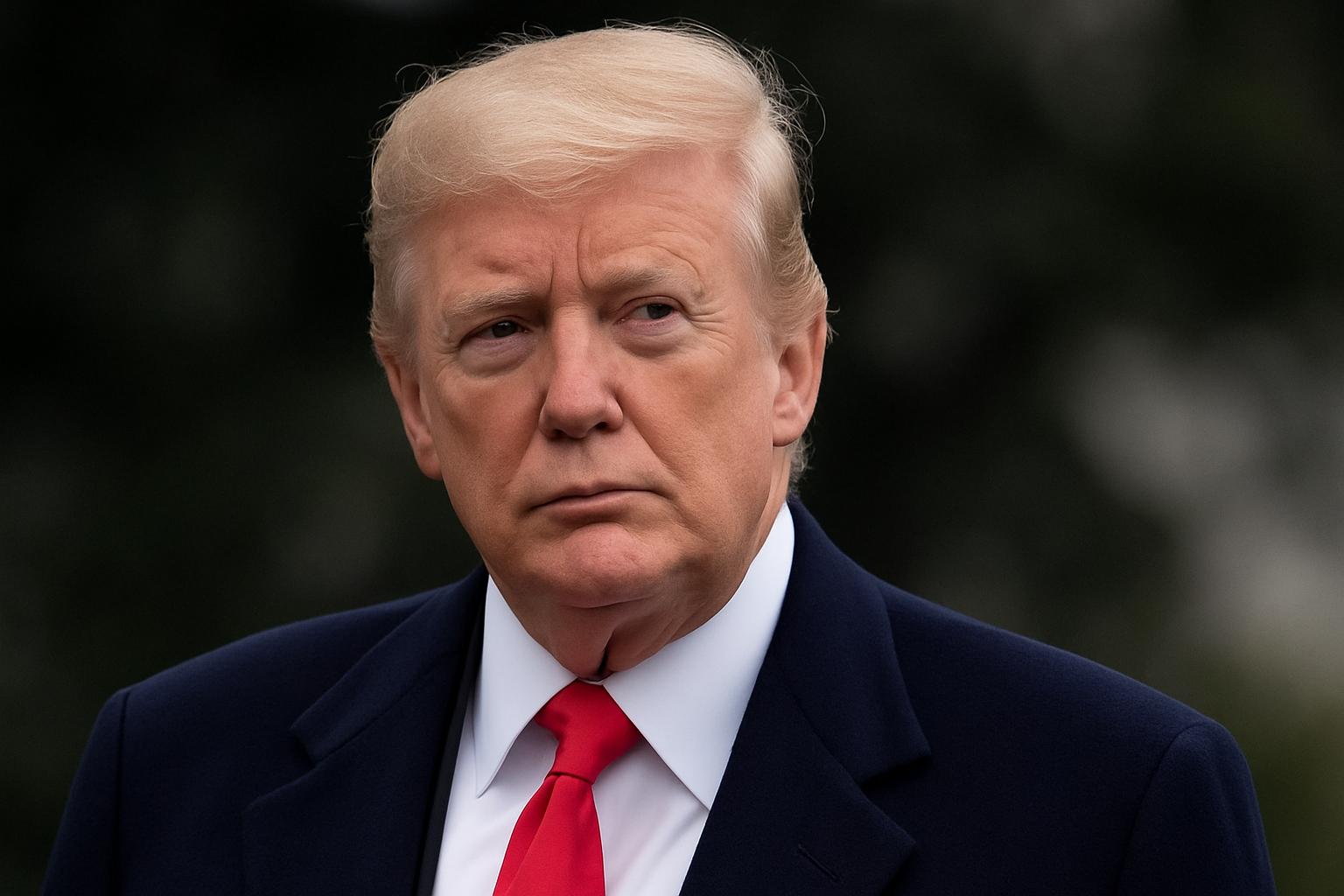
In a notable shift from his previous hardline stance on immigration, United States President Donald Trump appeared to defend the H1-B visa program, acknowledging that the country must rely on skilled talent from abroad to fill crucial workforce gaps. The remarks came during a televised interview on Fox News, where Trump discussed the challenges of maintaining a balance between protecting American jobs and sustaining industries that depend on specialized foreign labor.
When asked whether his administration’s policies would prioritize limiting the H1-B visa program due to concerns over wage suppression for American workers, Trump offered a surprising defense of the program. “I agree, but you do also have to bring in talent,” he said. When the interviewer countered that the United States already has an abundance of skilled workers, the President quickly disagreed, responding, “No, you don’t.”
Expanding on his point, Trump said that not every unemployed American could immediately step into highly technical roles. “You don’t have certain talents. People have to learn. You can’t take people off an unemployment line and say, ‘I’m going to put you into a factory where we’re going to make missiles,’” he explained, emphasizing the need for specialized skills that often come from international experts. His remarks marked a rare moment of support for a visa program that has long been a lifeline for skilled professionals from countries like India.
The comments come just weeks after the administration announced a steep increase in the H1-B visa application fee—raising it to USD 100,000 per applicant. The move sparked widespread concern among expatriate workers and multinational firms that rely heavily on foreign engineers, IT specialists, and researchers. The new fee, introduced as part of broader immigration reforms, was seen as an effort to restrict the flow of foreign professionals into the US labor market.
According to the proclamation issued on September 19, H1-B visa holders and applicants would be required to ensure their employers paid the new fee before being granted entry or reentry into the country. The policy triggered confusion and alarm, particularly among Indian workers who represent the largest share of H1-B recipients. Following public outcry, the White House later clarified that the fee would apply only to new applicants and not to current visa holders.
Trump also referred to a recent Immigration and Customs Enforcement (ICE) operation at a Hyundai facility in Georgia, where authorities detained hundreds of South Korean workers on alleged immigration violations. “They raided because they wanted illegal immigrants out,” Trump said, adding that the workers had been involved in advanced battery production. “Making batteries is very complicated. It’s not an easy thing. Very dangerous, a lot of explosions, a lot of problems. They had like 500 or 600 people, early stages, to make batteries and to teach people how to do it. Well, they wanted them to get out of the country. You’re going to need that,” he remarked.
The September raid led to the detention of more than 300 South Korean nationals, prompting Seoul to launch an investigation into possible human rights violations. South Korean officials later stated that they had not received prior notice of the enforcement action. Interestingly, during his visit to South Korea the following month, Trump expressed disapproval of the raid, saying he was “very much opposed” to the operation, signaling an internal divide within his administration on immigration enforcement.
Trump’s nuanced remarks on the H1-B program underscore a complex tension between his administration’s protectionist economic agenda and the demands of an evolving global economy. While his government has consistently emphasized the importance of prioritizing American workers, business leaders across the technology, defense, and manufacturing sectors have warned that limiting access to global expertise could stifle innovation and slow industrial growth.
The H1-B visa program has historically been a cornerstone of the United States’ effort to attract global talent, particularly in science, technology, engineering, and mathematics (STEM) fields. As the global competition for skilled labor intensifies, Trump’s unexpected endorsement of foreign talent reflects a recognition of the country’s continued dependence on international expertise to maintain its technological and industrial leadership. Whether this signals a broader policy shift remains uncertain, but for now, it offers a rare acknowledgment from the White House of the vital role foreign professionals play in driving the American economy.