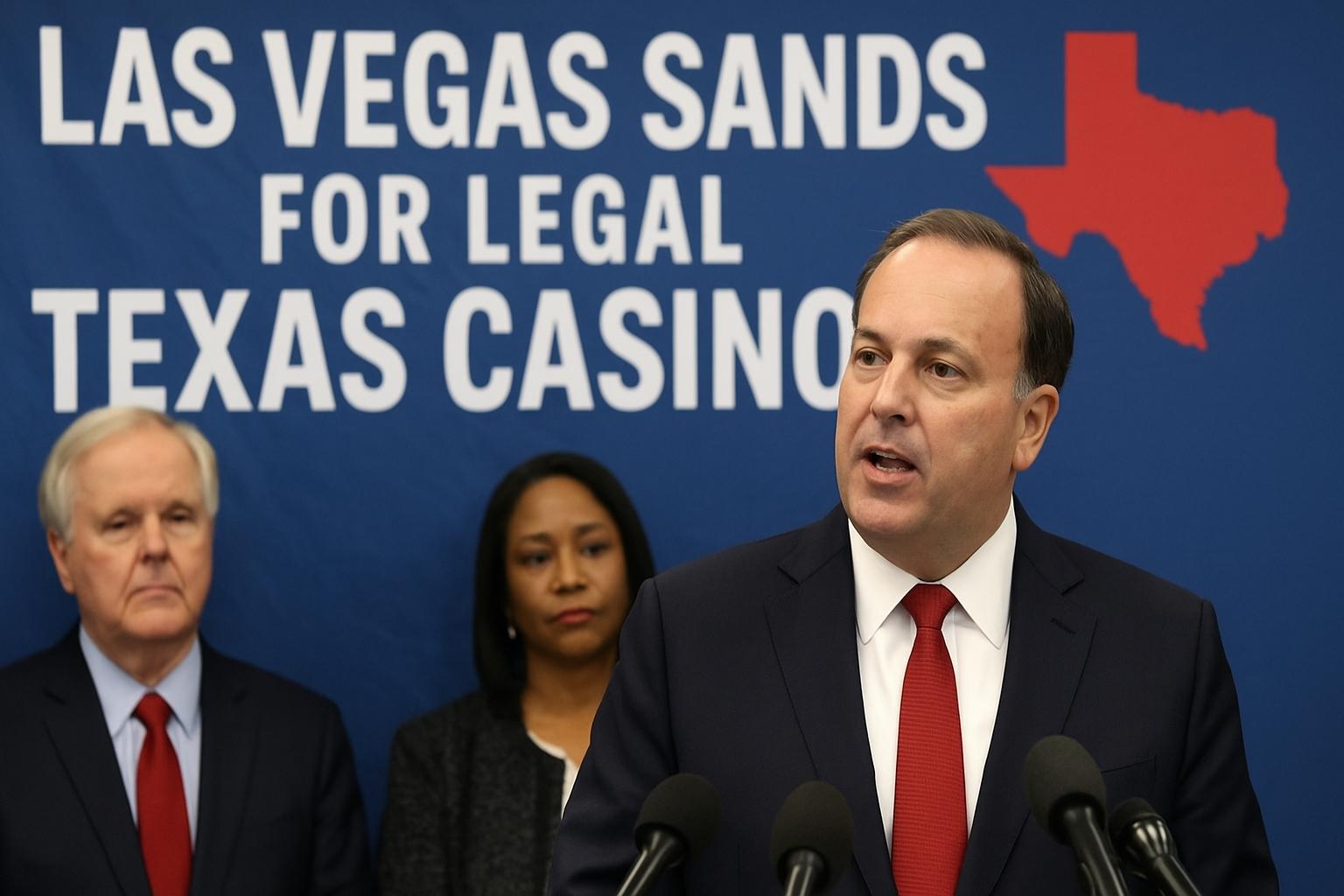
A major political battle is unfolding in Texas as the Las Vegas Sands organization accelerates its long-term campaign to expand legalized gambling in the state. The company, which hopes to build a luxury casino resort in North Texas modeled after its world-renowned Marina Bay Sands property in Singapore, is preparing to invest substantial financial resources into upcoming political contests. Executives say this effort will continue for years as they work to overcome significant legal and political barriers.
The company argues that its proposed destination resort could deliver thousands of jobs and billions in economic activity, echoing the impact of its Singapore development, which employs roughly 12,000 people across its 55-story structure. However, the Texas Constitution currently prohibits casino gaming, meaning any progress will require both legislative and voter approval. To place the question on the statewide ballot, two-thirds of lawmakers in both chambers must support a constitutional amendment, followed by a majority vote from Texans.
Public polling frequently cited by the company suggests that statewide support for legalized casino gaming is strong, with surveys showing a range of 56% to 73% in favor. Andy Abboud, senior vice president for the Las Vegas Sands, has repeatedly emphasized that the company is not asking lawmakers to legalize gambling directly but instead to allow voters to decide. He maintains that Texans want the opportunity to weigh in on the issue and would support casinos if regulations and community protections were clearly defined.
Opposition remains strong among Christian conservative organizations and several Republican lawmakers who warn that expanded gambling could intensify social challenges including addiction, crime, and other vices. Critics argue that regulated gaming industries often struggle to prevent problems such as money laundering, exploitation, and related criminal activity.
Abboud counters that Texas already has what he describes as the world’s largest illegal gaming market, operating without any safeguards. He argues that a regulated, licensed system would allow the state to monitor activity more effectively, enforce strict compliance standards, and fund programs aimed at reducing harm. According to the company, it is prepared to support mandatory contributions for anti-trafficking, anti-money-laundering, and addiction-treatment programs.
Financial documents show the scale of the company’s commitment. In 2021, the Las Vegas Sands employed more than 100 lobbyists in Austin, spending between $5 million and $10 million on advocacy. Over the past two years, its Texas-focused political action committees have donated more than $15 million to candidates across the state and still hold over $16 million in cash for future campaigns. Company officials say this level of investment will become a recurring annual strategy.
Still, not all political bets have paid off. A recent special election in a North Texas Senate district saw the company-backed candidate, John Huffman, place last despite over $3 million spent on his campaign. The result energized opponents of expanded gambling, including Republican State Sen. Bob Hall, who has long argued that gambling brings more harm than benefit. Hall cites past scandals, including corruption uncovered within the Texas Lottery Commission, as evidence that gambling-related oversight is vulnerable to abuse.
Both supporters and opponents acknowledge that the debate is far from over. The legislative fight is expected to stretch across multiple sessions, with the next opportunities arising in 2027 and 2029 if earlier efforts fail. Abboud insists the company is committed for the long term and is prepared to wait as long as necessary. Several key political players, including large donors and statewide leaders, have declined interviews on the matter but remain influential in shaping the outcome.
The upcoming election cycle may prove pivotal. Half of the Texas Senate will be on the ballot, and the Republican primaries next March could determine whether pro-gaming or anti-gaming candidates gain ground. With several incumbents retiring or seeking other offices, the balance of power in the Senate may shift, potentially altering the future of casino legislation in Texas.