- galaxy
- 03 Dec 2025
- #Religion & Spirituality #annamalaiyartemple #thiruvannamalaitemple #arunachaleswarartemple #arunachala #lordshiva #shivatempleindia #tamilnadutemples #thiruvannamalaihistory #karthigaideepam #girivalam #panchabhoothasthalam #agnistemple #vedicspirituality #hinduismguide #templefestivalsindia
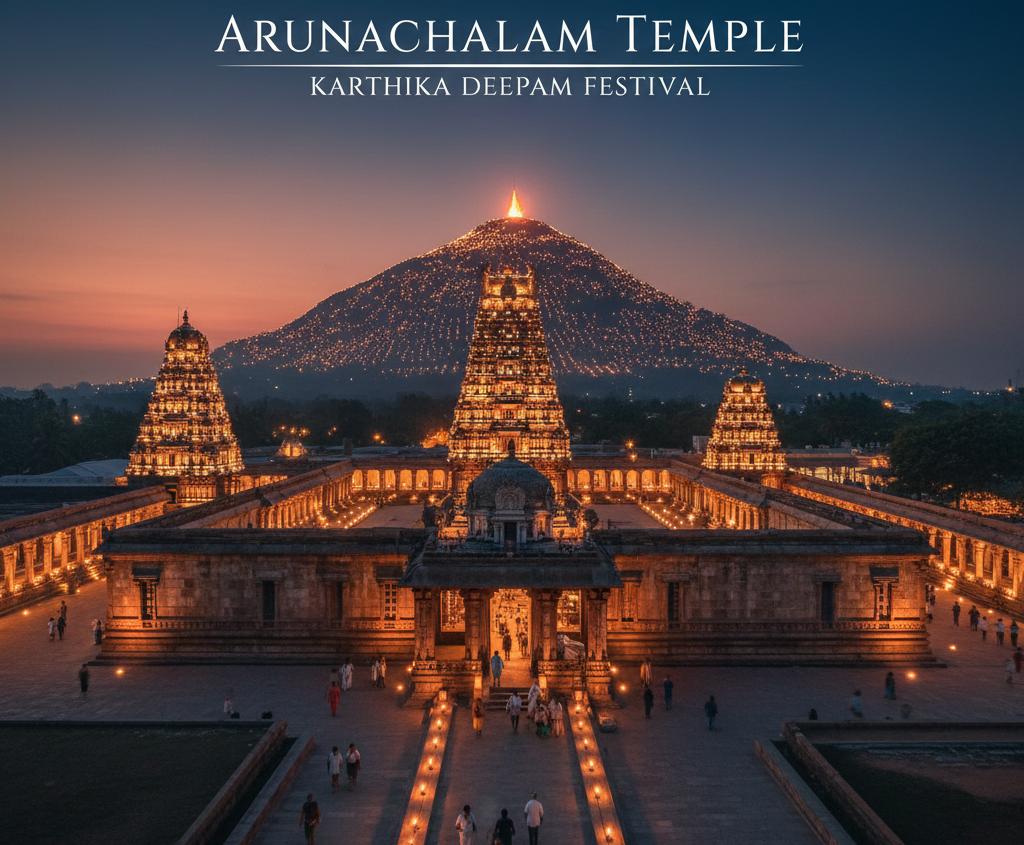
The Thiruvannamalai Annamalaiyar Temple, one of India’s most revered Shiva temples, stands at the foothills of the sacred Arunachala Hill in Tamil Nadu. Known as the temple of fire (Agni) among the five Panch Bhoota Sthalams, it holds deep spiritual significance. Devotees believe that Lord Shiva manifested here as an infinite column of light, symbolizing supreme truth and divine power. Rich in history, the temple has been shaped by the Chola, Pallava, Hoysala, Pandya, and Vijayanagara dynasties. It is spiritually linked to saints such as Ramana Maharshi, who regarded Arunachala Hill as Shiva’s living form radiating silence and wisdom.
Architecturally, the Thiruvannamalai Temple spans 25 acres, featuring nine towering gopurams, including the 217-foot Rajagopuram built by King Krishnadevaraya. Inside the temple, devotees experience strong spiritual vibrations through its five courtyards, sacred tanks, and the main sanctum housing the fiery Shiva Lingam. Worship here is believed to activate Agni energy, strengthen the Sun in one’s horoscope, and support clarity, vitality, and spiritual transformation.
The temple hosts six daily rituals and twelve major festivals each year. The most famous is Karthigai Deepam, when a massive flame is lit atop Arunachala Hill, symbolizing Shiva’s eternal light. Other important observances include Pradosham for karmic cleansing, Girivalam Pournami for spiritual purification, Thiruvoodal for divine love symbolism, and Maha Shivaratri for awakening inner consciousness. Devotees often perform Girivalam, chant sacred Shiva mantras, light ghee lamps, and meditate facing the hill to absorb the temple’s powerful energy.
The Arunachaleswarar Temple is open throughout the year from 5:30 AM to 12:30 PM and 3:30 PM to 9:30 PM. The best time to visit is between October and March or during sacred festivals for a vibrant spiritual experience.