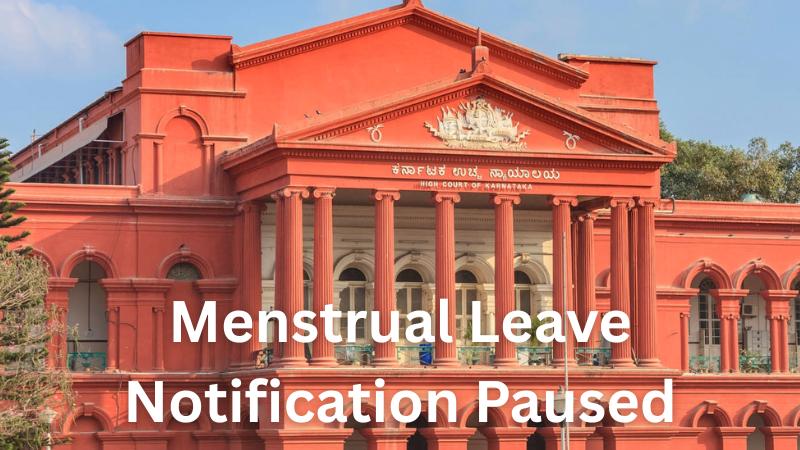
The Karnataka High Court on Tuesday put a temporary halt to the State government's order that mandated one day of paid menstrual leave per month for women employees across industries. The policy, issued through a notification on November 20, extended paid menstrual leave to permanent, contractual and outsourced women workers employed in establishments covered under the Factories Act, the Karnataka Shops and Commercial Establishments Act, the Plantation Labour Act, the Motor Transport Workers Act and the Beedi and Cigar Workers Act. While the initiative was welcomed by many as a progressive step towards menstrual health in the workplace, it soon faced legal challenges from industry bodies.
The interim stay was issued by Justice Jyoti M while hearing a petition filed by the Bengaluru Hotels Association, which questioned the legal authority of the government to enforce such a mandate. A similar petition filed by Avirata AFL Connectivity Systems Limited was also listed for hearing on the same day. The association, representing hotels, restaurants, bakeries, sweet shops and ice cream parlours with over 1,500 members, argued that leave provisions for employees already exist under various labour laws, and an additional mandatory leave would increase financial burden on businesses. They further stated that the notification lacked clarity on the power through which the government issued it and claimed it should have considered stakeholders before announcing such a policy.
After initial arguments from the association’s counsel Prashant BK, the court sought a detailed response from the State and put the policy on hold until further orders. The bench clarified that the government may request modifications to the interim stay if deemed necessary. The petitioners stated that such a rule should be left to the discretion of individual companies under their internal human resource policies rather than being enforced through an executive order. They highlighted that mandatory menstrual leave could lead to potential administrative challenges and additional expenses for employers, adding that it could have serious civil consequences if implemented without proper consultation.
The debate around menstrual leave policies continues in India, with supporters believing it improves workplace inclusion and health comfort for women, while business groups express concern over operational viability. The High Court’s stay has put the policy on pause, and further hearings will determine whether the notification will be upheld, modified or struck down. Until then, the future of menstrual leave implementation in Karnataka remains under judicial consideration.