Satheesan Uses Full Name Amid Debate
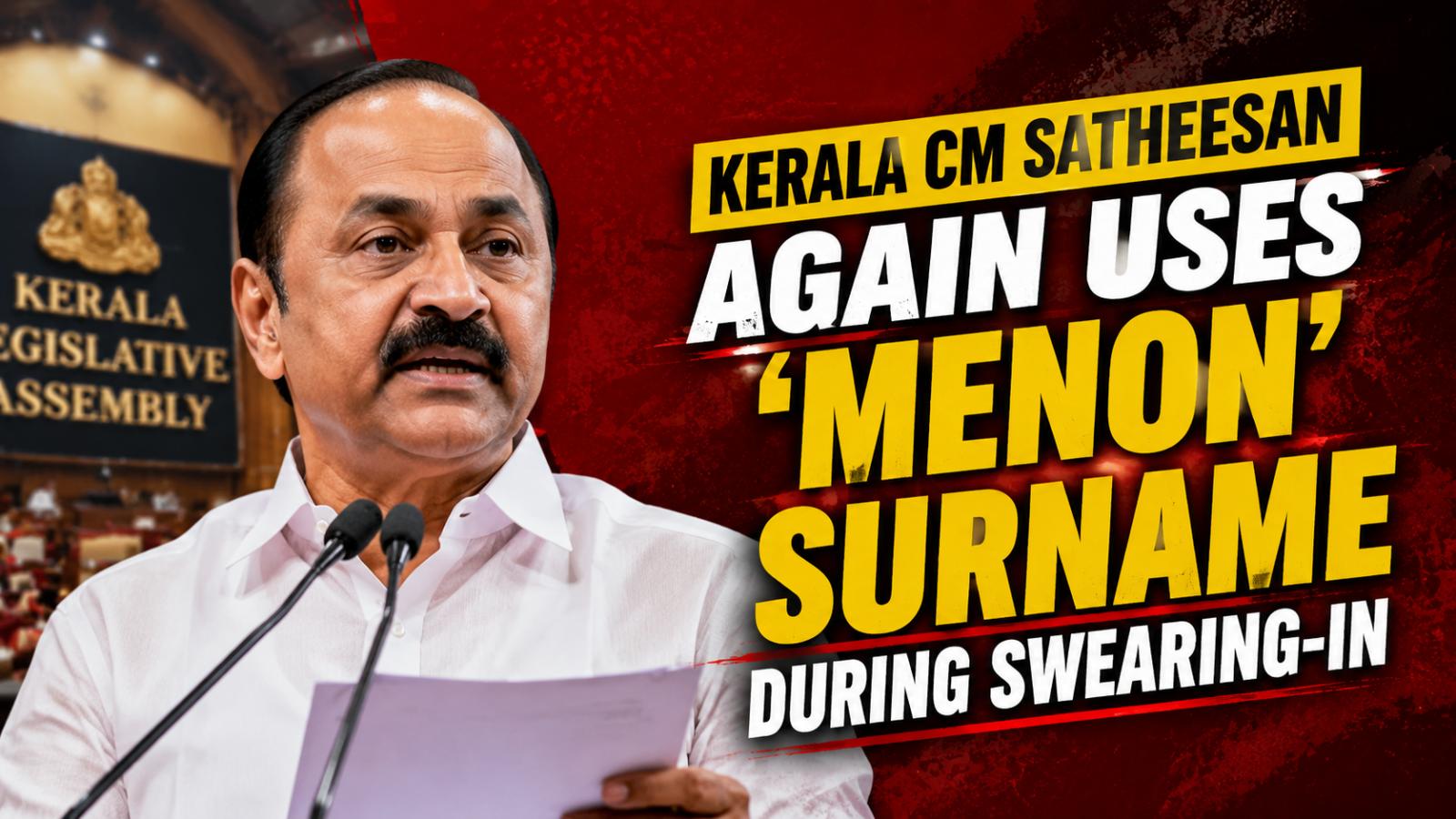
Kerala Chief Minister V D Satheesan made headlines once again when he took oath as an MLA of the 16th state Legislative Assembly on Thursday by using his full name, Vadasseri Damodara Menon Satheesan. This comes just days after his swearing-in as chief minister, where he similarly read out his entire name, sparking controversy over the inclusion of the caste-based surname "Menon." Critics on social media and some Congress leaders questioned the necessity of mentioning his caste, interpreting it as a political statement rather than a personal choice.
Satheesan defended his decision, clarifying that he was only acknowledging his father's name, a gesture he considers respectful. He emphasized that he saw no issue with stating his father’s name during such formal ceremonies and added that he would have liked to mention his mother as well but there was no scope to do so. His stance highlights the personal and cultural considerations politicians navigate when blending family heritage with public office.
Historical Context and Public Reaction
The controversy draws parallels to Satheesan’s 2021 legislative swearing-in, during which he had used only "V D Satheesan." The sudden shift to including his full name reignited discussions on caste identifiers in Kerala politics. Many social media users compared the two events, prompting debates about identity, political symbolism, and the importance of acknowledging familial lineage in official contexts.
Political analysts note that the situation underscores the delicate balance elected officials maintain between personal heritage and public perception. While some supporters argue that using the full name honors family tradition, critics believe it unnecessarily invokes caste-based considerations in political discourse. The event has become a focal point for discussions on tradition, identity, and representation in the state’s political sphere.
The swearing-in ceremony has, therefore, not only marked Satheesan’s formal assumption of legislative duties but also served as a catalyst for broader conversation about the intersection of personal identity, caste, and political optics in Kerala governance.