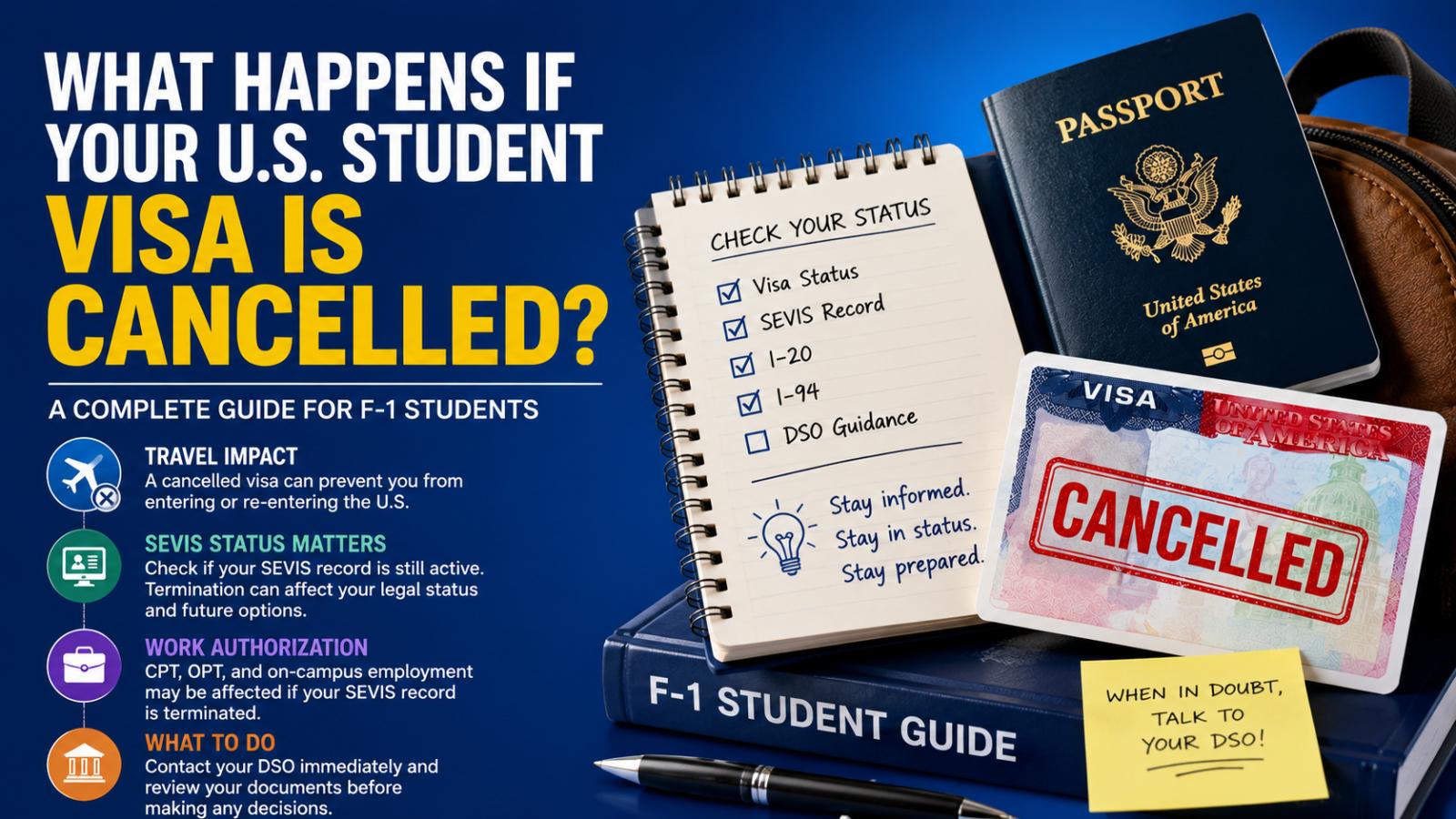
A cancelled U.S. student visa can create serious concerns for international students, but it does not always mean the same thing as losing F-1 status inside the United States.
The first question is whether only the visa stamp was cancelled or whether the student’s SEVIS record was also terminated. That difference can affect travel, study status, work authorization and future re-entry.
For the newest enforcement changes, read our latest report on U.S. student visa cancellations in 2026.
Visa Cancellation Mainly Affects Travel
A U.S. visa stamp is used to request entry into the United States. If an F-1 visa is cancelled or revoked, the student generally cannot use that visa to enter or re-enter the country.
For students already inside the U.S., the situation depends on whether they are still maintaining F-1 status and whether their SEVIS record remains active.
Why SEVIS Status Matters More
SEVIS is the system used to track international students and exchange visitors. If a student’s SEVIS record is terminated, the impact can be more serious than a cancelled visa stamp.
DHS student guidance says a terminated SEVIS record can affect on-campus and off-campus employment authorization. It may also prevent a student from re-entering the United States using that terminated record.
That means CPT, OPT, STEM OPT and future travel plans may be affected if the student’s SEVIS record is no longer active.
What Should Students Do First?
Students who receive a visa cancellation or revocation notice should not panic or make travel plans immediately. They should first contact their university Designated School Official and confirm whether their SEVIS record is still active.
They should also review their I-20, I-94, passport, visa notice and any emails from their school or U.S. government agencies.
Can F-1 Status Be Fixed?
In some cases, a student may be able to request reinstatement of F-1 status through USCIS. USCIS guidance says reinstatement is generally requested through Form I-539, along with a properly completed Form I-20 recommended by the school DSO.
In other cases, the student may need a new I-20, a new SEVIS record, departure from the U.S. or a new visa application. The correct step depends on the reason for cancellation or termination.
Students facing an urgent visa issue can also read our practical checklist on steps to take after an F-1 visa cancellation.
Why This Matters
A cancelled student visa can affect more than travel. It can create problems for enrollment, internships, work authorization and future immigration records.
For the latest enforcement developments, read our update on U.S. student visa cancellations in 2026. Students facing an actual cancellation or SEVIS termination should speak with their school DSO and a qualified immigration attorney before taking action.