Melina Trump criticizes Jimmy Kimmel over a controversial joke, calling it harmful rhetoric and reigniting debate over satire, media responsibility, and free speech.
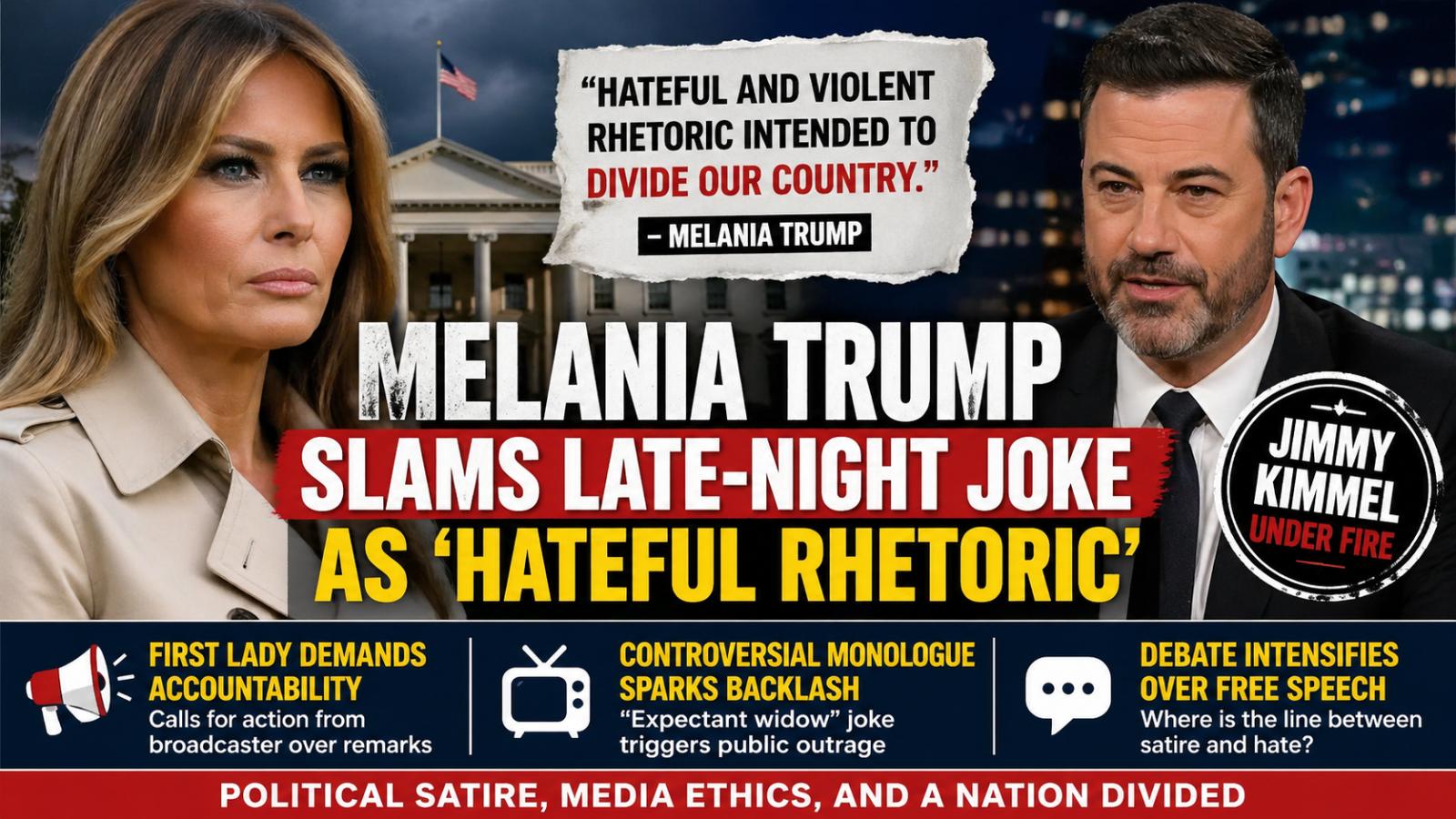
The controversy surrounding remarks made by a late-night television host has intensified in the United States, drawing a sharp response from First Lady Melania Trump and renewing scrutiny of political satire in mainstream entertainment. The issue emerged after the host delivered a monologue during a parody segment modeled on a White House Correspondents’ Dinner-style event, where he referred to the First Lady using the phrase “expectant widow.” The comment quickly circulated online, prompting widespread debate across political and media circles.
In a strongly worded statement shared on social media, Melania Trump condemned the remarks, describing them as “hateful and violent rhetoric intended to divide our country.” She argued that such commentary crosses the line between humor and harm, adding that monologues targeting her family contribute to what she characterized as a broader deterioration in political discourse. The First Lady further called for action from the broadcaster airing the program, suggesting that individuals in influential media roles should be held accountable for content delivered into American homes.
The situation has drawn additional attention due to its timing, as the remarks were made shortly before a security incident at a public event attended by the First Lady and President Donald Trump. While no direct connection has been established between the two developments, the proximity has heightened sensitivities around language perceived as hostile or inflammatory. Critics of the host argue that the joke was inappropriate given the current climate, while supporters maintain that satire remains a protected and longstanding feature of American television.
The episode underscores ongoing tensions in the United States over the boundaries of free speech, particularly in formats that blend comedy with political commentary. Media analysts note that late-night programming has increasingly become a platform for political expression, often reflecting and amplifying partisan divides. As calls for accountability continue, the response from broadcasters and industry stakeholders may shape how similar controversies are addressed going forward.