Edit

Trump IRS Lawsuit Settlement Explained: DOJ Fund Faces Challenge

Trump IRS Lawsuit Settlement Explained: DOJ Fund Faces Challenge

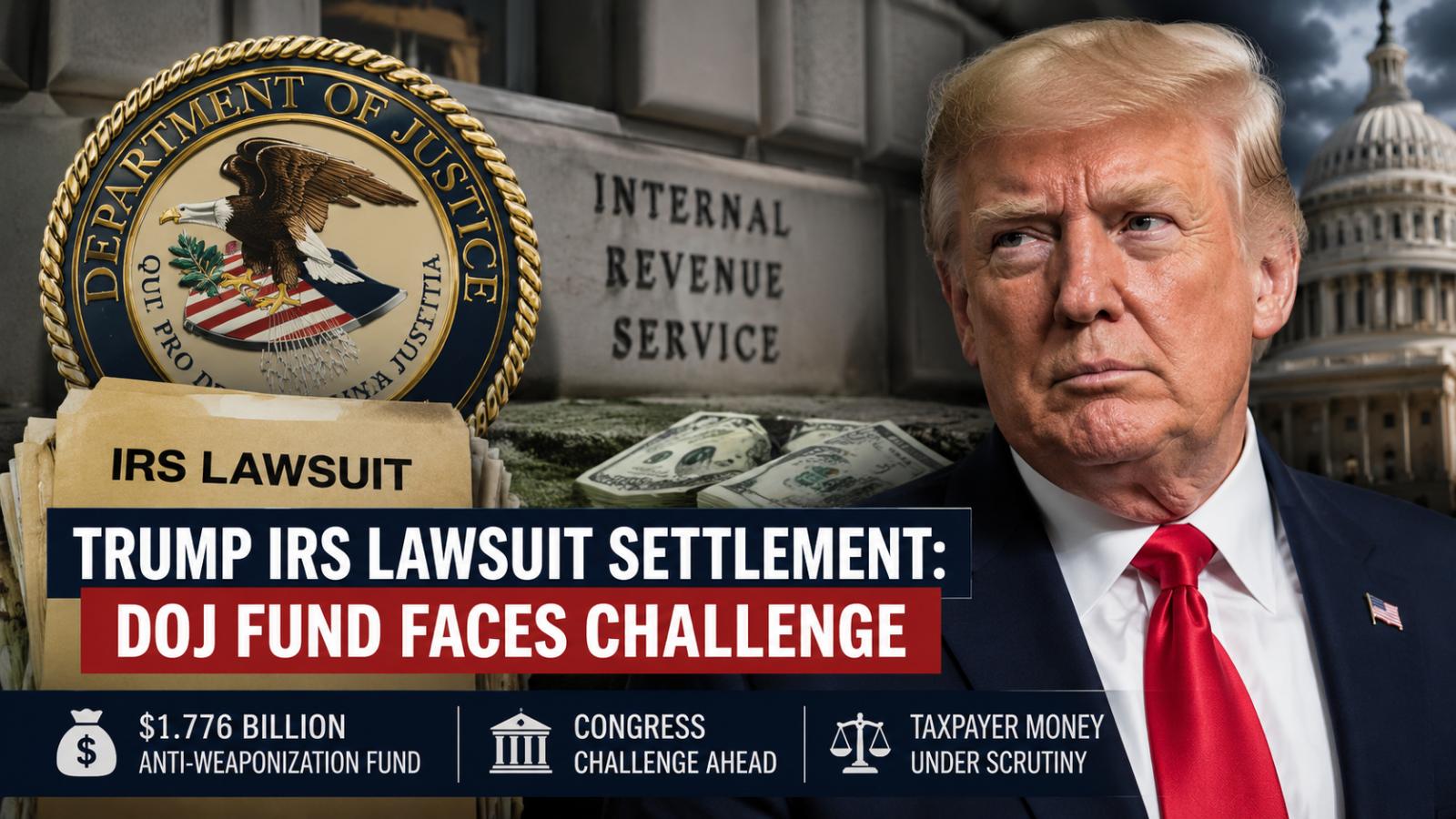
The Trump IRS lawsuit settlement is drawing new scrutiny after the Justice Department announced a $1.776 billion DOJ Anti-Weaponization Fund on Monday, May 18, 2026, as part of an agreement resolving President Donald Trump’s lawsuit over leaked tax return information.

The settlement ends Trump’s $10 billion lawsuit against the Internal Revenue Service, which was filed after his confidential tax records were leaked. Under the agreement, Trump and other plaintiffs are expected to receive a formal apology but no monetary damages.

What the DOJ Anti-Weaponization Fund Means

The DOJ Anti-Weaponization Fund is designed to review claims from people who say they were unfairly targeted by politically motivated government investigations or prosecutions. The fund could provide compensation or formal apologies to approved claimants.

The proposal has quickly become a major political and legal issue because the money would come through a federal judgment fund, raising questions over taxpayer money, congressional approval and Justice Department oversight.

Why the Trump IRS Lawsuit Settlement Faces a Congress Challenge

Democrats argue that the Trump IRS lawsuit settlement could allow taxpayer money to benefit political allies of the president. Representative Jamie Raskin, the top Democrat on the House Judiciary Committee, has criticized the plan and argued that Congress did not authorize the fund.

The expected Congress challenge to the Trump settlement fund may focus on whether the executive branch can create such a large compensation program through a lawsuit settlement without direct approval from lawmakers.

Trump Tax Return Leak Remains at the Center

The original case came from the Trump tax return leak, after confidential IRS information was disclosed and later reported by media outlets. A former IRS contractor, Charles Littlejohn, was prosecuted and sentenced to five years in prison for leaking tax records.

The legal fight is now moving beyond the tax leak itself. The larger dispute is over whether the Justice Department can use settlement power to create a politically sensitive compensation fund involving claims of government “weaponization.”

For US readers, the case matters because it could shape future limits on executive authority, federal settlements and how taxpayer-funded legal claims are handled when a sitting president is personally connected to the dispute.

What is your response?

joyful Joyful 0%
cool Cool 0%
thrilled Thrilled 0%
upset Upset 0%
unhappy Unhappy 0%
AD
AD