- devara
- 21 Aug 2025
- #Political News #Constitution Amendment Bill #BJP #Opposition #Amit Shah #Lok Sabha #Rajya Sabha #corruption in politics #criminality in politics #Jailed Chief Ministers #political controversy #federal structure #political debate #Article 75 #Article 164 #power struggle #governance
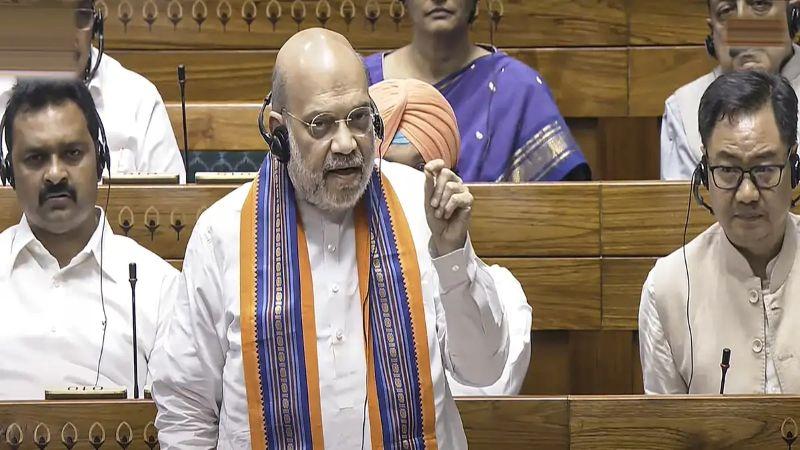
In a move that has ignited a political storm in India, Union Home Minister Amit Shah introduced the Constitution (130th Amendment) Bill in the Lok Sabha, which has sparked widespread controversy and heated debates. The Bill proposes that any Prime Minister, Chief Minister, or minister who is arrested and remains in custody for more than 30 days due to charges carrying a jail term of five years or more should be removed from office. This legislation has led to strong protests from the Opposition, who claim it is an attempt by the ruling Bharatiya Janata Party (BJP) to destabilize state governments led by non-BJP parties. They accuse the government of misusing central agencies to frame opposition leaders and put them behind bars, further deepening the political divide.
The government, however, has defended the Bill, stating that it aims to elevate the moral standards of political leadership and uphold integrity in governance. The Bill's supporters argue that it will prevent elected officials from holding office while under serious criminal charges, thus ensuring that those in power remain accountable to the public. According to the government's official statement, this move is in line with the need to maintain the moral compass of the nation, as individuals holding such high offices should be above any suspicion.
However, the introduction of such a Bill is not without its complexities. A Constitutional amendment requires a two-thirds majority in both Houses of Parliament, and the current political landscape makes the passage of this Bill unlikely without the support of the Opposition. The National Democratic Alliance (NDA), led by the BJP, currently lacks the numbers to pass this Bill without crucial backing from a major opposition party like Congress. Given the current political situation, it is clear that this is a battle for perception, with the government seeking to cast the Opposition in a negative light by portraying them as defenders of corrupt political figures who refuse to step down when arrested.
The Bill aims to amend Articles 75, 164, and 239AA of the Indian Constitution, which govern the appointment and removal of ministers, including the Prime Minister and Chief Ministers. Under the proposed law, any elected official arrested and detained for over 30 days, facing serious criminal charges, could be removed from office based on the mere allegation, without requiring a conviction. While this provision is seen by some as a means of ensuring integrity in politics, it raises questions about the potential misuse of such powers, particularly when political rivals are involved.
The Opposition, led by parties such as the Congress, Trinamool Congress, and Shiv Sena, has vehemently opposed the Bill, accusing the government of attempting to turn India into a "police state" by allowing central agencies to target and imprison opposition leaders. Senior Congress leader Priyanka Gandhi Vadra called the Bill "draconian" and argued that it is a mere ploy to distract the public from the BJP's alleged failures. The Trinamool Congress and Shiv Sena have voiced similar concerns, claiming that the legislation could lead the country toward dictatorship, undermining democracy and individual freedoms.
The timing of the Bill’s introduction is particularly interesting, as it was tabled just a day before the Monsoon Session of Parliament was to end. The government’s decision to refer the Bill to a Joint Parliamentary Committee, which will consist of members from both Houses, further suggests that the government may not be in a rush to pass the legislation immediately. This move could be seen as a way to keep the Bill alive in the public and political discourse while waiting for an opportunity to gather more support.
Despite the Opposition's vocal objections, the government appears confident in its stance. According to sources within the government, the primary objective of the Bill is to highlight the issue of corruption in politics. The legislation came on the heels of a political controversy in Delhi involving Chief Minister Arvind Kejriwal, who faced calls to resign after being arrested. The government argues that there is no clear provision in the Constitution to address such scenarios, and thus, this amendment is needed to clarify the matter.
While the Bill faces significant opposition and constitutional challenges, it could have profound implications for India’s political landscape. If passed, the legislation could reshape the way political leaders are held accountable and the way state and central governments interact. However, with the potential for a lengthy legal battle and the need for approval from a majority of states, the Bill’s future remains uncertain.