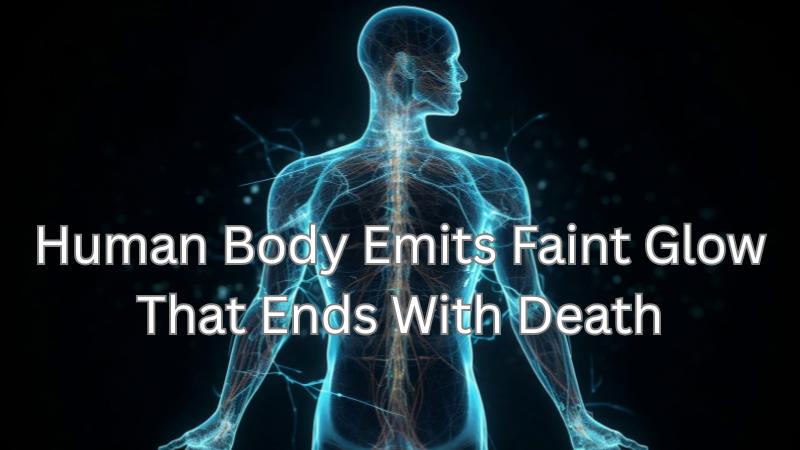
A recent scientific breakthrough has revealed that the human body emits a faint glow, a phenomenon that vanishes once life ends. This glow, described as ultraweak photon emission or biophoton emission, involves faint particles of light generated by living cells. Researchers from the University of Calgary and the National Research Council of Canada reported the findings in The Journal of Physical Chemistry Letters, showing that humans, mice, and even plants radiate a subtle light while alive. Once life stops, this light disappears, suggesting that the glow is deeply tied to biological activity.
Biophotons are produced during normal metabolic processes, particularly those involving reactive oxygen species. These photons cover wavelengths from 200 to 1,000 nanometers, far too weak for human eyes to see but detectable with advanced tools such as electron-multiplying charge-coupled device cameras. While earlier studies had noted emissions in isolated tissues like cow heart cells, this new study was one of the first to capture and compare emissions across entire organisms, both alive and dead.
The researchers conducted their tests using four mice and leaves from thale cress and dwarf umbrella tree plants. The animals were placed in dark boxes and imaged while alive for one hour, then euthanised and imaged again for an hour under the same temperature conditions to remove heat effects. The study found a clear decline in photon emissions after death, strongly linking the glow to ongoing biological processes. Plants were also tested under stress, such as physical cuts and chemical exposure. Injured areas emitted brighter light compared to healthy areas, an effect lasting for 16 hours.
The research suggests that reactive oxygen species are the main contributors to biophoton emissions. When molecules such as hydrogen peroxide cause reactions in fats and proteins, electrons release energetic photons as they stabilise. This glow could provide valuable information about the health of cells, potentially allowing doctors to assess tissue stress or early disease symptoms in a non-invasive way. It could also help farmers monitor crop health under stress from toxins or pathogens. While this technology is still far from practical everyday use due to the difficulty of detecting such weak light, it opens a fascinating window into life itself. The discovery challenges traditional perceptions of life energy and may inspire future applications in medicine and agriculture.