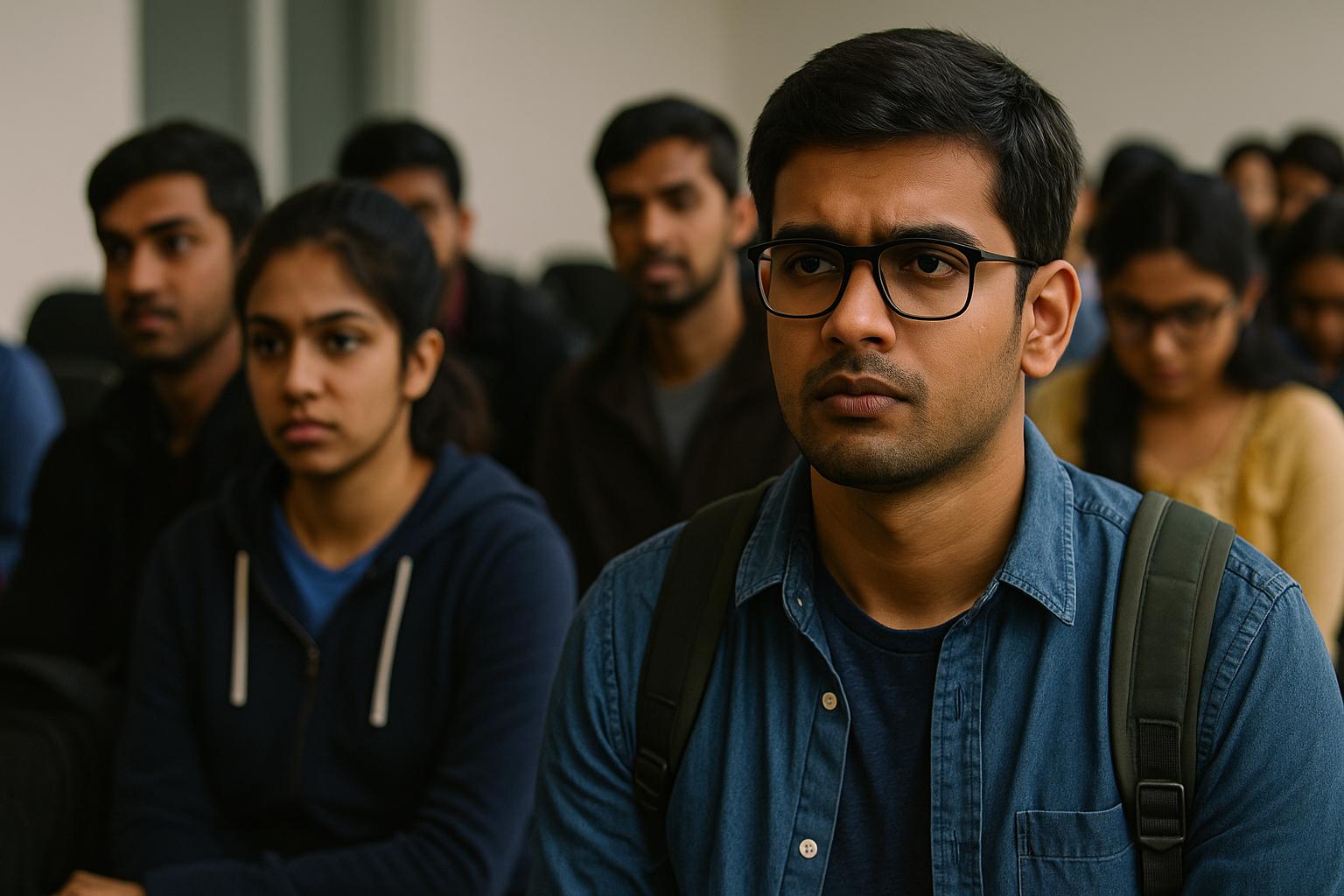
Thousands of Indian students studying in the United States are facing growing uncertainty over their post-graduation career prospects as new immigration policies and enforcement actions threaten the stability of the Optional Practical Training (OPT) and H-1B visa systems. The OPT program has long served as a bridge for international students transitioning from study to work, but recent developments suggest that this once-reliable path may soon become more complex and costly.
The anxiety intensified when a recent post on Reddit described how an Indian student’s OPT record was abruptly terminated after their employer withdrew an H-1B petition. The student, whose work authorization was tied to the transition from F-1 to H-1B status, said their SEVIS record was automatically cancelled on October 1—the date the H-1B was due to take effect. The sudden termination left the student “out of status” until the U.S. Citizenship and Immigration Services (USCIS) formally processed the withdrawal, allowing their university to correct the record.
This case underscores a troubling reality for many international graduates: the U.S. visa system’s reliance on tightly interlinked databases means that even a minor delay or administrative change can instantly disrupt legal status. USCIS processes visa petitions and employer withdrawals that directly affect SEVIS, the Student and Exchange Visitor Information System, often triggering unintended consequences.
The OPT program allows international students on F-1 visas to work in the United States for up to 12 months after graduation—extended by 24 months for STEM graduates. For Indian students, who make up the largest share of international enrollees in U.S. universities, OPT serves as the crucial first step toward securing an H-1B work visa and longer-term employment. However, the introduction of new fees and proposed reforms is quickly eroding that safety net.
A recent policy has shocked employers and foreign workers alike by imposing a one-time $100,000 fee on new H-1B petitions filed after September 21, 2025. While some exemptions may apply, the steep fee has already made many companies reconsider sponsoring international talent. The Department of Homeland Security (DHS) has also proposed tightening exemptions, third-party placements, and eligibility criteria, which could further limit opportunities for students completing their OPT periods.
Several bills in Congress are also threatening to change the financial appeal of hiring OPT participants. Proposals such as the OPT Fair Tax Act and the DIGNITY Act of 2025 aim to end the payroll tax exemption for OPT workers and their employers. If enacted, both parties would have to pay Social Security and Medicare taxes—around 15.3% combined—significantly reducing take-home pay for students and increasing costs for businesses.
In addition to financial pressures, enforcement has become noticeably stricter. Immigration and Customs Enforcement (ICE) and the Student and Exchange Visitor Program (SEVP) have issued warning letters to thousands of students flagged for employment irregularities. Reports suggest that nearly 69,000 Indian students were affected by a recent ICE review threatening SEVIS termination for alleged violations. Meanwhile, USCIS has expanded its Administrative Site Visit and Verification Program (ASVVP), conducting surprise inspections at workplaces to verify compliance with training plans.
Such heightened scrutiny has created an atmosphere of fear and uncertainty for students who depend on lawful employment to maintain their immigration status. Experts say that resolving issues like SEVIS terminations now requires faster coordination among universities, employers, and USCIS. In most cases, a Designated School Official (DSO) must request data corrections once a written withdrawal notice is received from USCIS. If that fails, students may have to file for reinstatement under federal regulations or exit and re-enter on a new F-1 visa.
For Indian students, the implications reach beyond individual cases. The combined effect of higher fees, stricter oversight, and potential tax liabilities threatens to make U.S. study less attractive. Universities could see a decline in international enrollments if students opt for alternative destinations such as Canada, Germany, or Australia, where post-study work pathways are viewed as more stable and predictable.
The shift reflects a broader political climate in Washington, where immigration and labor policies have become increasingly contentious. What was once a straightforward transition from student status to skilled employment has turned into a complex legal maze requiring expert guidance and meticulous compliance.
For students already navigating OPT, the advice from legal experts remains practical: stay in close contact with your DSO, document every aspect of your employment, and seek immediate legal assistance if any changes occur with your visa or employer.
The American dream of studying and building a career in the United States remains possible—but it now comes with rising costs, greater bureaucracy, and a growing sense of uncertainty about what the next policy shift might bring.