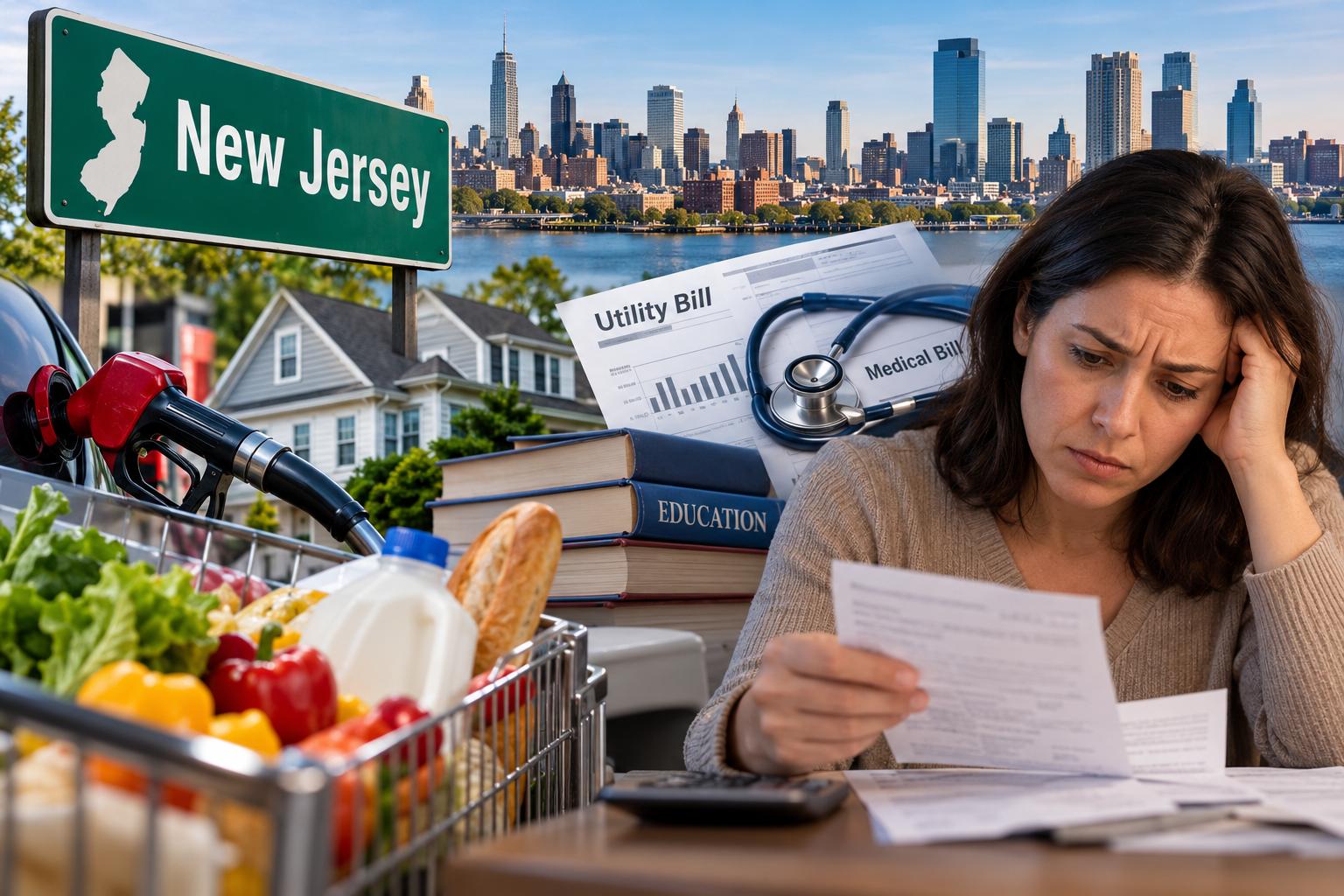
The New Jersey affordability crisis is putting greater pressure on household budgets, with a Rutgers-Eagleton poll showing increased difficulty paying for transportation, groceries, health care, housing and education.
New Jersey residents are reporting growing difficulty paying for several major household expenses, even as the overall share struggling with basic necessities has remained relatively stable, according to a Rutgers-Eagleton poll.
Transportation and housing costs pressure households
New Jersey affordability snapshot
New Jersey residents are reporting financial pressure across several everyday expenses, including transportation, housing, groceries, utilities, health care and education. Lower-income households reported some of the greatest difficulty, according to the Rutgers-Eagleton poll.
Two-thirds of residents said gasoline and transportation costs were difficult to afford, including 34% who described them as very difficult.
Housing pressure also increased. The share of residents who said housing was very difficult to afford rose four percentage points compared with the previous survey in March.
About six in 10 respondents reported difficulty paying for health care, utilities and groceries, showing that affordability problems extend across several essential household expenses.
Groceries, health care and education become harder to afford
Compared with the March survey, the share calling expenses “very difficult” rose 10 percentage points for both education and transportation.
The figure increased six points for groceries, five points for health care, four points for housing and two points for utilities. The increases involving education, transportation, groceries and health care were statistically significant.
New Jersey economy receives negative ratings
Economic pessimism remains widespread. Eight in 10 respondents rated the national economy negatively, while more than three-quarters expressed a negative view of New Jersey’s economy.
Thirty-five percent described the state economy as poor, compared with 18% who rated it good. The proportion giving the state economy a poor rating increased five percentage points from March.
Views of the national economy varied politically, with 91% of Democrats and 85% of independents rating it negatively, compared with 55% of Republicans.
Lower-income residents face greater affordability strain
Residents earning $50,000 or less reported some of the greatest financial pressure. Among this group, 83% said housing and groceries were difficult to afford, while 84% reported difficulty with utilities.
Among households earning less than $100,000, 82% said child care was difficult to afford.
Black and Hispanic residents were more likely than white residents to report affordability difficulties, while adults 65 and older generally reported fewer challenges.
The survey included 1,004 adults and was conducted from September 24 through September 27 through the Rutgers-Eagleton/SSRS Garden State Panel. The poll has a margin of error of plus or minus 4.1 percentage points.