A new pilot program by Chicago’s commuter rail system, Metra, is set to change how passengers present tickets at select downtown stations, marking a shift in boarding procedures aimed at improving efficiency. The initiative began after the morning rush hour on Monday, though officials did not specify the exact start date in the announcement.
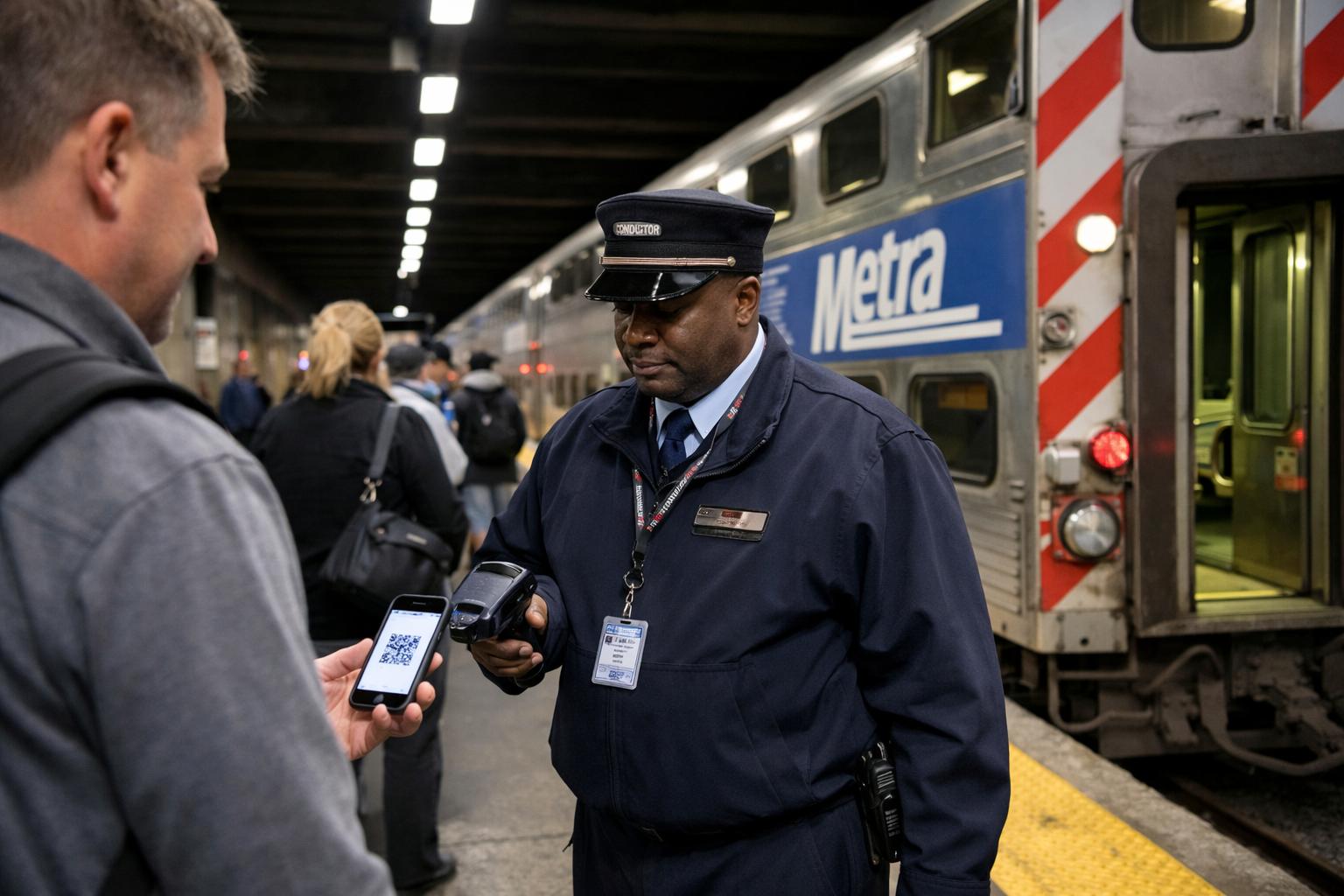
Under the pilot, passengers traveling during off-peak hours at Millennium Station, Union Station, and Ogilvie Transportation Center will be required to display their tickets before boarding. Riders must either open the Ventra app or present a paper ticket to a conductor stationed on the platform. This represents a departure from Metra’s traditional system, where conductors typically verify tickets after passengers have already boarded the train.
The program is being tested outside of peak commuting periods to minimize disruptions and evaluate operational impacts. Officials indicated that regular procedures during morning and evening rush hours will remain unchanged for now, allowing commuters to continue their usual routines without adjustment.
The pilot also introduces the use of handheld scanning devices, enabling conductors to scan QR codes on digital or printed tickets at train doors. According to Metra, the trial is designed to assess the speed, functionality, and durability of these devices in a real-world environment. The shift toward pre-boarding validation aligns Metra more closely with other transit systems that require proof of fare before entry.
Passengers who typically purchase tickets onboard trains will need to adjust, as conductors will no longer sell tickets during this pilot at participating stations. Instead, riders must obtain tickets in advance through station kiosks or the Ventra app.
While the duration of the pilot has not been announced, the effort is also expected to inform broader regional transit coordination. The program may support integration goals of the Northern Illinois Transit Authority, a newly established body created to unify operations across Metra, CTA, and Pace under a statewide transit initiative.
Under the pilot, passengers traveling during off-peak hours at Millennium Station, Union Station, and Ogilvie Transportation Center will be required to display their tickets before boarding. Riders must either open the Ventra app or present a paper ticket to a conductor stationed on the platform. This represents a departure from Metra’s traditional system, where conductors typically verify tickets after passengers have already boarded the train.
The program is being tested outside of peak commuting periods to minimize disruptions and evaluate operational impacts. Officials indicated that regular procedures during morning and evening rush hours will remain unchanged for now, allowing commuters to continue their usual routines without adjustment.
The pilot also introduces the use of handheld scanning devices, enabling conductors to scan QR codes on digital or printed tickets at train doors. According to Metra, the trial is designed to assess the speed, functionality, and durability of these devices in a real-world environment. The shift toward pre-boarding validation aligns Metra more closely with other transit systems that require proof of fare before entry.
Passengers who typically purchase tickets onboard trains will need to adjust, as conductors will no longer sell tickets during this pilot at participating stations. Instead, riders must obtain tickets in advance through station kiosks or the Ventra app.
While the duration of the pilot has not been announced, the effort is also expected to inform broader regional transit coordination. The program may support integration goals of the Northern Illinois Transit Authority, a newly established body created to unify operations across Metra, CTA, and Pace under a statewide transit initiative.