The United States has officially ended production of the one-cent coin, closing the chapter on more than two centuries of penny circulation. The decision marks the first time since 1793 that the US Mint will no longer manufacture the nation’s lowest-value currency, and it comes after years of financial losses tied to the cost of producing each coin. The final penny was struck on November 12 at the Philadelphia Mint by US Treasurer Brandon Beach, symbolically concluding 232 years of continuous minting.
The decision to end the penny was driven entirely by cost. According to the US Mint’s 2024 annual cost report, it now requires 3.69 cents in raw materials, labor, shipping, and distribution to produce a coin worth only one cent. This imbalance first emerged in 2006, and the gap has widened every year since. Rising metal prices, transportation expenses, and long-term inflation have made the penny a loss-making part of US currency for almost 20 years. The last time the Mint made a penny for less than its own face value was in 2005, when manufacturing costs were just under one cent per unit.
The Trump administration approved the minting halt as part of a broader efficiency measure, concluding that maintaining a coin that costs more than it is worth no longer made economic sense. For decades, officials and economists have debated whether eliminating the penny would disrupt transactions, but digital payments and rounding policies in other countries helped soften concerns. Canada, for example, successfully retired its penny in 2013.
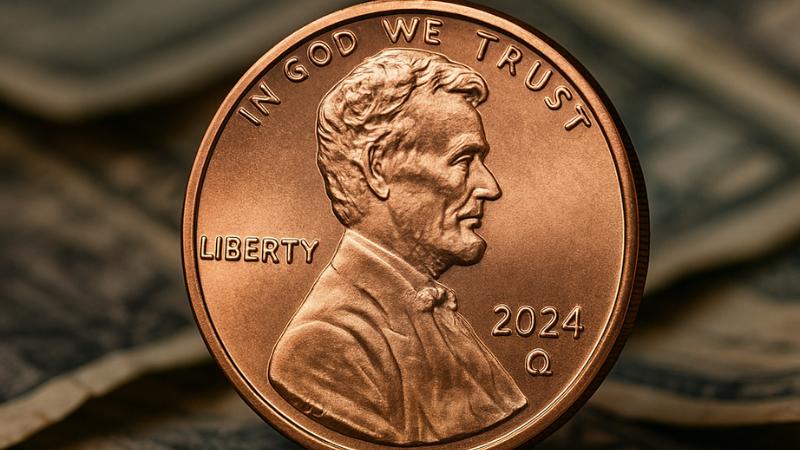
While Americans will continue using existing pennies already in circulation, no more will be added. However, enormous attention is now focused on the last five coins minted. These coins have been specially marked with an omega symbol and will not be released to the public. Instead, they will be offered at a public auction, where collectors expect fierce competition. Because they represent the last official business-strike Lincoln cents ever produced by the US Mint and exist only in a five-coin set, experts believe they may become some of the most valuable modern American coins.
Industry specialists have already begun estimating their worth. Rare coin analyst John Feigenbaum noted that collectors consider these coins essential to completing any full set of Lincoln cents, making demand unusually high. Early projections suggest the entire set could reach as much as $5 million, although some analysts believe the top bid may settle closer to $1 million. Regardless of the final price, auction houses expect global interest from private collectors, museums, and investment buyers.
Proceeds from the auction will be used to support Mint operations, and any remaining balance will be transferred to the US Treasury. Meanwhile, economists note that the disappearance of the penny may gradually push retailers toward rounding prices, though no immediate policy changes are expected. For now, the end of penny production represents both a nostalgic milestone in US currency history and a significant shift in how the country manages the economics of minting. As collectors prepare for the historic auction, the last Lincoln cents are already being described as among the rarest American coins of the modern era.