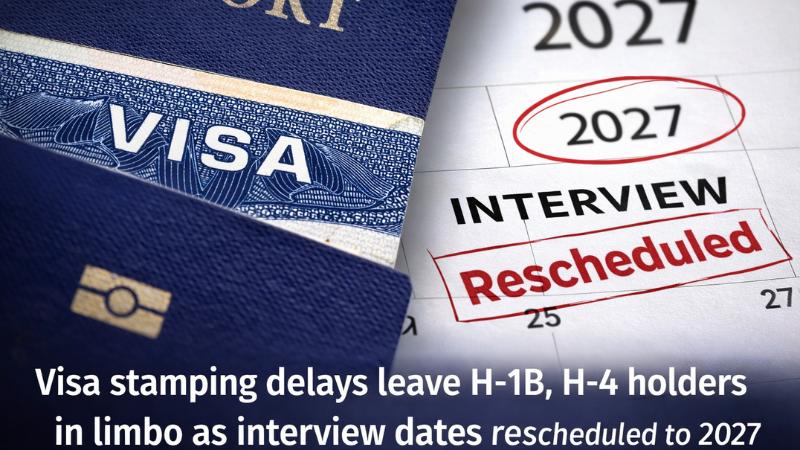
The prolonged delay in H-1B visa stamping that began in December has continued into the new year, with no signs of immediate relief for thousands of skilled workers dependent on timely consular processing. No new interview slots have been opened at US consulates in India, and applicants are now receiving notifications that their previously scheduled appointments are being deferred as far as 2027, intensifying anxiety among visa holders and employers alike.
Immigration attorneys and experts tracking the situation say the outlook remains bleak. Many are advising H-1B holders currently residing in the United States to avoid traveling to India for visa stamping altogether, warning that once individuals leave the US, returning may become uncertain due to repeated deferrals and administrative scrutiny. The delays have already disrupted travel plans for hundreds of professionals who traveled to India late last year expecting routine visa renewals.
In December, numerous H-1B visa holders arrived in India for scheduled stamping appointments, only to be informed that their interviews had been postponed by more than a year. In several cases, dates were pushed into 2026 following the initiation of expanded social media vetting by consular officials. Since then, the situation has worsened. Applicants with January and February interview dates report receiving emails from their respective consulates stating that appointments have been rescheduled to April or May of 2027.
Immigration attorney Emily Neumann said she has not observed any meaningful progress in the availability of visa interview slots for India over the past 50 days. According to Neumann, the lack of movement suggests a broader policy shift in how employment-based visas are being processed. She cautioned that H-1B holders in the US should not attempt to secure visa stamping appointments in India under the current circumstances, noting that the administration appears increasingly restrictive in issuing visas.
Neumann added that the environment surrounding visa approvals has changed significantly compared to previous years. She said applicants should be prepared for heightened scrutiny and prolonged delays, emphasizing that consular officers are not operating under time pressure to resolve cases quickly. For many families, the uncertainty has made international travel a high-risk decision with potential long-term consequences.
Compounding the challenges is a growing pattern of prudential visa revocations, particularly affecting H-4 visa holders who accompany H-1B workers. The US State Department has been canceling visas based on new information that may raise questions about eligibility, even when no formal violation has occurred. In several reported cases, H-4 spouses attending stamping appointments were informed that their visas had been revoked due to past legal issues, such as a DUI, involving the primary H-1B visa holder.
Immigration experts say these revocations are being carried out administratively, often without prior warning, leaving families stranded and uncertain about their next steps. The combination of stamping delays, increased vetting, and revocation actions has created an atmosphere of instability for foreign workers who form a critical part of the US technology and professional workforce.
As the backlog grows and interview dates continue to move further into the future, affected visa holders are being urged to plan cautiously and seek legal guidance before making international travel decisions. With no official timeline for reopening interview slots or clearing pending applications, the visa stamping crisis shows little sign of easing in the near term.