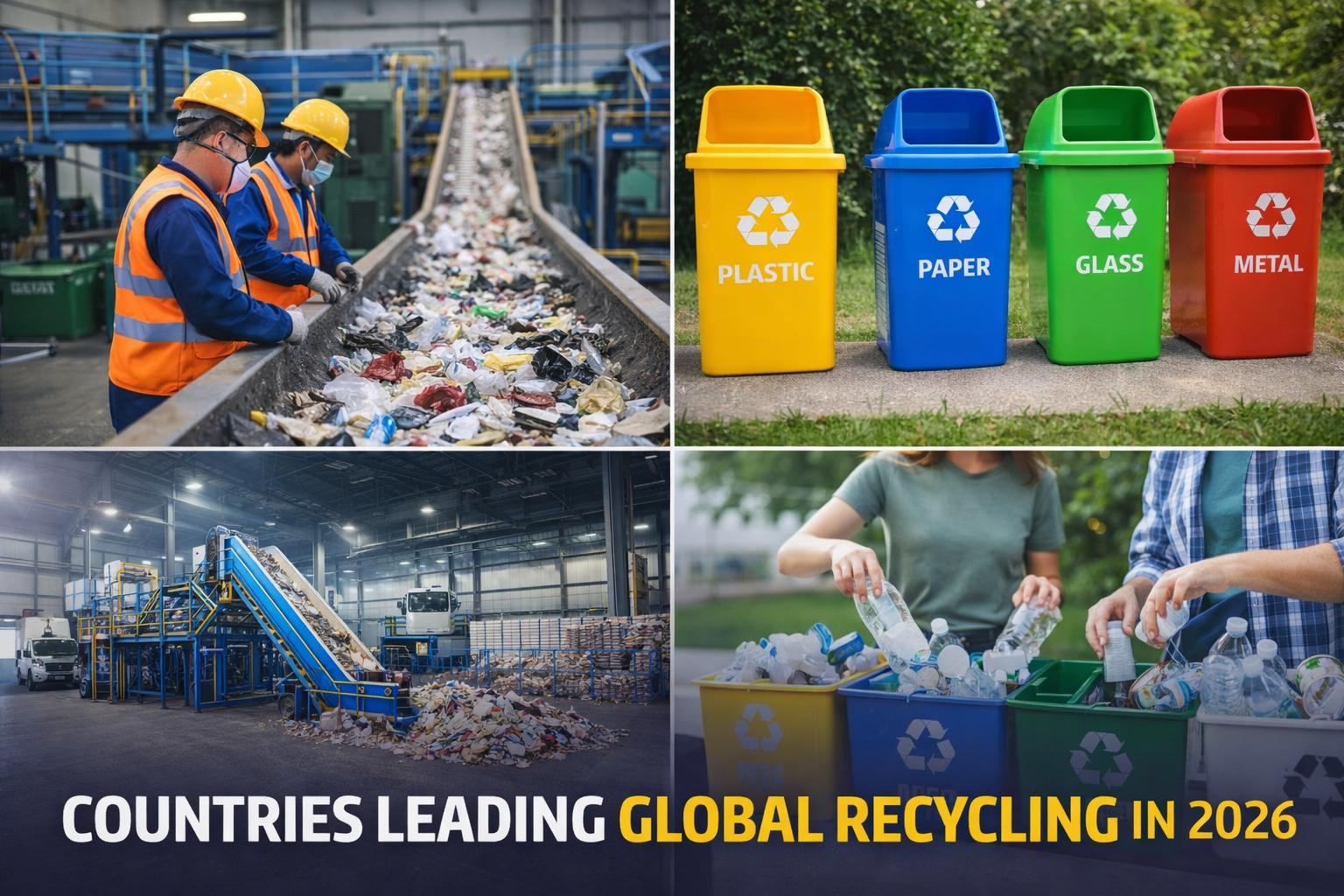
Recycling has become one of the most effective solutions to address the growing global waste crisis. As populations grow and consumption increases, the amount of waste generated worldwide has risen dramatically. Many countries still struggle with waste management due to limited infrastructure and poor segregation practices. However, a few nations have successfully developed highly efficient recycling systems that allow them to recover a significant portion of their waste instead of sending it to landfills. These countries are now considered global leaders in sustainable waste management.
According to data compiled by World Population Review using the Environmental Performance Index waste recovery score, several European countries dominate the recycling rankings in 2026. The EPI measures how efficiently countries recover waste through recycling, composting and other treatment methods. Countries that invest heavily in environmental policies, public awareness campaigns and advanced waste processing technologies generally achieve higher scores in waste recovery.
Many of the top performing nations have adopted strict waste segregation laws and invested in modern recycling facilities. Citizens are required to separate waste at home into categories such as plastic, paper, glass, metal and organic waste. Governments also encourage recycling through awareness programmes, financial incentives and strict penalties for improper waste disposal. These systems help ensure that recyclable materials are processed efficiently and reused in manufacturing.
Global Recycling Leaders
- Switzerland ranks first globally with a waste recovery score of 100, reflecting one of the most efficient recycling systems in the world.
- Denmark follows closely with a score of 99.9 due to its strong waste sorting infrastructure and environmental policies.
- Finland ranks third with 99.4 and is known for its advanced waste-to-energy facilities and recycling programs.
- Sweden holds the fourth position with a score of 99.2 and has long been a pioneer in waste recovery technology.
- Germany ranks fifth with 98.9, supported by decades of strict recycling laws and public participation in waste segregation.
- Countries such as Belgium, the Netherlands and Austria also perform strongly due to their well developed recycling infrastructure.
- Taiwan and Singapore are among the top Asian countries leading in efficient waste management systems.
- Slovenia stands out globally in municipal recycling rates by recycling about 55.3 percent of its municipal waste.
- Germany also performs well in municipal recycling with around 47 percent of its municipal waste being recycled.
The success of these countries is largely due to their commitment to environmental sustainability. Governments in these nations have implemented long term strategies to reduce landfill waste and promote a circular economy where materials are reused, recycled and reintroduced into production cycles. Advanced recycling technologies and efficient waste collection systems also play a crucial role in improving recovery rates.
Despite progress in many countries, global waste generation continues to rise due to increasing urbanisation and consumer demand. Environmental experts say that expanding recycling infrastructure, encouraging responsible consumption and adopting circular economy practices will be essential for managing waste sustainably in the future. Countries that learn from the successful models of leading recycling nations will be better positioned to tackle the growing waste challenge.