Why is Microsoft offering buyouts to U.S. employees? It aims to adapt to AI-driven industry changes
Voluntary buyouts introduced for U.S. workforce amid AI shift
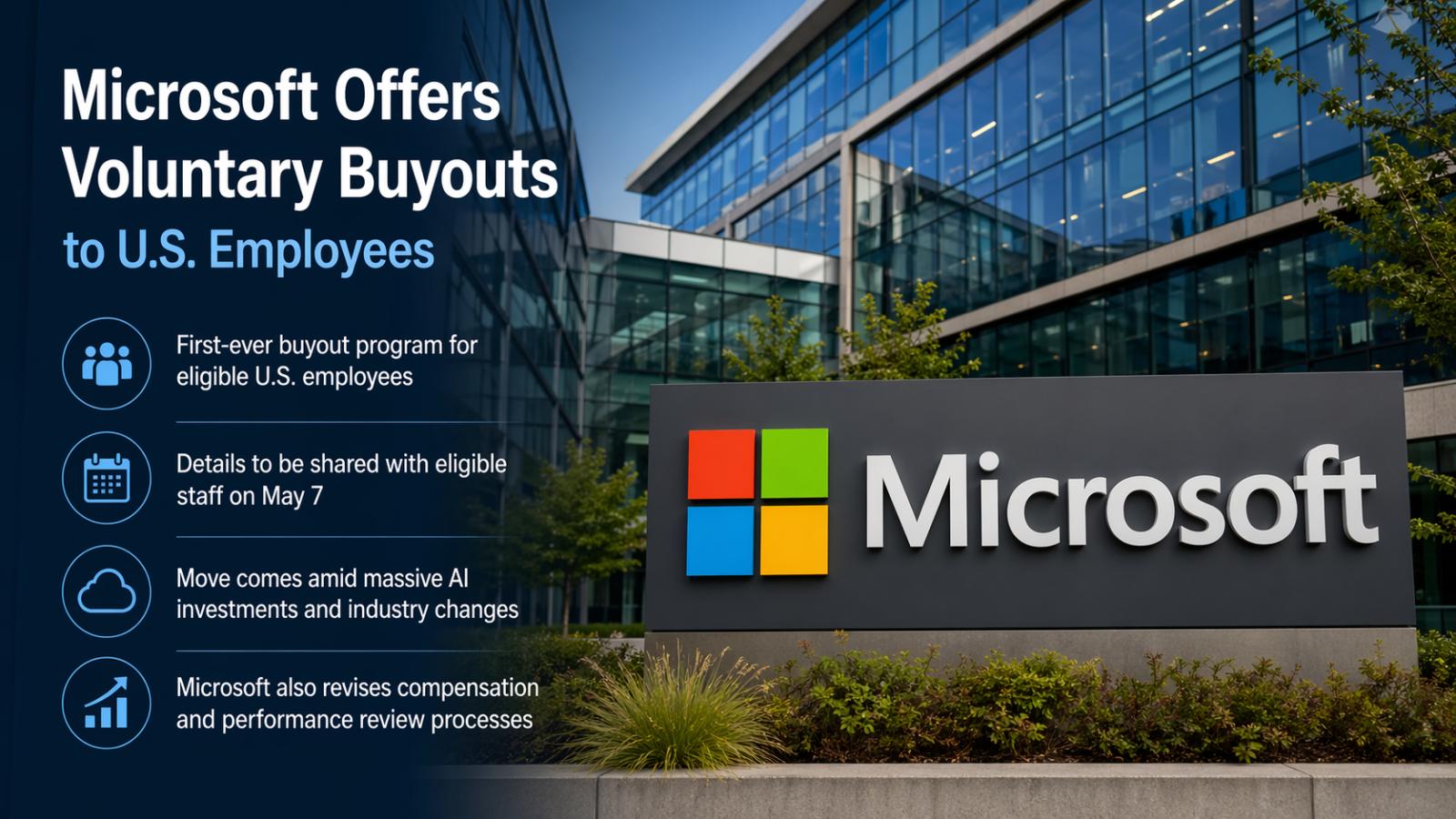
Microsoft is offering voluntary buyouts to a portion of its U.S. workforce, marking the first such initiative in the company’s 51-year history. The move comes as the broader technology sector adjusts to rapid changes driven by the rise of artificial intelligence. According to a person familiar with the plan, approximately 7% of U.S.-based employees may be eligible, though the company has not publicly disclosed that figure.
Eligibility criteria and rollout details for retirement program
The one-time program applies to employees at the senior director level and below whose combined age and years of service total at least 70. Details are expected to be shared with eligible staff and their managers on Wednesday, May 7. Employees participating in sales incentive plans are excluded from the offer, narrowing the pool of potential participants.
Rising AI investments reshape workforce priorities
The buyout program comes as Microsoft increases spending on data centers to meet demand for cloud computing infrastructure capable of supporting generative AI systems. Competitors such as Alphabet and Amazon are making similar investments. At the same time, software companies face pressure as emerging tools from firms like Anthropic introduce new competitive dynamics in coding and automation.
Workforce adjustments follow prior layoffs and cost controls
The company previously implemented multiple rounds of layoffs to reduce costs. As of June 2025, it employed approximately 228,000 people globally, including about 125,000 in the United States. The voluntary buyout program reflects a more flexible approach to workforce management during a period of technological transition.
Changes to compensation and performance evaluation systems
In addition to the buyouts, Microsoft is revising its compensation structure. Managers will no longer be required to tie stock awards directly to cash bonuses, allowing greater discretion in rewarding high-performing employees. The company is also simplifying its performance review system, reducing pay decision options from nine to five to streamline evaluations and improve clarity.