Regulatory action culminates in license cancellation
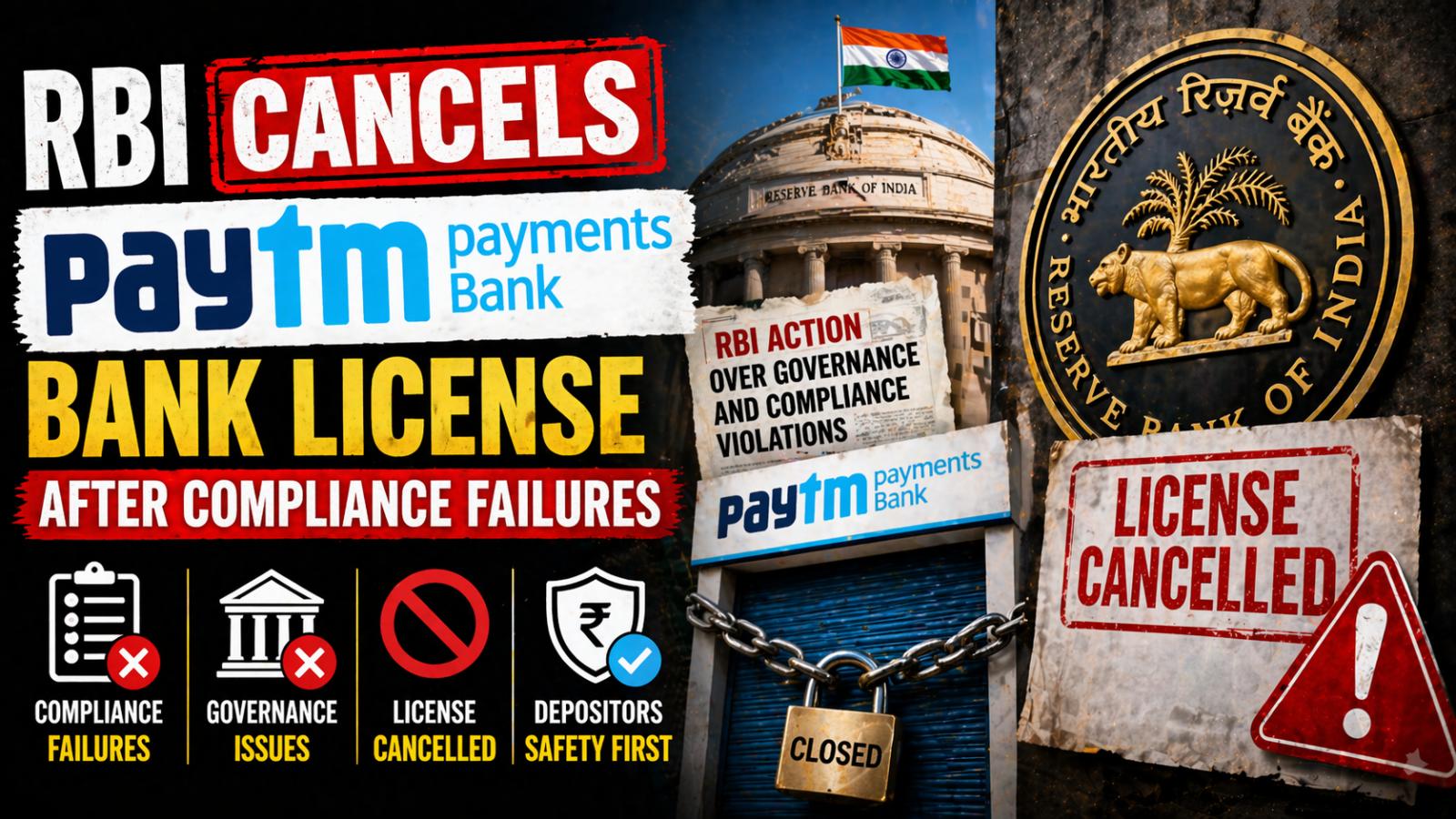
What happened to Paytm Payments Bank? RBI cancels its license after violations forms the central development in India’s financial sector, as the Reserve Bank of India revoked the banking license of Paytm Payments Bank Ltd with immediate effect. The regulator stated that the bank has sufficient funds to meet its liabilities during the winding-up process, aiming to protect depositors as operations cease.
Multi-year scrutiny and escalating restrictions
The license cancellation marks the final step in a prolonged regulatory process that began in 2022. Over the past two years, the RBI imposed a series of restrictions on the payments bank, including prohibiting it from onboarding new customers and accepting fresh deposits. These measures were intensified in 2024 following repeated supervisory concerns about governance standards, operational practices, and compliance failures.
Governance concerns and compliance failures cited
Why did RBI shut down Paytm Payments Bank? Regulatory failures led to closure, according to the central bank’s findings. The RBI cited multiple grounds for the decision, stating that the bank’s operations were conducted in a manner detrimental to the interests of both the institution and its depositors. It further noted that the management’s conduct raised serious concerns and was considered prejudicial to public interest.
Impact on Paytm app and digital payment services
What led to Paytm Payments Bank closure? RBI cites governance and compliance issues, while clarifying a key distinction for users: the Paytm mobile application itself is expected to continue functioning. As a fintech platform, Paytm can operate independently of its in-house bank by partnering with other regulated financial institutions. This means services such as UPI payments, QR-based transactions, and merchant payments may remain available, although certain wallet or banking-linked features tied specifically to Paytm Payments Bank could be discontinued or migrated.
Decision driven by depositor protection and public interest
What led to Paytm Payments Bank closure? RBI cites governance and compliance issues, emphasizing that continuing operations would serve no meaningful purpose. The regulator concluded that the bank had failed to meet the conditions tied to its payments bank license and had not addressed repeated compliance lapses. By revoking the license, the RBI signaled a firm stance on financial regulation and depositor safety within India’s rapidly evolving fintech landscape.