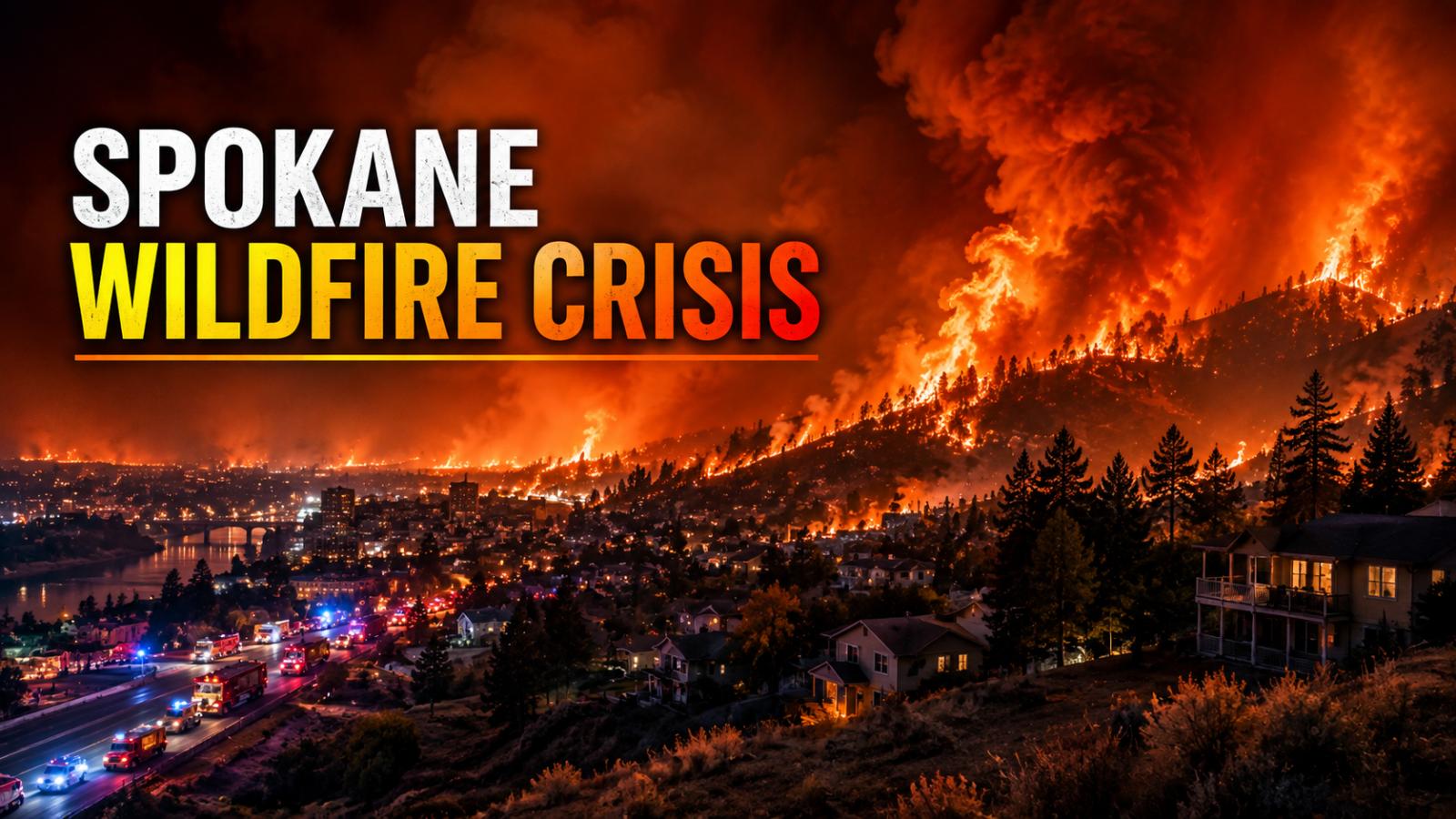
The Spokane wildfire crisis has destroyed at least 700 structures and placed about 64,000 residents under immediate evacuation orders. Fire crews are battling three major blazes as drought, strong winds and extreme heat worsen conditions across eastern Washington.
Spokane Fires Destroy Hundreds of Structures
Wildfires burning near Spokane, Washington, for a third consecutive day have destroyed homes and other buildings while threatening additional communities on the city’s northern outskirts.
Incident officials said the group of three fires had burned more than 8,000 acres since starting on Saturday, August 1. The affected area includes suburban and rural communities near Spokane, Washington’s second-largest city, close to the Idaho border.
Benjamin Cossel, a spokesperson for the incident command centre, said at least 700 structures had been confirmed destroyed by Monday. Most were homes and other residential buildings.
Officials warned that the final damage total could rise considerably. Preliminary aerial infrared surveys identified approximately 400 additional structures that may have been damaged or destroyed. Ground assessment teams had not yet inspected every affected property because active fire conditions continued to make some areas unsafe.
Washington Wildfire Evacuations Expand
Authorities placed around 64,000 people under immediate evacuation orders as flames moved rapidly through dry vegetation and residential areas. That figure represented a steep increase from roughly 4,000 people who had been ordered to leave their homes one day earlier.
Emergency officials urged residents in evacuation zones to leave immediately rather than wait for visible flames. Wildfires can shift direction quickly, particularly when strong winds carry burning embers across roads, fields and neighbourhoods.
Residents outside mandatory evacuation areas were advised to prepare essential medicines, identification documents, clothing, drinking water and supplies for pets. Officials also encouraged families to monitor local emergency alerts for changing evacuation boundaries and shelter information.
Fire Crews Face Hot and Windy Conditions
Firefighters continued using ground crews, engines and aircraft to slow the advancing blazes. However, hot temperatures, low humidity, drought-stressed vegetation and gusty winds complicated containment work.
The National Interagency Fire Center reported elevated wildfire activity across the Northwest, with dozens of uncontained large fires burning in Oregon and Washington. Thousands of firefighters and support personnel were deployed nationwide as authorities managed nearly 100 major incidents.
The Spokane-area fires became a major national firefighting priority because of their proximity to heavily populated communities and the rapid increase in evacuations and structural losses.
Wildfire Smoke Threatens Regional Air Quality
Heavy smoke from the Spokane fires and other Pacific Northwest wildfires has reduced visibility and worsened air quality across a wide area. Smoke can travel hundreds of miles and may affect communities far from the active fire lines.
Health officials generally advise children, older adults and people with heart or lung conditions to limit prolonged outdoor activity when smoke levels become unhealthy. Residents should follow local air-quality reports and keep windows closed when conditions deteriorate.
Spokane County has also published emergency updates and public services for residents affected by the fires. Evacuation orders, road closures and damage figures may continue changing as crews complete further assessments.
The full scale of the disaster remains uncertain. Authorities are prioritising public safety, structure protection and containment while investigators and assessment teams work to determine the extent of the damage.