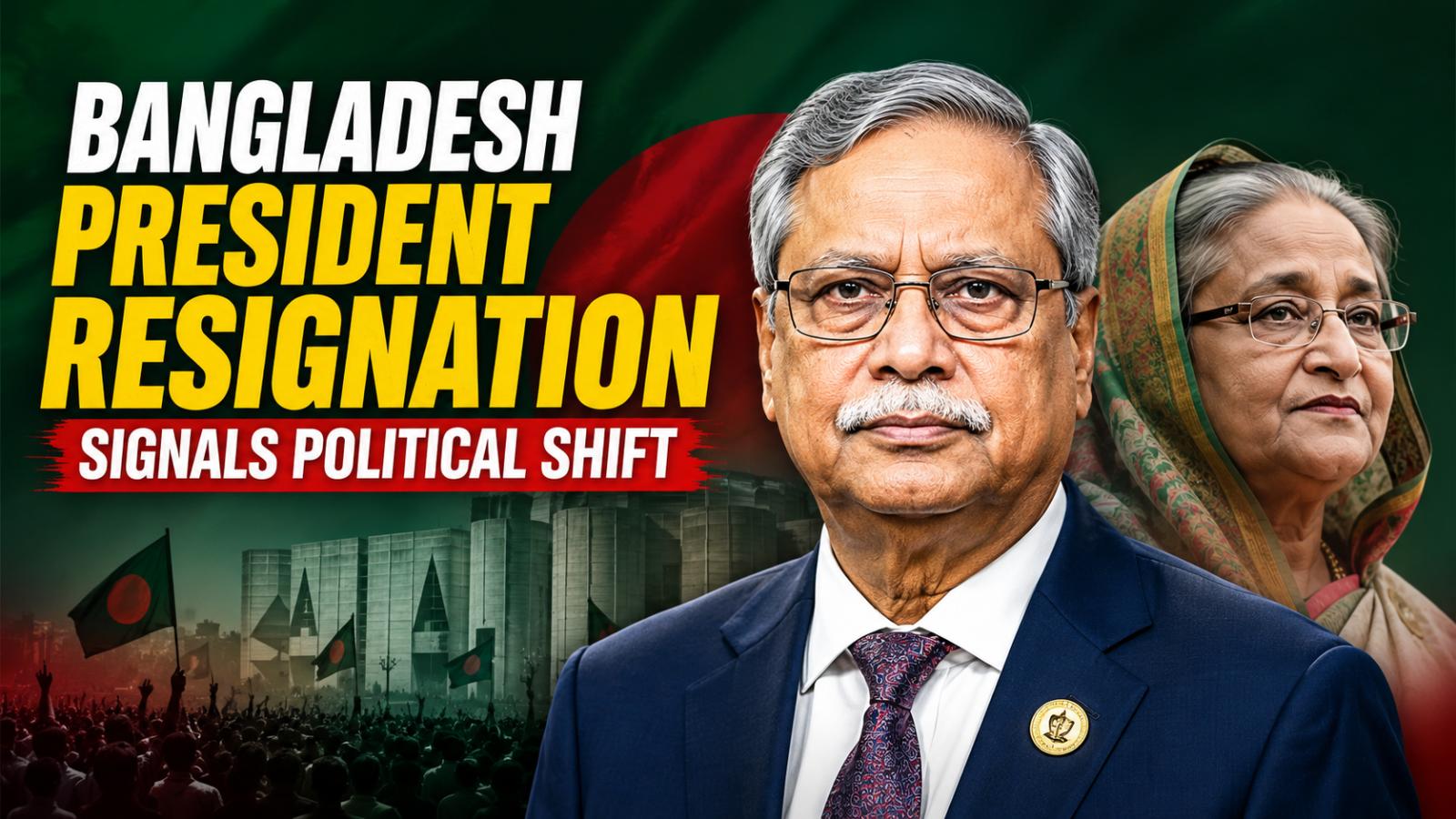
President Shahabuddin Steps Down
Bangladesh is entering another crucial phase in its political journey after President Mohammad Shahabuddin decided to resign before completing his five-year term. The development follows months of political uncertainty and growing pressure over his perceived closeness to former Prime Minister Sheikh Hasina and the Awami League. His departure is expected to reshape the country's political landscape as Bangladesh prepares for another period of transition.
Sheikh Hasina's Return Plans
The political situation has gained further attention after Sheikh Hasina announced plans to return to Bangladesh later this year. The former prime minister has been living outside the country since the student-led uprising in 2024 that ended the Awami League's long rule. She was recently convicted by Bangladesh's war crimes tribunal, although she has strongly rejected the verdict and described the charges as politically motivated.
Bangladesh Political Transition
Official sources indicate that President Shahabuddin's resignation reflects increasing political pressure rather than a routine constitutional decision. Since the 2024 protests, Bangladesh has been governed under a transitional arrangement focused on restoring stability, implementing reforms and preparing for future elections. Political observers believe the president's exit could reduce tensions surrounding the presidency and create space for broader institutional reforms.
The resignation also highlights the continuing impact of the 2024 student movement, which transformed Bangladesh's political environment. Protesters demanded greater transparency, stronger democratic institutions and increased accountability from public officials. Those demands continue to influence the country's reform agenda as policymakers work toward rebuilding public confidence.
Awami League Future
The future of the Awami League remains one of the biggest questions in Bangladesh politics. While the party continues to have a significant support base, its leadership faces legal challenges and political uncertainty. Sheikh Hasina's proposed return could become a defining moment, potentially triggering new political debates, legal proceedings and public demonstrations depending on how authorities respond.
Analysts believe the coming months will be critical for determining whether Bangladesh can maintain political stability while balancing legal processes with democratic participation. Much will depend on the actions of the interim authorities, the country's constitutional institutions and political parties seeking to shape the next phase of governance.
Government officials have not yet announced the timeline for selecting Shahabuddin's successor, but constitutional procedures are expected to guide the transition. Authorities have repeatedly stated that maintaining stability and ensuring an orderly transfer of responsibilities remain top priorities.
The resignation of President Mohammad Shahabuddin represents more than a leadership change. It reflects the continuing transformation of Bangladesh politics following the events of 2024. With Sheikh Hasina planning a return, ongoing legal proceedings and preparations for future elections, Bangladesh now faces one of its most significant political chapters in recent years. Officials say further announcements regarding the transition and electoral roadmap are expected in the coming weeks as the country moves toward its next stage of governance.