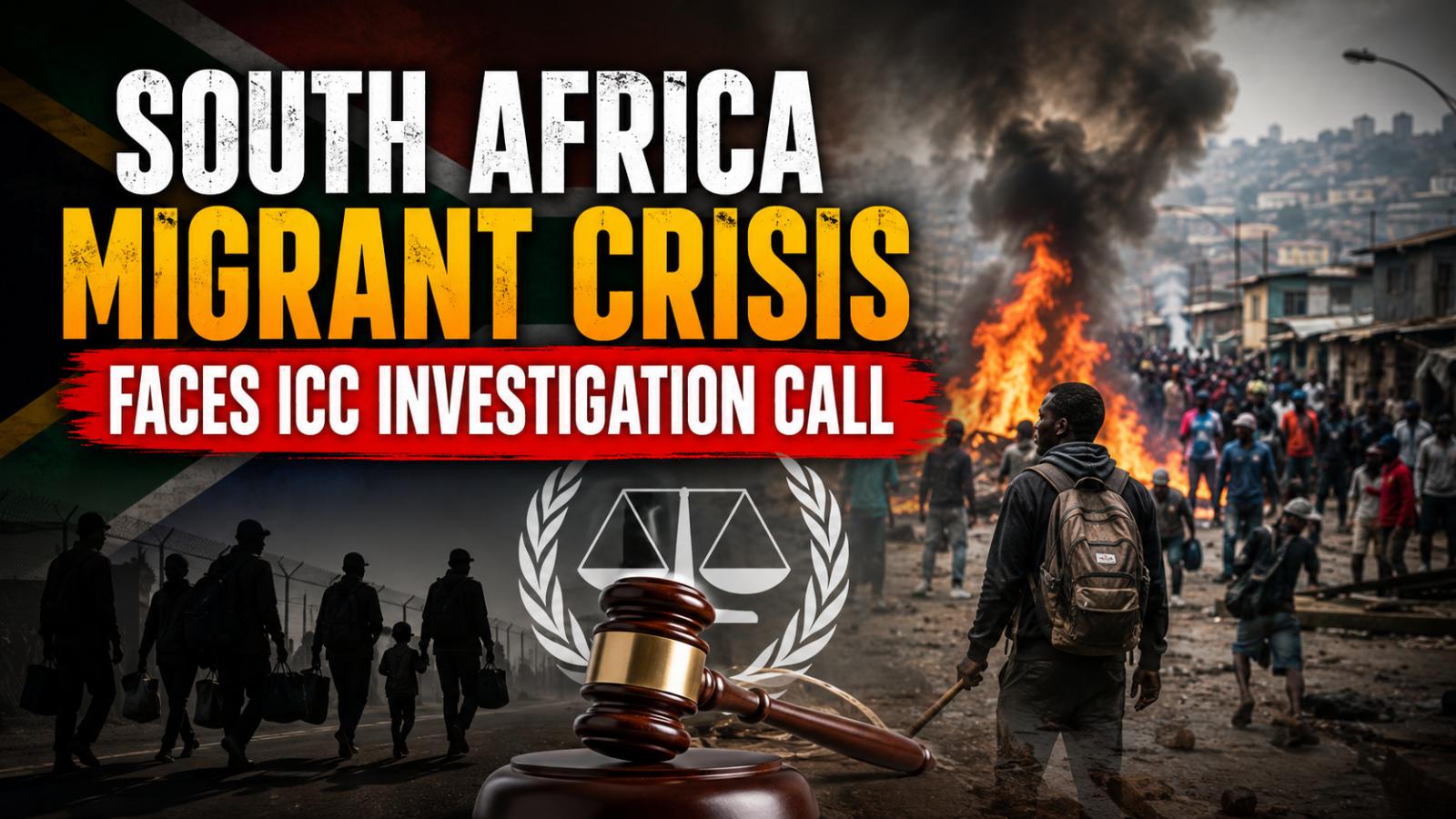
South Africa’s migrant crisis has entered a new legal and diplomatic phase after two Ghanaian nationals asked the International Criminal Court to examine years of alleged violence against foreign nationals. The petition raises questions about accountability, migrant protection and whether repeated attacks could meet the threshold for crimes against humanity.
ICC Probe Requested by Ghanaian Petitioners
Palgrave Boakye-Danquah, a former Ghanaian government spokesperson, and security analyst Emmanuel Kotin submitted the petition to the ICC prosecutor on July 15, 2026. Their filing alleges a widespread pattern of killings, assaults, looting and forced displacement targeting migrants between 2015 and 2026.
The petition is a private initiative and does not represent the Ghanaian government. The ICC has acknowledged receiving the communication, but that does not mean a formal investigation has begun. Prosecutors must first examine jurisdiction, available evidence and whether the allegations meet the court’s legal standards.
Migrant Attacks Intensify Regional Concern
Recent violence has affected migrants from Ghana, Nigeria, Malawi, Mozambique and other African countries. Homes and foreign-owned shops have reportedly been attacked, while several governments have helped citizens leave South Africa.
The African Commission on Human and Peoples’ Rights has condemned intimidation, attacks and violence directed at African migrants. It warned that vigilante conduct and discrimination threaten the rights and safety of refugees, asylum seekers and other foreign nationals.
South Africa hosted more than 167,000 refugees and asylum seekers in 2025, according to UNHCR. Most live in towns and cities rather than refugee camps, making community safety and access to public services central to the wider migrant rights debate.
Anti-Immigration Unrest and Deportations
South African authorities have increased immigration enforcement while insisting that citizens cannot take the law into their own hands. Government figures show that tens of thousands of undocumented migrants have been arrested during operations in 2026.
President Cyril Ramaphosa has condemned attacks on foreign nationals and said immigration concerns must be handled through state institutions. The government has also condemned looting, vigilantism and the targeting of people based on nationality as criminal acts.
This distinction matters. A government has the authority to enforce immigration laws, but deportation procedures must remain separate from mob violence, intimidation or collective punishment.
Rights Crisis Tests South Africa’s Response
The petitioners argue that repeated attacks and alleged failures to protect migrants justify international scrutiny. South Africa rejects claims that the state supports xenophobia and says its courts, police and constitutional institutions can address discrimination and violence.
The ICC will have to determine whether the alleged conduct was widespread or systematic and whether national authorities are genuinely investigating and prosecuting those responsible. Filing a petition alone does not establish criminal liability.
The case nevertheless increases pressure on South Africa to prosecute attackers, protect threatened communities and prevent political or economic frustration from being redirected toward migrants.
Foreign Unrest Carries Wider Consequences
The crisis is no longer only a domestic immigration issue. It is affecting South Africa’s diplomatic ties, regional reputation and relations with governments whose citizens have been targeted or repatriated.
A lasting response will require stricter action against violent groups, lawful border management and direct efforts to address unemployment, crime and poor public services. Blaming migrants may produce political attention, but it does not solve the structural problems driving public anger.