A prominent voice in the American financial sector has reignited the debate around immigration reform by advocating for automatic work visas for international students graduating from U.S. universities. The proposal is gaining attention for its simplicity and potential to retain top global talent educated within the country.
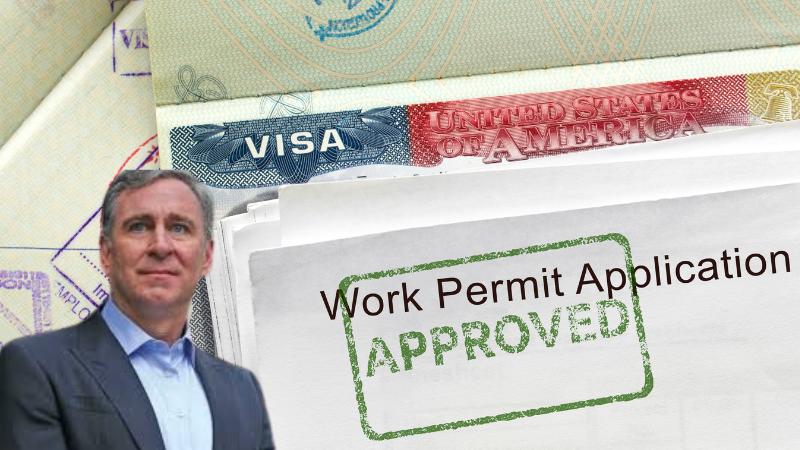
The suggestion, made by billionaire investor Ken Griffin, centers on the belief that the United States should immediately offer a work visa to anyone who completes a degree from a recognized American university or graduate school. According to Griffin, the move would help the country maintain its competitive edge by keeping highly educated individuals who have already demonstrated commitment and capability.
Griffin emphasized the importance of welcoming these students not just to study, but to stay and contribute. He characterized the act of leaving one's home country to pursue education in the U.S. as a strong testament to individual ambition and determination. For these students, remaining in the U.S. after graduation offers a pathway to professional development and innovation, which in turn benefits the broader economy.
He expressed confusion over why the U.S. fails to take advantage of the talent it cultivates. Many lawmakers reportedly agree in private that foreign graduates should be allowed to stay, yet the country continues to enforce rigid immigration policies that make it difficult for international students to transition to long-term residency or employment. Griffin questioned why, despite general bipartisan support for such ideas, concrete policy changes have yet to be implemented.
His remarks come at a time when international students face mounting uncertainty. Thousands of student visas have been revoked in recent years, leading to widespread anxiety within the student population. Students who had planned to continue their education or begin their careers in the U.S. now find themselves either forced to leave, unable to reenter, or left in limbo regarding their legal status. Many of these students report having no serious legal infractions, only minor administrative issues, yet still suffer the full consequences of visa revocation.
Public officials have started asking for clarity on the process, seeking to ensure students are treated fairly while upholding national law. There is growing concern that blanket visa cancellations without due explanation undermine the trust international students place in the U.S. education system. While it is understood that students must comply with American laws and respect the country's values, there is a call for the process to be more transparent and balanced.
The atmosphere of uncertainty has discouraged many potential applicants from choosing the U.S. as a destination for higher education. Competing countries are stepping up efforts to attract the same talent pool by offering more reliable and streamlined immigration paths. These trends raise fears that the U.S. is losing its appeal and diminishing its historical role as a hub for global education and innovation.
Recent analyses show that more than 1,200 international students across nearly 190 institutions have lost their legal status in a short period. The impact of these decisions goes beyond education, affecting careers, research opportunities, and families. While some students returned to their home countries, others disengaged from studies altogether. A few even reportedly went into hiding out of fear of deportation.
The current situation presents a paradox. On one hand, the U.S. continues to attract some of the most capable students from around the world. On the other, outdated visa policies are driving many of them away after graduation. As a result, the country is losing out on valuable intellectual and professional contributions that could support economic growth, technological advancement, and job creation.
Griffin’s recommendation aligns with the broader belief that immigration policy should support national interests by fostering innovation and retaining global talent. Allowing international graduates to stay and work would not only benefit industries like technology, healthcare, and finance but would also reinforce the idea of the U.S. as a land of opportunity.
In a time when talent mobility is more important than ever, countries that adapt their immigration frameworks to prioritize skill retention are likely to lead in global competitiveness. Granting automatic work visas to graduates may not solve all immigration challenges, but it represents a clear, actionable step toward strengthening the American workforce and economy. As business leaders, educators, and students continue to call for reform, the urgency for a practical and forward-thinking visa policy grows stronger.
The suggestion, made by billionaire investor Ken Griffin, centers on the belief that the United States should immediately offer a work visa to anyone who completes a degree from a recognized American university or graduate school. According to Griffin, the move would help the country maintain its competitive edge by keeping highly educated individuals who have already demonstrated commitment and capability.
Griffin emphasized the importance of welcoming these students not just to study, but to stay and contribute. He characterized the act of leaving one's home country to pursue education in the U.S. as a strong testament to individual ambition and determination. For these students, remaining in the U.S. after graduation offers a pathway to professional development and innovation, which in turn benefits the broader economy.
He expressed confusion over why the U.S. fails to take advantage of the talent it cultivates. Many lawmakers reportedly agree in private that foreign graduates should be allowed to stay, yet the country continues to enforce rigid immigration policies that make it difficult for international students to transition to long-term residency or employment. Griffin questioned why, despite general bipartisan support for such ideas, concrete policy changes have yet to be implemented.
His remarks come at a time when international students face mounting uncertainty. Thousands of student visas have been revoked in recent years, leading to widespread anxiety within the student population. Students who had planned to continue their education or begin their careers in the U.S. now find themselves either forced to leave, unable to reenter, or left in limbo regarding their legal status. Many of these students report having no serious legal infractions, only minor administrative issues, yet still suffer the full consequences of visa revocation.
Public officials have started asking for clarity on the process, seeking to ensure students are treated fairly while upholding national law. There is growing concern that blanket visa cancellations without due explanation undermine the trust international students place in the U.S. education system. While it is understood that students must comply with American laws and respect the country's values, there is a call for the process to be more transparent and balanced.
The atmosphere of uncertainty has discouraged many potential applicants from choosing the U.S. as a destination for higher education. Competing countries are stepping up efforts to attract the same talent pool by offering more reliable and streamlined immigration paths. These trends raise fears that the U.S. is losing its appeal and diminishing its historical role as a hub for global education and innovation.
Recent analyses show that more than 1,200 international students across nearly 190 institutions have lost their legal status in a short period. The impact of these decisions goes beyond education, affecting careers, research opportunities, and families. While some students returned to their home countries, others disengaged from studies altogether. A few even reportedly went into hiding out of fear of deportation.
The current situation presents a paradox. On one hand, the U.S. continues to attract some of the most capable students from around the world. On the other, outdated visa policies are driving many of them away after graduation. As a result, the country is losing out on valuable intellectual and professional contributions that could support economic growth, technological advancement, and job creation.
Griffin’s recommendation aligns with the broader belief that immigration policy should support national interests by fostering innovation and retaining global talent. Allowing international graduates to stay and work would not only benefit industries like technology, healthcare, and finance but would also reinforce the idea of the U.S. as a land of opportunity.
In a time when talent mobility is more important than ever, countries that adapt their immigration frameworks to prioritize skill retention are likely to lead in global competitiveness. Granting automatic work visas to graduates may not solve all immigration challenges, but it represents a clear, actionable step toward strengthening the American workforce and economy. As business leaders, educators, and students continue to call for reform, the urgency for a practical and forward-thinking visa policy grows stronger.