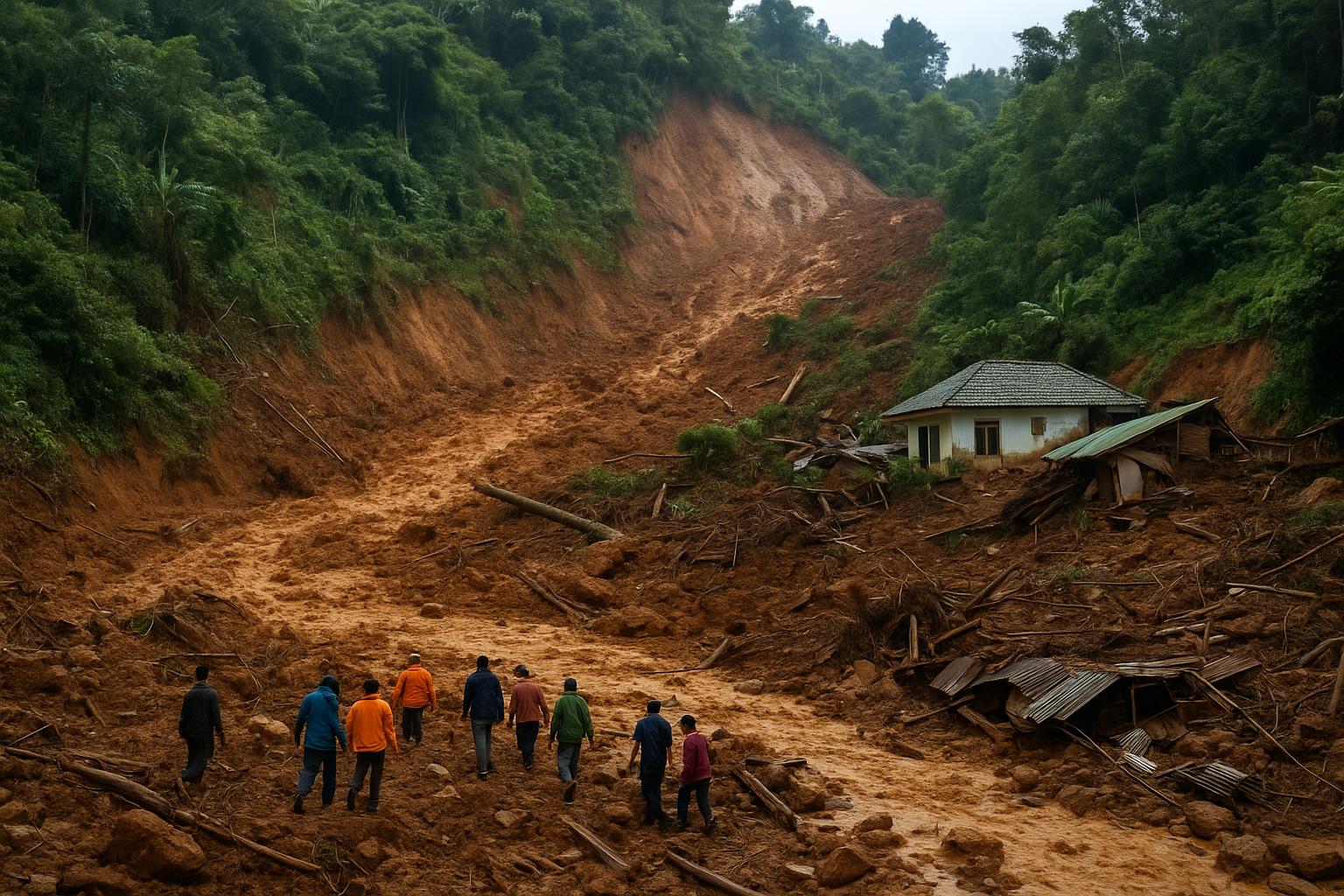
A deadly landslide in Indonesia’s Central Java province has left six people confirmed dead and 17 others missing after days of unrelenting heavy rainfall. Local authorities reported that the incident occurred on Thursday in the city of Cilacap, where a mass of soil and debris swept through Cibeunying village and buried a cluster of homes. The disaster struck during a period of intense seasonal rains that have raised the threat of landslides and flash floods across several regions of the country.
According to information provided by regional disaster management officials, rescue teams have been deployed continuously since the landslide struck. They are racing against time to locate the missing residents, with efforts made more difficult by the depth of the debris and the unstable ground conditions. Budi Irawan, a deputy at Indonesia’s national disaster management agency, confirmed that three additional bodies were recovered on Saturday, bringing the death toll to six. He noted that the remaining missing individuals are believed to be buried under soil layers ranging from three to eight metres deep, adding significant complexity to the rescue operation.
Emergency crews have been working in coordinated teams, using excavation tools and manual digging techniques to prevent further soil movement in the area. The remote location of the affected homes and the extent of the landslide have created logistical challenges, with rescuers forced to navigate thick mud and unstable slopes. Authorities emphasized that their teams are making every possible effort, but progress remains slow due to safety concerns and the shifting terrain.
Indonesia is currently in the midst of its wet season, which began in September and is expected to continue until April, according to the national weather agency. This period typically brings heavy rainfall, but meteorologists have warned that this year’s conditions may produce more extreme weather events than usual. Experts attribute the heightened risk to a combination of seasonal climate patterns and the region’s varied topography, which makes many communities particularly vulnerable to landslides when prolonged rainfall saturates soil on steep hillsides.
Central Java has experienced multiple weather-related disasters in recent months. In January, a severe landslide triggered by intense rain in the city of Pekalongan resulted in at least 25 fatalities, prompting renewed calls for strengthened early warning systems and improved land management in high-risk zones. Local governments have been urged to increase monitoring in hillside villages and to provide clear evacuation plans for residents during periods of sustained rainfall.
Authorities in Cilacap are continuing to assess conditions in Cibeunying village to determine whether further evacuations are necessary. They have also deployed additional personnel to assist in recovery operations and support displaced families. As rainfall is forecast to continue in the coming days, officials warn that secondary landslides remain a possibility and encourage nearby communities to stay alert and follow guidance from emergency services.
Rescue teams have pledged to continue their search until all missing residents are accounted for. Families in the area have gathered near the disaster site, hoping for news of their loved ones as emergency crews work methodically through the impacted zone. The incident has once again highlighted the urgent need for improved disaster preparedness in regions prone to landslides, especially during Indonesia’s long and often severe wet season.