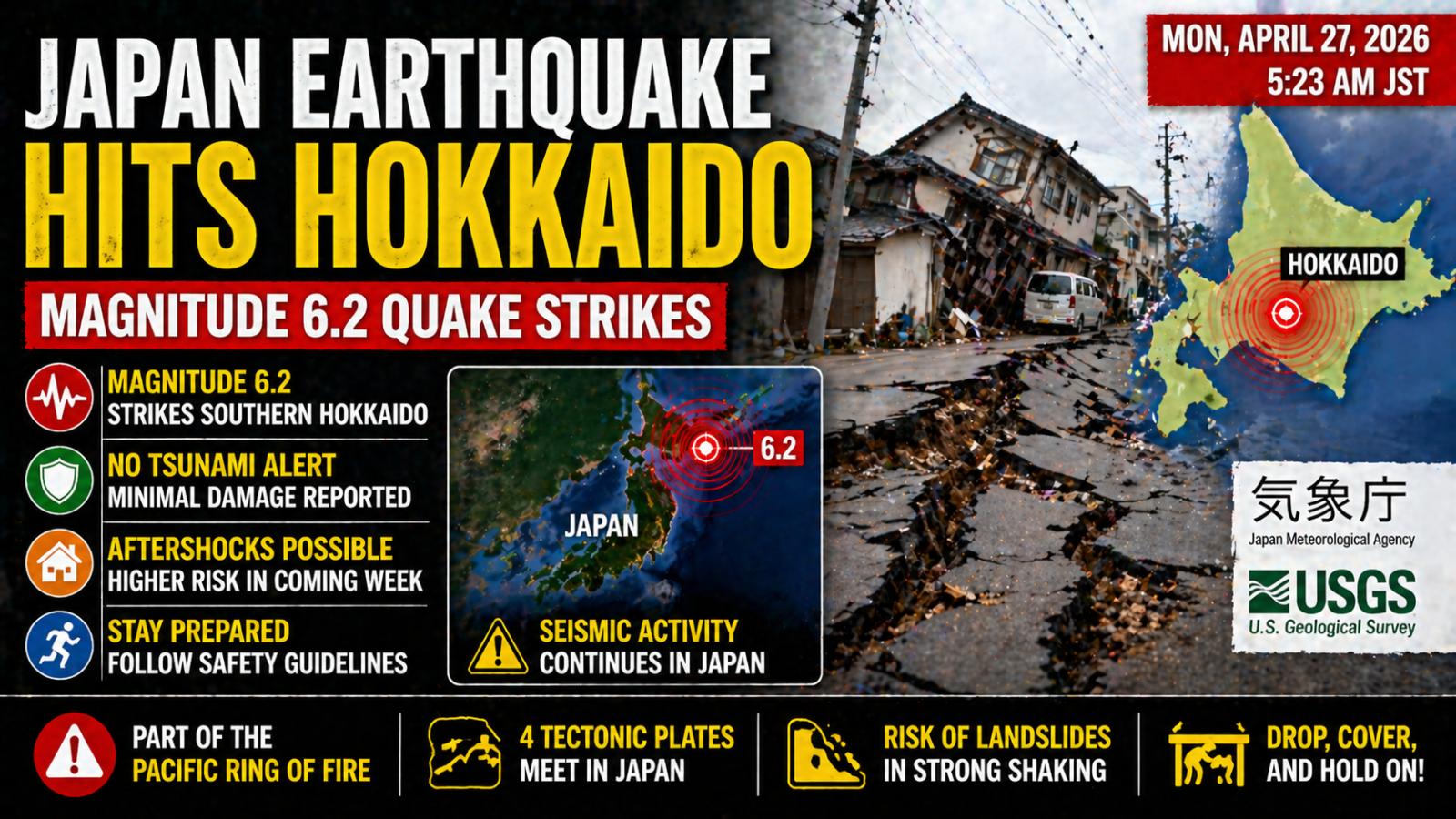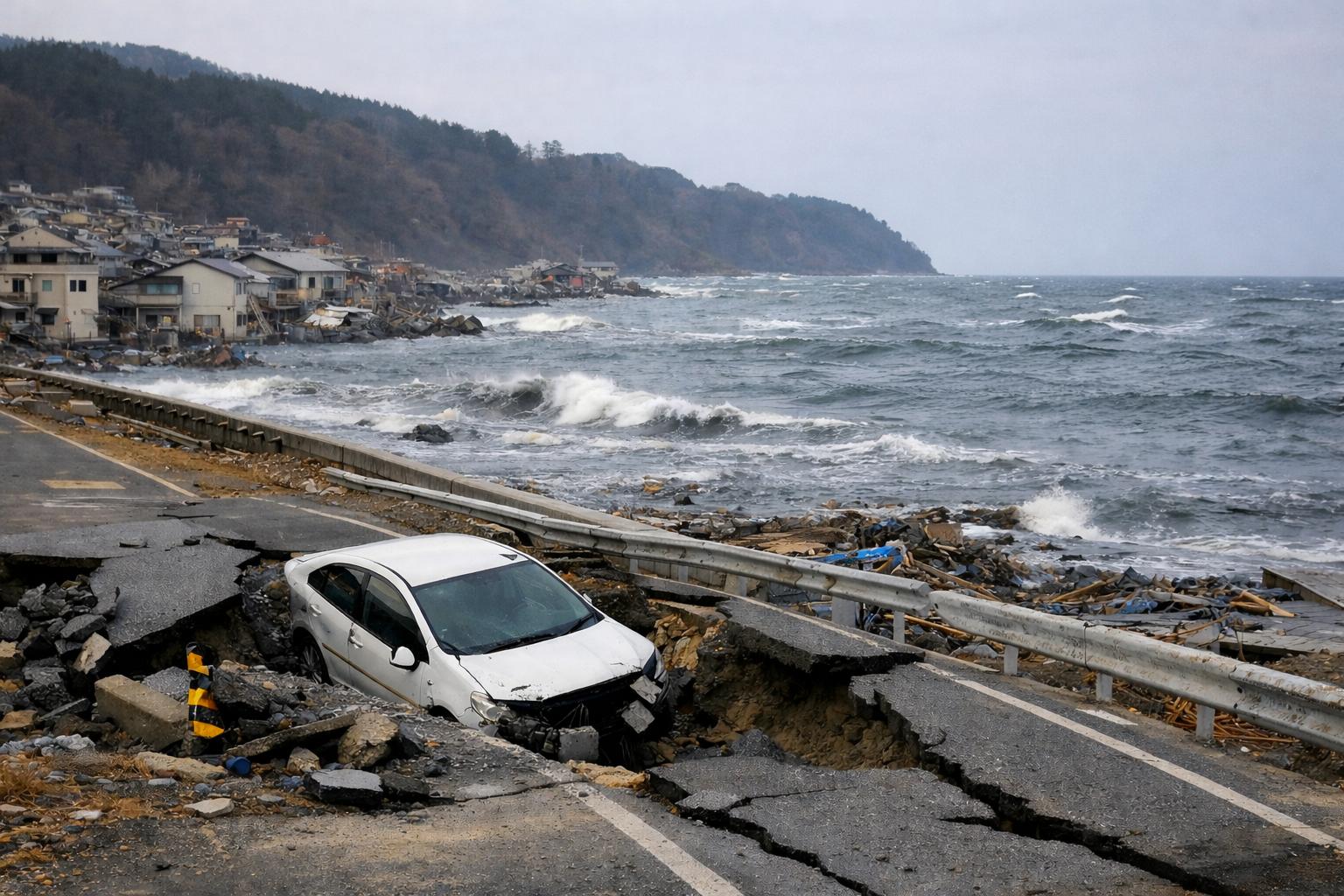
A powerful 7.5-magnitude earthquake struck Japan on April 20, shaking the northeastern coast and triggering widespread concern across the region. The quake occurred at a shallow depth of around 10 kilometres, with its epicentre located nearly 100 kilometres east of Miyako in Iwate Prefecture along the tsunami-prone Sanriku coastline. Authorities quickly issued tsunami warnings, cautioning residents about waves that could reach up to three metres and urging immediate evacuation to safer areas.
The tremor injured several people and forced nearly 90,000 residents to evacuate as emergency alerts flashed across television networks. Officials, including the country’s leadership, called for calm but stressed the importance of moving away from coastal regions and riverbanks. The incident once again highlighted the constant seismic threat faced by Japan, a nation that experiences nearly 10 percent of the world’s earthquakes despite covering only a small fraction of the Earth’s landmass.
The reason lies beneath the surface. Japan sits at the intersection of four major tectonic plates — the Pacific, Philippine Sea, Eurasian, and North American plates. The Pacific Plate continuously moves beneath the Okhotsk Plate along the Japan Trench, while the Philippine Sea Plate pushes beneath other parts of the country. This geological setup creates immense pressure over time, which is eventually released in the form of earthquakes.
When such seismic activity occurs underwater, it can displace large volumes of seawater, leading to tsunamis. The Sanriku coast, where the latest quake struck, is particularly vulnerable and has a history of devastating disasters, including the 2011 earthquake and tsunami. These recurring events are a stark reminder of the region’s volatile geological nature.
The recent quake has also reignited fears of a potential megaquake. Scientists classify earthquakes of magnitude 8.0 or higher as megaquakes, typically occurring in subduction zones where tectonic plates collide. While the latest 7.5 tremor does not fall into this category, experts warn that strong earthquakes can sometimes be followed by larger events, though the probability remains relatively low.
Studies suggest that Japan faces a significant long-term risk, with estimates indicating a major earthquake could occur within the next 30 years. While such predictions are not certain, they underline the need for constant preparedness. For Japan, living with earthquakes is an unavoidable reality, making resilience and rapid response systems crucial for minimizing damage and saving lives.