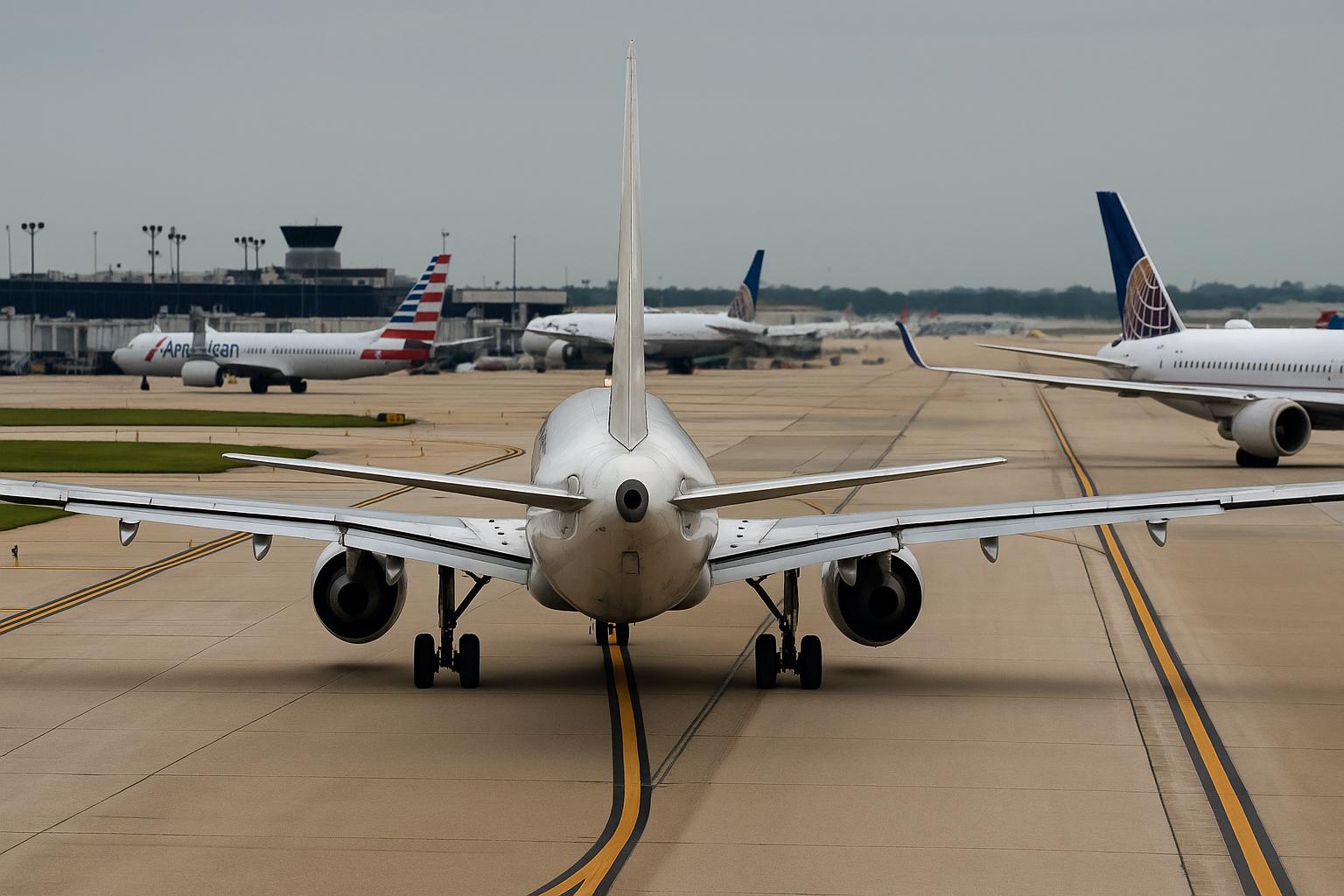
The Federal Aviation Administration (FAA) has announced significant flight reductions across 40 major U.S. airports, including Chicago’s O’Hare and Midway, beginning Friday. The move comes as the agency struggles to maintain safety standards during what has become the longest government shutdown in American history, now stretching into its 37th day.
U.S. Transportation Secretary Sean Duffy warned earlier this week that the continued shutdown could cause “mass chaos, cancellations, and flight delays” if no resolution is reached soon. On Wednesday, Duffy confirmed that the FAA will implement up to a 10 percent reduction in flights nationwide to manage mounting pressure on air traffic control systems.
Federal Aviation Administrator Bryan Bedford said the cuts were decided after assessing where air traffic controllers—many working unpaid and under immense stress—were experiencing the heaviest workloads. “We are seeing pressures build in a way that, if left unchecked, could compromise our ability to operate the safest airline system in the world,” Bedford explained. “This is a proactive step to protect safety, not a reactive one.”
Since the shutdown began on October 1, air traffic controllers have been working without pay, many logging six-day weeks with mandatory overtime. Growing fatigue, financial strain, and absenteeism among staff have started to impact daily operations, leading to delays at several key airports. Some controllers have taken on second jobs or skipped shifts due to a lack of childcare or transportation funds.
“I’m not aware in my 35 years in aviation of any precedent for such measures,” Bedford said. “We’re in new territory when it comes to the operational effects of this shutdown.”
The FAA oversees more than 44,000 flights daily, including commercial passenger services, cargo planes, and private aviation. Officials have confirmed that restrictions will remain in effect “as long as necessary” to safeguard airspace management.
In Chicago, the Department of Aviation said it is “monitoring the situation closely” and will coordinate with federal and airline partners to reduce passenger inconvenience. O’Hare International Airport, one of the busiest in the world, has already reported multiple delays due to staff shortages. As of early Thursday, 22 flights were delayed and six canceled at the airport.
According to internal estimates, the nationwide reductions could affect up to 1,800 flights and 268,000 passenger seats. If cuts are distributed evenly, Chicago O’Hare could lose around 121 flights from its Friday schedule of 1,212.
Among the affected airports are Atlanta’s Hartsfield–Jackson, Los Angeles International, New York’s JFK and LaGuardia, Miami International, Denver International, and Washington Dulles. The list also includes Anchorage, Honolulu, Las Vegas, San Francisco, and Seattle-Tacoma, among others.
United Airlines, headquartered in Chicago, confirmed it will begin adjusting its schedules starting November 7. CEO Scott Kirby said the airline is making “rolling updates” to minimize disruption and provide passengers advance notice. He noted that long-haul international and hub-to-hub routes will remain unaffected, with cuts focused instead on regional and domestic flights. “Customers traveling during this period will be eligible for refunds, even if their flights are not directly impacted,” Kirby stated.
Southwest Airlines also said it is assessing how the FAA’s decision will affect its operations. “Nothing is more important to Southwest than the safety of our customers and employees,” a company spokesperson said. “We urge Congress to immediately resolve its impasse and restore full capacity to the National Airspace System.”
Transportation officials emphasize that the reductions are temporary but necessary to maintain safe air travel while essential personnel remain unpaid. Bedford reiterated that ensuring safety amid limited staffing levels remains the agency’s top priority.
The aviation industry has warned that prolonged disruptions could ripple across the economy, affecting tourism, cargo transport, and airport businesses. For now, travelers are being urged to check flight statuses regularly and prepare for possible changes in their travel plans.
As Washington struggles to break its political deadlock, America’s skies are feeling the strain. The FAA’s unprecedented step to cut flights underscores the tangible costs of the government shutdown, from the control towers to the concourses, where thousands of travelers are bracing for delays in a system once known as the safest and most efficient in the world.