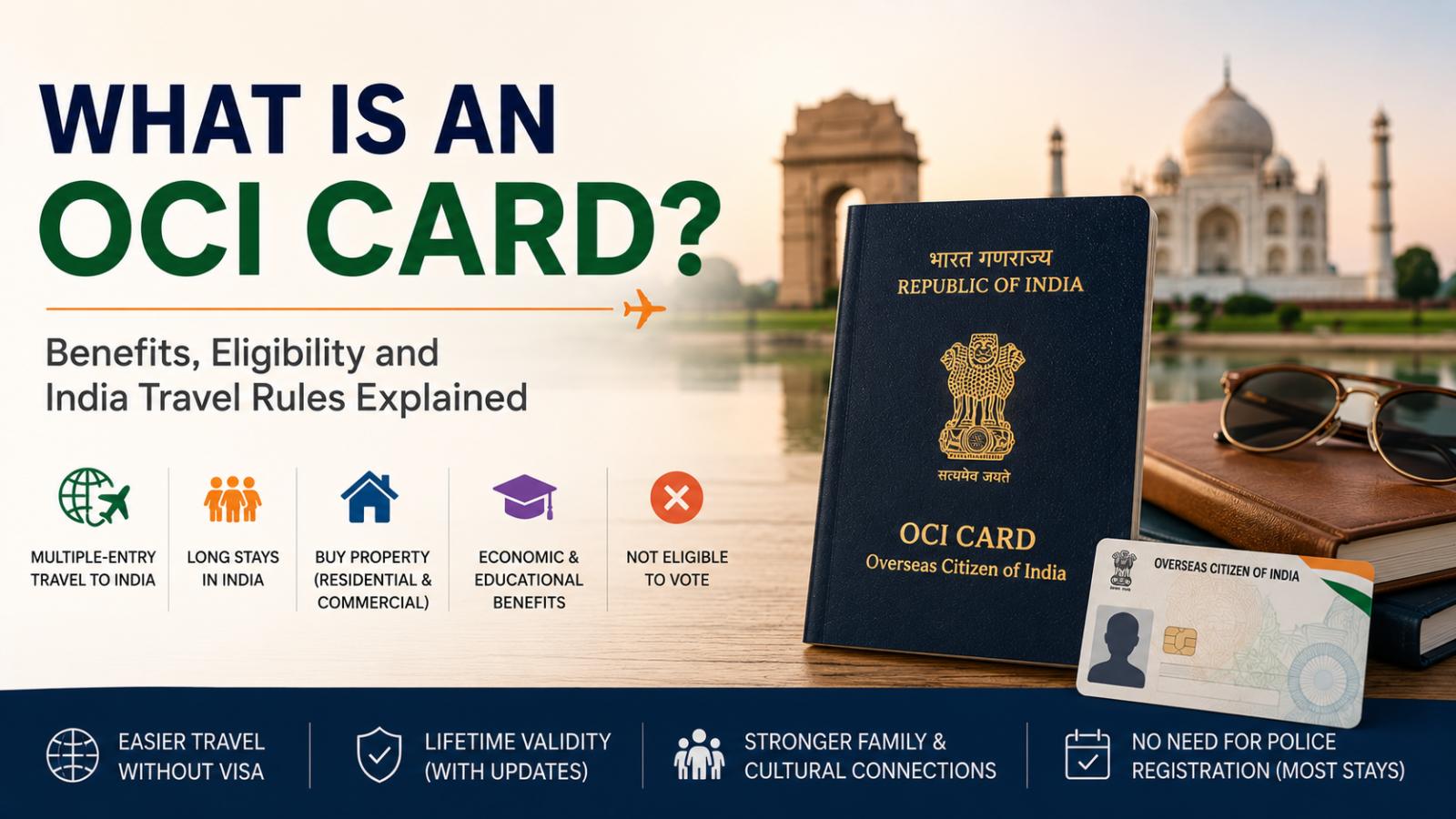
An OCI card, or Overseas Citizen of India card, gives eligible foreign citizens of Indian origin long-term access to India.
For Indian-origin Americans, the OCI card is especially useful after U.S. citizenship. It helps eligible former Indian citizens and people of Indian origin visit India frequently, stay for longer periods and maintain family, cultural, property and business ties with India.
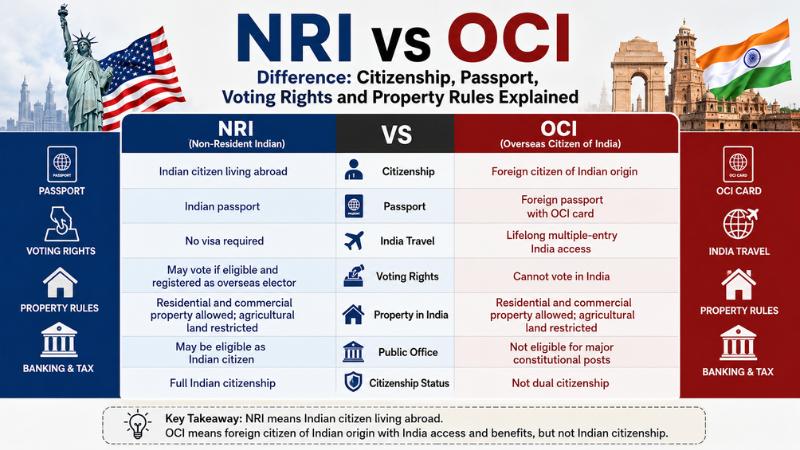
However, OCI is not Indian citizenship. OCI cardholders cannot vote in India, hold an Indian passport, contest elections or claim full political rights available to Indian citizens.
The full form of OCI is Overseas Citizen of India.
Despite the word “citizen,” OCI does not mean dual citizenship. India treats an OCI cardholder as a foreign citizen of Indian origin with certain India-related benefits.
In simple words, OCI gives long-term India access, but it does not give Indian citizenship.
An OCI card allows eligible foreign citizens of Indian origin to travel to India repeatedly without applying for a regular visa for every visit.
OCI cardholders can generally stay in India for extended periods, subject to applicable rules. This makes the card useful for family visits, religious events, property matters, medical needs, business travel and long-term India connections.
For Indian-origin Americans, OCI often becomes the main India travel document after becoming a U.S. citizen and surrendering the Indian passport.
OCI eligibility is generally linked to Indian origin.
A foreign citizen may be eligible if the person was an Indian citizen earlier, was eligible to become an Indian citizen under specified rules, or has parents, grandparents or great-grandparents connected to Indian origin, subject to official conditions.
Many former Indian citizens who become U.S. citizens apply for OCI after surrendering their Indian passport.
Eligibility can depend on citizenship history, family background, documents and country-specific restrictions. Applicants should check the latest official OCI rules before applying.
The biggest benefit of an OCI card is easier long-term travel to India.
Main OCI benefits include multiple-entry India access, longer stays in India, reduced visa paperwork, easier family visits, and the ability to maintain cultural, property and personal ties with India.
OCI can also help Indian-origin families who frequently travel to India for weddings, festivals, religious events, elder care, property matters or business needs.
For a full comparison with NRI status, read: NRI vs OCI Difference: Citizenship, Voting, Passport and Property Rules Explained.
Can OCI Cardholders Buy Property in India?
OCI cardholders can generally buy residential and commercial property in India, subject to applicable rules.
However, they are generally restricted from acquiring agricultural land, farmhouse or plantation property in India.
This means an OCI cardholder may be able to buy a house, apartment, villa, shop or office space, but not restricted agricultural property.
Inheritance rules may differ from purchase rules, so OCI cardholders dealing with ancestral property, farmland or inherited assets should check official rules or consult a legal professional.
Can OCI Cardholders Vote in India?
No. OCI cardholders cannot vote in Indian elections.
Voting rights are linked to Indian citizenship. Since OCI cardholders are foreign citizens, they do not get voting rights in India.
This is one of the clearest differences between OCI benefits and Indian citizenship rights.
An OCI card gives eligible foreign citizens of Indian origin long-term access to India.
For Indian-origin Americans, it is especially useful after U.S. citizenship because it supports frequent India travel, family visits, long stays, property matters and cultural connections.
But OCI is not Indian citizenship. OCI cardholders cannot vote, hold an Indian passport, contest elections or acquire restricted agricultural land, farmhouse or plantation property.
Before applying or making travel, property or legal decisions, readers should check the latest official rules.
What is an OCI card?
An OCI card gives eligible foreign citizens of Indian origin long-term access to India and certain India-related benefits.
What is the full form of OCI?
The full form of OCI is Overseas Citizen of India.
Is OCI Indian citizenship?
No. OCI is not Indian citizenship.
Is OCI dual citizenship?
No. OCI is not dual citizenship.
Can OCI cardholders vote in India?
No. OCI cardholders cannot vote in Indian elections.
Can OCI cardholders hold an Indian passport?
No. OCI cardholders cannot hold an Indian passport because they are foreign citizens.
Can OCI cardholders buy property in India?
OCI cardholders can generally buy residential and commercial property in India, but agricultural land, farmhouse and plantation property are restricted.
Do OCI cardholders need a visa for India?
OCI cardholders generally do not need a regular visa for most India visits, subject to official rules.
For Indian-origin Americans, the OCI card is especially useful after U.S. citizenship. It helps eligible former Indian citizens and people of Indian origin visit India frequently, stay for longer periods and maintain family, cultural, property and business ties with India.
However, OCI is not Indian citizenship. OCI cardholders cannot vote in India, hold an Indian passport, contest elections or claim full political rights available to Indian citizens.
What Is the Full Form of OCI?
The full form of OCI is Overseas Citizen of India.
Despite the word “citizen,” OCI does not mean dual citizenship. India treats an OCI cardholder as a foreign citizen of Indian origin with certain India-related benefits.
In simple words, OCI gives long-term India access, but it does not give Indian citizenship.
What Does an OCI Card Allow?
An OCI card allows eligible foreign citizens of Indian origin to travel to India repeatedly without applying for a regular visa for every visit.
OCI cardholders can generally stay in India for extended periods, subject to applicable rules. This makes the card useful for family visits, religious events, property matters, medical needs, business travel and long-term India connections.
For Indian-origin Americans, OCI often becomes the main India travel document after becoming a U.S. citizen and surrendering the Indian passport.
Who Can Apply for an OCI Card?
OCI eligibility is generally linked to Indian origin.
A foreign citizen may be eligible if the person was an Indian citizen earlier, was eligible to become an Indian citizen under specified rules, or has parents, grandparents or great-grandparents connected to Indian origin, subject to official conditions.
Many former Indian citizens who become U.S. citizens apply for OCI after surrendering their Indian passport.
Eligibility can depend on citizenship history, family background, documents and country-specific restrictions. Applicants should check the latest official OCI rules before applying.
Key Benefits of an OCI Card
The biggest benefit of an OCI card is easier long-term travel to India.
Main OCI benefits include multiple-entry India access, longer stays in India, reduced visa paperwork, easier family visits, and the ability to maintain cultural, property and personal ties with India.
OCI can also help Indian-origin families who frequently travel to India for weddings, festivals, religious events, elder care, property matters or business needs.
For a full comparison with NRI status, read: NRI vs OCI Difference: Citizenship, Voting, Passport and Property Rules Explained.
What Are the Restrictions on OCI Cardholders?
OCI cardholders receive important benefits, but they also have clear restrictions. They cannot vote in Indian elections. They cannot contest elections or become members of Parliament or state legislatures. They cannot hold major constitutional posts in India. OCI cardholders also cannot hold an Indian passport because they are foreign citizens. Indian passports are only for Indian citizens.
Can OCI Cardholders Buy Property in India?
OCI cardholders can generally buy residential and commercial property in India, subject to applicable rules.
However, they are generally restricted from acquiring agricultural land, farmhouse or plantation property in India.
This means an OCI cardholder may be able to buy a house, apartment, villa, shop or office space, but not restricted agricultural property.
Inheritance rules may differ from purchase rules, so OCI cardholders dealing with ancestral property, farmland or inherited assets should check official rules or consult a legal professional.
Can OCI Cardholders Vote in India?
No. OCI cardholders cannot vote in Indian elections.
Voting rights are linked to Indian citizenship. Since OCI cardholders are foreign citizens, they do not get voting rights in India.
This is one of the clearest differences between OCI benefits and Indian citizenship rights.
An OCI card gives eligible foreign citizens of Indian origin long-term access to India.
For Indian-origin Americans, it is especially useful after U.S. citizenship because it supports frequent India travel, family visits, long stays, property matters and cultural connections.
But OCI is not Indian citizenship. OCI cardholders cannot vote, hold an Indian passport, contest elections or acquire restricted agricultural land, farmhouse or plantation property.
Before applying or making travel, property or legal decisions, readers should check the latest official rules.
OCI FAQs
What is an OCI card?
An OCI card gives eligible foreign citizens of Indian origin long-term access to India and certain India-related benefits.
What is the full form of OCI?
The full form of OCI is Overseas Citizen of India.
Is OCI Indian citizenship?
No. OCI is not Indian citizenship.
Is OCI dual citizenship?
No. OCI is not dual citizenship.
Can OCI cardholders vote in India?
No. OCI cardholders cannot vote in Indian elections.
Can OCI cardholders hold an Indian passport?
No. OCI cardholders cannot hold an Indian passport because they are foreign citizens.
Can OCI cardholders buy property in India?
OCI cardholders can generally buy residential and commercial property in India, but agricultural land, farmhouse and plantation property are restricted.
Do OCI cardholders need a visa for India?
OCI cardholders generally do not need a regular visa for most India visits, subject to official rules.