Found someone lost in the U.S.? This guide explains how to respond safely when a person appears confused, distressed or separated from family, including when to call 911 or 988, how to handle language barriers, protect privacy and involve local authorities or community support.
Found someone lost or distressed? Start with safety
Found someone who appears lost, confused or distressed in public? A calm response can help, but bystanders should avoid assumptions about the person’s health, immigration status or family situation.
Check for immediate danger
If the person is seriously injured or facing an immediate threat or urgently needs police, fire or medical assistance, call 911. Give the dispatcher the location and describe what you can observe.
If there is no immediate emergency, consider contacting the local police department through its non-emergency number.
Ask before trying to help
If it is safe to approach, introduce yourself and ask simple questions: Do you need help? What language do you speak? Is there a family member or trusted person you want contacted?
Someone who appears confused should not automatically be described as homeless, mentally ill, abandoned or missing. Those conclusions may be wrong and can expose a vulnerable person to unnecessary attention.
If language is a barrier, tell responding authorities which language appears to be needed. A trusted community member or interpreter may help with communication.
Know when crisis support may help
If the person appears to be experiencing emotional distress or a behavioral-health crisis but is not in immediate physical danger, the 988 Suicide & Crisis Lifeline may be an option. People in the United States can call or text 988 for crisis support, including when they are worried about someone else.
For an immediate threat to life or safety, use 911.
Avoid forcing or restraining the person
Do not assume you have authority to force an adult into a vehicle, prevent them from leaving or take them elsewhere against their wishes. Laws covering restraint and emergency intervention vary by state.
When serious safety concerns exist, contact trained professionals rather than trying to physically control the situation.
Protect privacy when sharing online
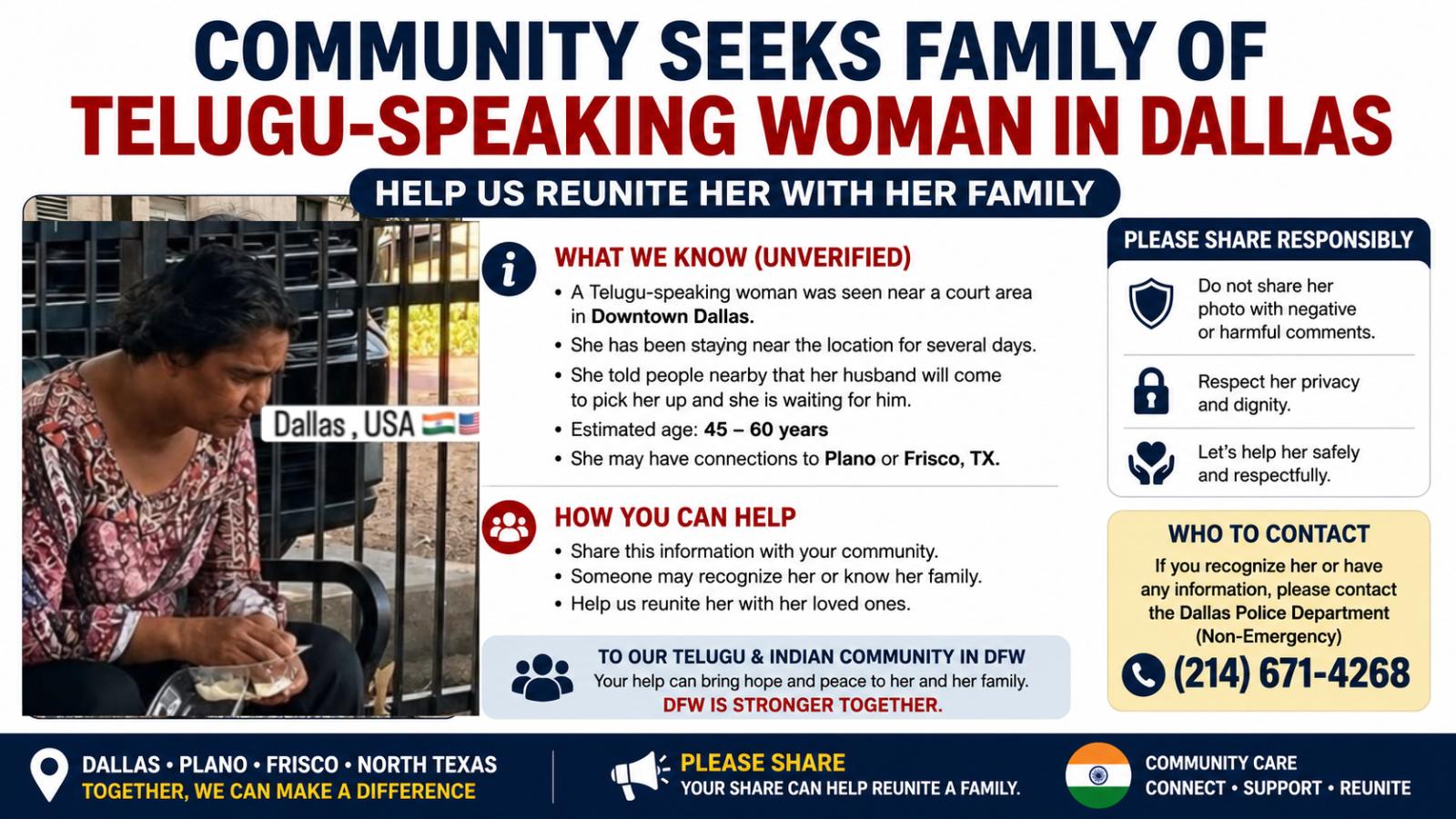
A recent Dallas community appeal involving a Telugu-speaking woman shows how social sharing can help connect someone with family while still requiring careful verification.
Social media and community organizations can sometimes help reconnect people with family, especially when language barriers are involved.
Share only information reasonably necessary to seek assistance. Avoid posting identification documents, home addresses, medical or financial details, or unsupported claims.
Community help works best when it combines compassion with caution: address immediate danger, communicate respectfully, involve appropriate services and protect the person’s dignity while efforts are made to reconnect them with trusted support.
If the person you are trying to help may actually be missing from their family, read what families should do first when someone goes missing in the U.S.