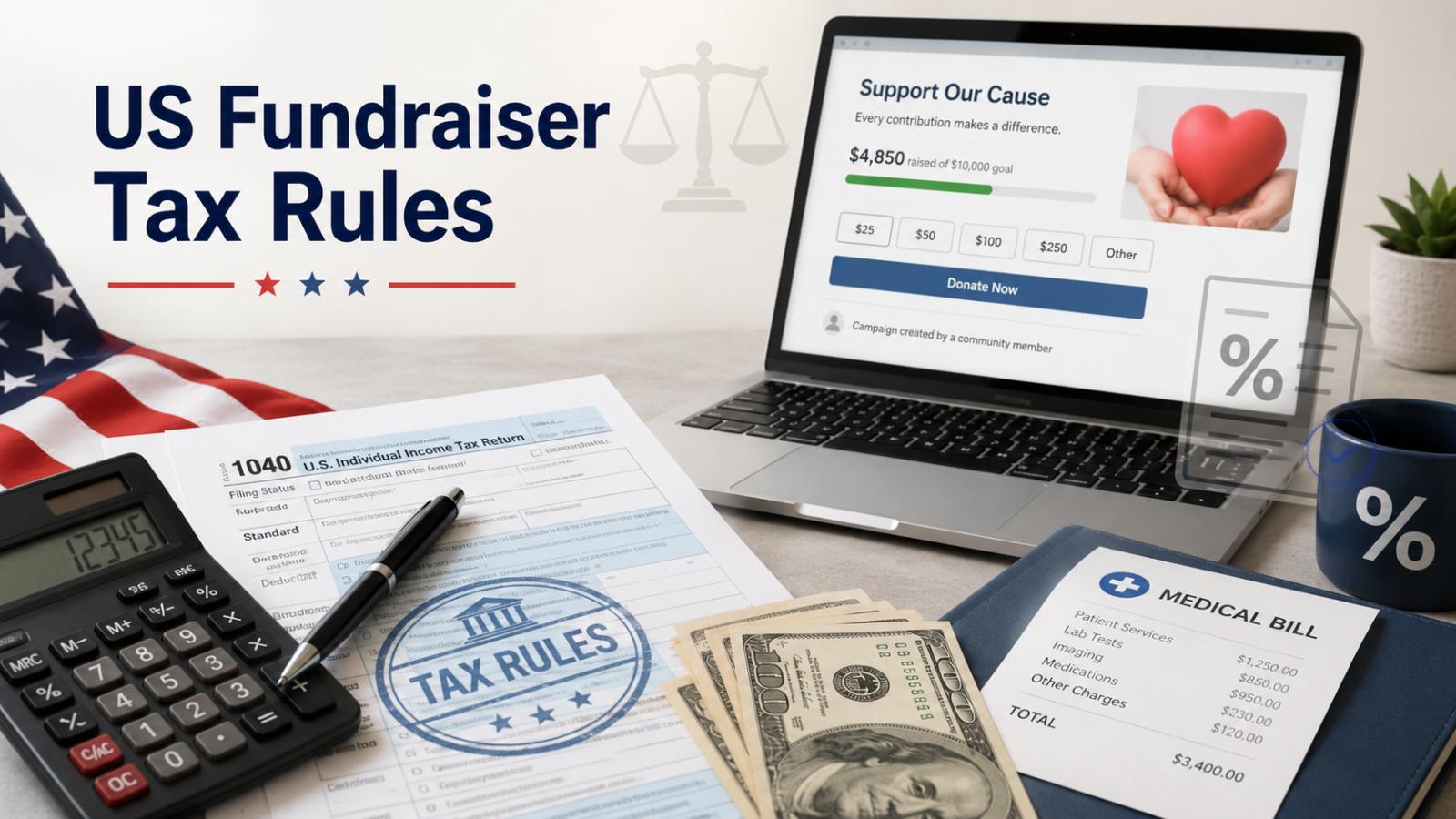
Are GoFundMe donations tax-deductible in the United States? Personal fundraiser donations generally do not qualify, while donations to eligible nonprofit campaigns may. New 2026 federal rules also provide a limited deduction for certain cash gifts to qualified charities.
Are personal GoFundMe donations tax-deductible?
In most cases, donations to personal GoFundMe campaigns are not tax-deductible in the United States.
The IRS states that contributions made to a specific individual cannot be claimed as charitable deductions. That applies even when the recipient is facing medical expenses, financial hardship or another serious emergency.
GoFundMe similarly says donations to personal fundraisers are generally treated as personal gifts and are not guaranteed to be tax-deductible. The platform does not issue a tax-deductible receipt for these personal campaigns.
When can a GoFundMe donation be deductible?
A different rule applies when a fundraiser supports an eligible nonprofit organization.
The IRS allows charitable deductions for contributions to qualified organizations. Most qualifying charities include organizations recognized under Section 501(c)(3), although other categories can also qualify. Donors can verify an organization's eligibility through the IRS Tax Exempt Organization Search.
GoFundMe says U.S. nonprofit fundraisers display a “Tax deductible” designation and eligible donations receive a tax receipt through its nonprofit fundraising system.
What changed for charitable donations in 2026?
A notable federal tax change took effect for tax year 2026.
The IRS says taxpayers who do not itemize deductions may be able to deduct up to $1,000 in qualifying cash charitable contributions, or $2,000 for married couples filing jointly. The contribution must still be made to an eligible qualified organization.
This does not make ordinary personal GoFundMe donations deductible. A donation to an individual fundraiser remains different from a qualifying charitable contribution.
What about medical GoFundMe campaigns?
A fundraiser being created for medical treatment does not by itself turn the donation into a charitable deduction.
IRS guidance specifically says contributions to identified individuals are not deductible. It also notes that payments to a hospital earmarked for a specific patient's care are not deductible as charitable contributions, even when the hospital itself is a qualified organization.
What donors should check before claiming a deduction
Before including a crowdfunding contribution on a U.S. tax return, donors should confirm whether the campaign supports a qualified nonprofit and retain the donation receipt or other required records.
If the fundraiser is for a specific person or family, donors generally should not treat the contribution as a charitable tax deduction merely because it was made through GoFundMe.
For large donations, cross-border contributions or unusual tax circumstances, professional tax advice may be appropriate.
This article provides general tax information and is not individualized tax or legal advice.