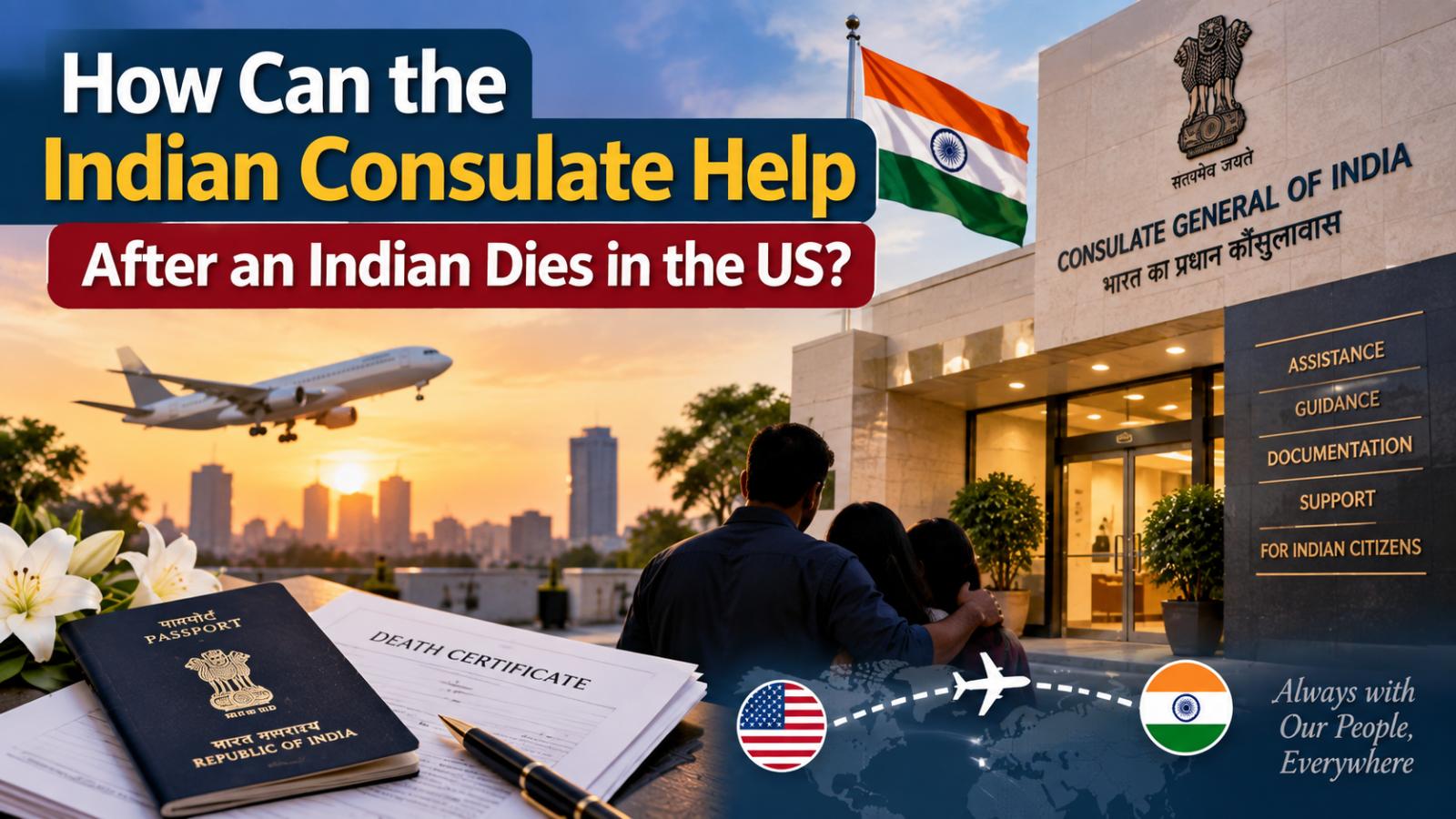
When an Indian citizen dies in the US, the appropriate Indian Consulate can help the family with death registration, documentation, coordination with local authorities and repatriation formalities. In qualifying cases, financial assistance may also be considered.
When an Indian citizen dies in the United States, the Indian Consulate responsible for the state where the death occurred can become an important point of contact for the family.
The Consulate does not replace U.S. police, medical examiners, funeral homes or airlines, but it can help families navigate the official process and coordinate the paperwork required to send mortal remains to India.
The Consulate can help register the death
India's Ministry of External Affairs says the death of an Indian national abroad should be registered with the concerned Indian Mission or Post before repatriation.
Families may be asked to provide the deceased person's passport, death certificate or medical report, visa details and consent from the next of kin. In accidental or unnatural-death cases, police documentation may also be required.
Some Indian Consulates in the United States require families to complete death registration through the government's eSEWA consular platform before applying for documentation connected with transportation of mortal remains.
Consular officials can coordinate repatriation
Indian Missions and Posts can remain in contact with the deceased person's family and liaise with local authorities to help complete formalities.
The Ministry of External Affairs states that Missions may coordinate with foreign authorities and facilitate transportation of mortal remains or local burial or cremation according to the family's wishes.
Families will usually still need a licensed funeral home to handle embalming, preparation, transport to the airport and airline cargo arrangements.
The Consulate can assist with required documents
Documents for repatriation may include a death certificate, embalming certificate, transit permit, next-of-kin authorization and the deceased person's passport.
A No Objection Certificate from the Indian Mission or Consulate may also be required before the remains can be transported to India. Exact requirements can vary by consular jurisdiction and individual circumstances.
Financial assistance may be available in some cases
If a family cannot afford repatriation, the Indian Mission may consider assistance on a means-tested basis.
The Ministry of External Affairs says financial support may be considered in qualifying cases, including through mechanisms such as the Indian Community Welfare Fund, depending on eligibility and whether other sources such as an employer or insurance are available.
Families should contact the appropriate Consulate as early as possible because investigations, documentation and local procedures can affect how quickly repatriation can take place.