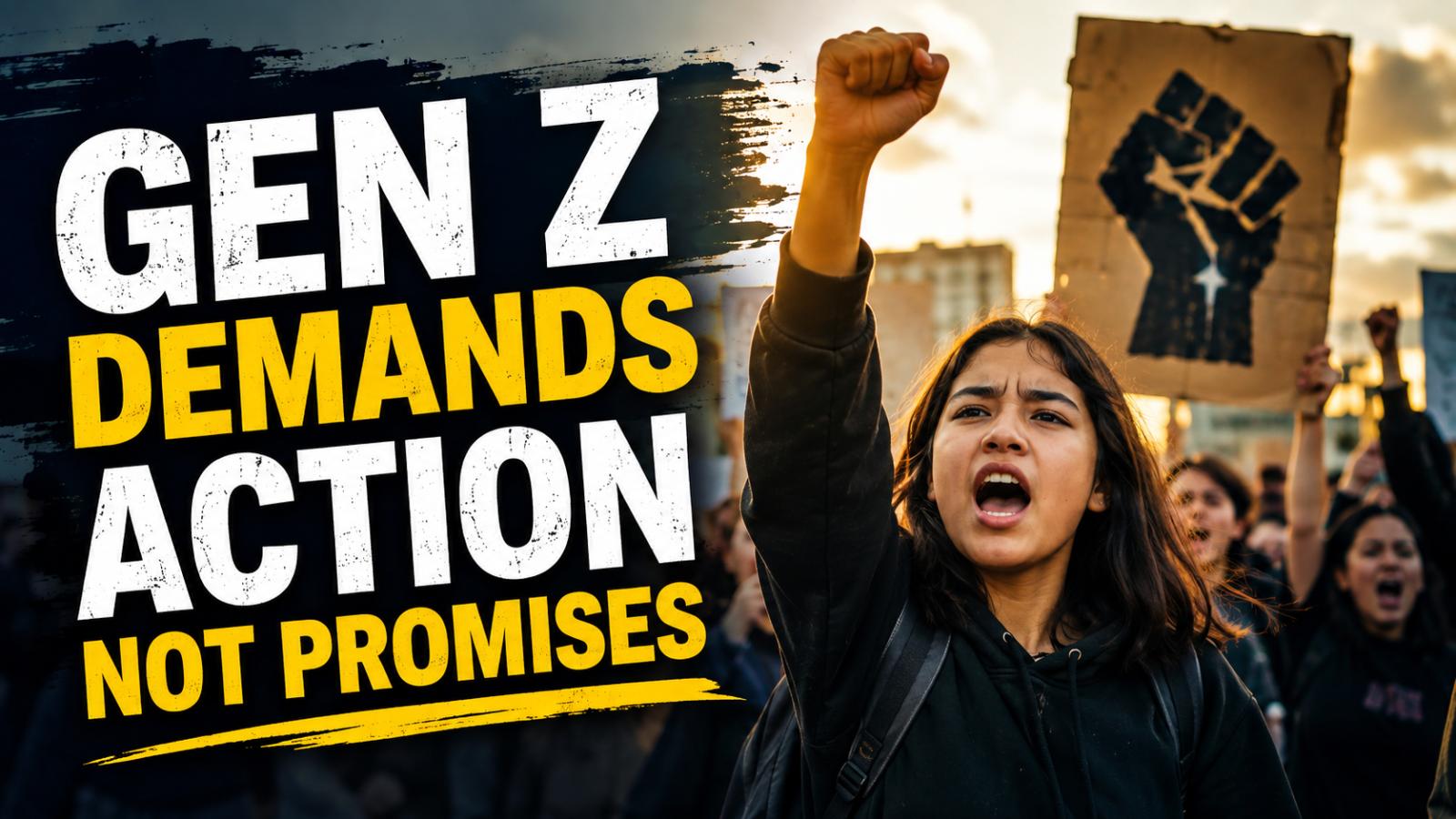
Gen Z youth protest demands are exposing a widening trust gap between young people and institutions. Youth anger, police duty, peaceful protest, public trust and real action now sit at the center of a debate over how leaders should respond to student grievances.
Youth anger reflects a deeper warning
The frustration coming from young people should not be dismissed as youthful impatience or another social media trend. Many members of Gen Z believe the problems they are raising today could become even more serious for Gen Alpha, including their younger brothers, sisters, cousins and future communities.
Trying to calm protesters by copying their slang or using popular expressions may therefore miss the point. For many students, talk has become cheap when it is not followed by visible action. Placards, chants, demonstrations, emotional appeals and hunger strikes are often intended to force institutions to acknowledge that a genuine grievance exists.
Real action matters more than promises
Listening does not mean every demand can be fulfilled immediately. Complex reforms can require time, funding, legislation or administrative changes. However, institutions can still acknowledge concerns, explain what can realistically be achieved and begin taking measurable steps.
Young people are increasingly skeptical of promises that sound impressive but offer no clear path toward delivery. Governments, universities and other institutions risk damaging credibility when they repeatedly make commitments that are later abandoned.
Clear timelines, realistic commitments and regular progress updates are more valuable than promises designed only to temporarily reduce public pressure.
Police duty requires restraint
Police officers have a difficult responsibility during demonstrations. They must maintain public safety while also respecting people taking part in peaceful assemblies.
Students should not automatically be treated as threats simply because they are loud, emotional or openly critical of authorities. Communication, restraint and de-escalation should remain central whenever demonstrations remain peaceful.
Aggressive responses can quickly increase tension and shift public attention away from the original grievances toward confrontation between protesters and law enforcement.
Peaceful protest protects the cause
Students also carry responsibility for keeping their movement credible. Large demonstrations can attract individuals who may not share the protesters' goals and may instead attempt to provoke violence, damage property or trigger confrontation.
Protesters should remain aware of their surroundings and reject anyone attempting to hijack the movement. Organizers can strengthen their message by encouraging nonviolence, cooperating on safety measures and making their demands clear.
Once violence dominates public discussion, the original purpose of the protest can easily disappear from view.
Public trust depends on listening
The larger question is not whether Gen Z is more emotional or demanding than previous generations. The real issue is whether institutions can respond to youth grievances with seriousness, transparency and measurable action.
Gen Z is sending a clear message that symbolic gestures alone are no longer enough. If leaders want to rebuild public trust, they must show that they are listening, avoid promises they cannot reasonably keep and demonstrate progress where change is possible.
At the same time, students must protect the legitimacy of their movements by remaining peaceful and focused on their demands. Police, protesters and public institutions all have responsibilities. When restraint replaces confrontation and action replaces empty assurances, meaningful dialogue becomes far more possible.