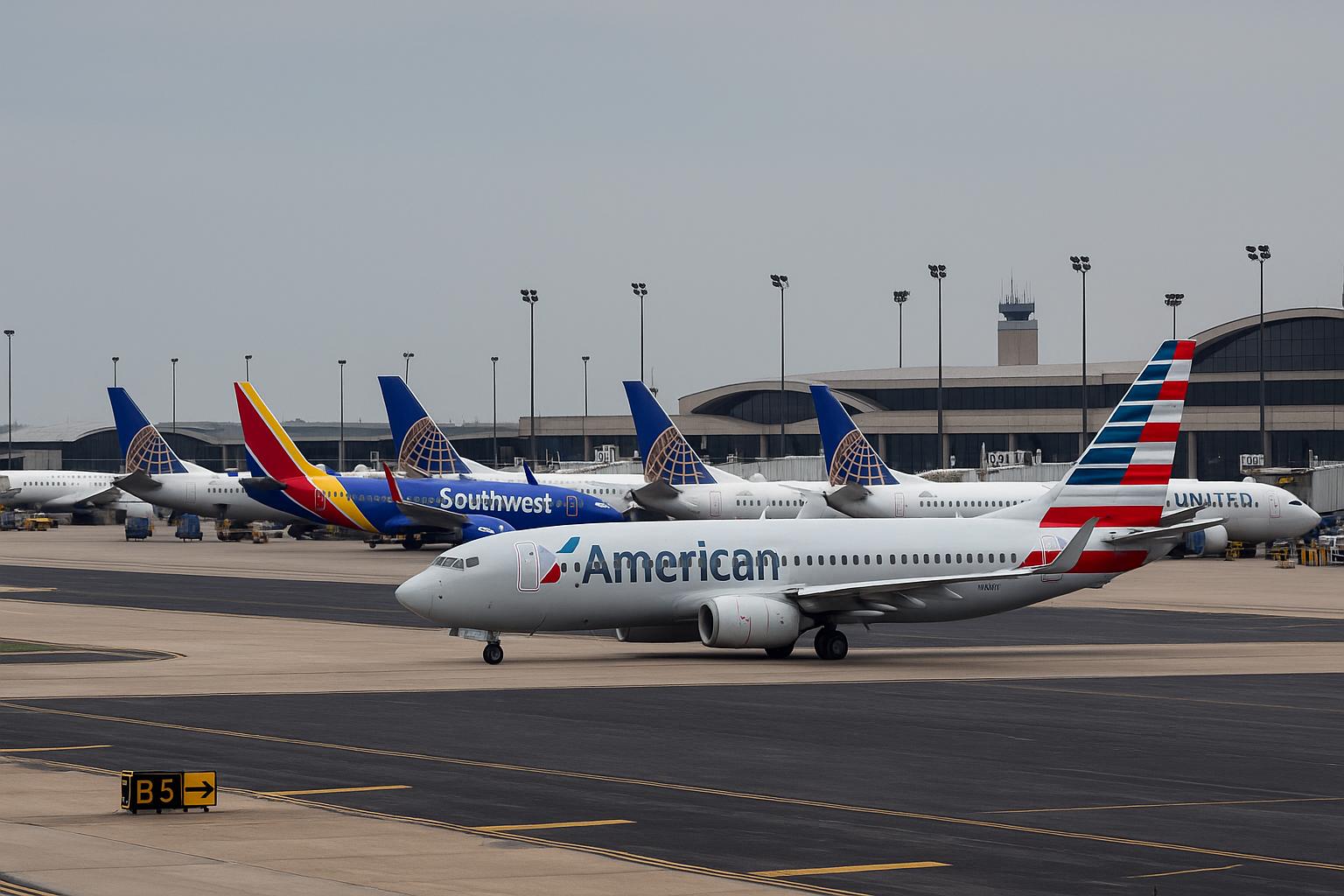
With the historic government shutdown approaching its resolution, flight delays continue to ripple across the United States as the Federal Aviation Administration (FAA) enforces a nationwide order aimed at reducing strain on air traffic controllers. The measure, while temporary, has led to extended flight times, increased rerouting, and longer wait periods for passengers and pilots alike.
For the fifth consecutive day, air traffic operations have slowed as the FAA manages reduced staffing levels and elevated stress among controllers, many of whom have been working without pay during the shutdown. The situation has placed additional pressure on both commercial and private aviation sectors, forcing pilots to make strategic adjustments to their routes and flight patterns.
In North Texas, pilot Marvin Bell has chosen to take a proactive approach to ease the load on overworked controllers. Flying between Grand Prairie Municipal Airport and McKinney National Airport, Bell deliberately adds distance to his route to avoid heavily monitored airspaces. “I just routed my flight, and because of the shutdown, I didn’t want to bother ATC,” Bell explained. “Flying under the Bravo airspace would have saved me about seven minutes.”
Typically, Bell would contact air traffic control for clearance through the restricted airspace surrounding Dallas-Fort Worth International Airport and Dallas Love Field. This week, however, he decided to bypass radio communication entirely by taking an alternate path around the region’s controlled airspace. “I flew around so I wouldn’t have to contact ATC and not burden them with little old me,” he said, describing the small but deliberate effort to help relieve the workload faced by federal controllers.
At Chicago’s O’Hare International Airport, Transportation Secretary Sean Duffy addressed the ongoing disruptions, warning that staffing shortages could persist until the government fully reopens. “You’re going to see this Friday, Saturday, and Sunday, the big disruption thus far, massively more disruptions as we come into the weekend if the government doesn’t open,” Duffy said during a briefing.
The FAA’s restrictions are part of a coordinated response designed to maintain air safety standards while reducing the risk of burnout among critical personnel. Many controllers have reportedly been working overtime to sustain operations at major airports, leading to widespread fatigue concerns within the aviation industry. Airlines have also been forced to adjust schedules, with some flights delayed or rerouted to comply with reduced capacity guidelines.
For pilots like Bell, the inconvenience of longer routes and added flight time is a small price to pay to support those managing the nation’s airspace. “They’re crucial to everything that we do in aerospace,” he said, acknowledging the controllers’ essential role in maintaining order and safety.
As the FAA and airlines collaborate to restore normal operations, the situation has become a reminder of the delicate balance between efficiency and safety within U.S. aviation. While passengers continue to experience delays, industry professionals are urging patience and cooperation as the system recovers from the disruption.
For now, small gestures of support from pilots and aviation workers represent a collective effort to keep flights operating safely amid unprecedented challenges. As the government moves closer to reopening, the nation’s skies remain a symbol of both the strain and solidarity that define the aviation community during times of uncertainty.