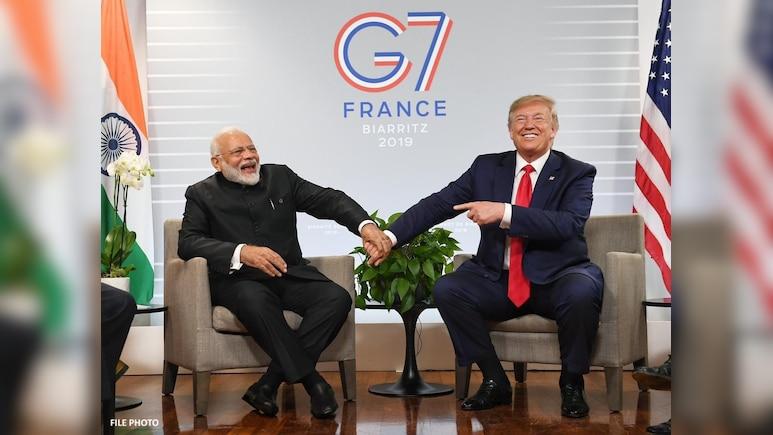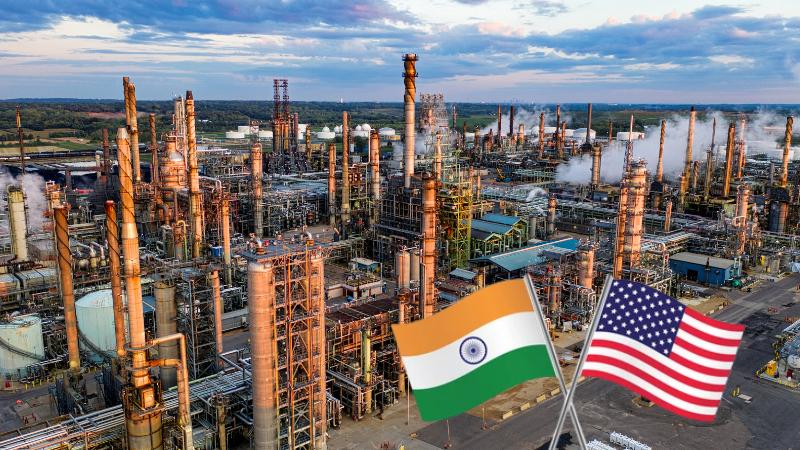
The long-awaited trade deal between India and the United States is expected to materialize in the near future, according to U.S. Secretary of Commerce Howard Lutnick. Speaking on June 2, 2025, at the eighth edition of the Leadership Summit hosted by the U.S.-India Strategic Partnership Forum in Washington, Mr. Lutnick shared insights on the progress of the negotiations, highlighting that India stands to gain favorable tariffs on multiple manufacturing sectors, providing it a competitive advantage globally.
Mr. Lutnick acknowledged the reality of international trade negotiations by stating that countries that negotiate earlier typically receive better deals. He commended India for its efforts to be among the first to secure a beneficial agreement, noting the country's proactive approach. Typically, trade deals take two to three years to finalize, but according to the Commerce Secretary, India's decision to assign the "right person on the other side of the table" has sped up the negotiation process considerably. He contrasted this with the usual drawn-out talks led by trade ministers accustomed to lengthy discussions without swift outcomes.
The potential trade deal, while not comprehensive, is expected to open up reasonable market access for the U.S. in India. Mr. Lutnick explained that the deal would not cover all sectors or markets but aims to reduce the trade deficit between the two countries. In return, India will seek preferential access to key American markets. This mutual exchange of benefits is central to the ongoing discussions.
Furthermore, the U.S. government envisions bringing back advanced manufacturing to American soil but also recognizes an opportunity for India to manufacture a broad range of products. The envisioned trade deal would position India uniquely, granting it special tariff relationships in certain industries compared to other countries worldwide. This arrangement would effectively benefit India by making it a preferred manufacturing partner for the U.S. in those sectors.
Agricultural market access remains sensitive due to strong domestic political voices in both countries. Mr. Lutnick acknowledged these political realities but expressed optimism that India and the U.S. have found an acceptable political balance that respects the interests of farmers while advancing bilateral trade.
The Secretary also addressed past frictions in the India-U.S. relationship, particularly India's defense procurement from Russia, which has traditionally been a point of contention. He pointed out that India is now moving towards purchasing military equipment from the U.S., a shift that significantly improves bilateral ties. This change indicates India's growing alignment with the U.S. in strategic and defense areas.
Additionally, Mr. Lutnick highlighted India’s efforts to distance itself from discussions about BRICS countries moving away from the U.S. dollar-based financial system. This move signals a stronger commitment to maintaining economic ties with the U.S. and a willingness to deepen cooperation.
The India-U.S. trade deal appears to be approaching fruition faster than usual, driven by pragmatic leadership and mutual economic interests. The agreement is expected to provide India with advantageous tariffs on many manufacturing goods, enhancing its global competitiveness. At the same time, the U.S. will gain reasonable access to Indian markets, supporting its efforts to rebalance trade and encourage manufacturing partnerships. Political and strategic alignments, such as defense cooperation and financial ties, further underscore the evolving strength of the India-U.S. economic relationship. As negotiations continue, both countries seem poised to benefit from a deal that fosters growth, market access, and closer bilateral ties.