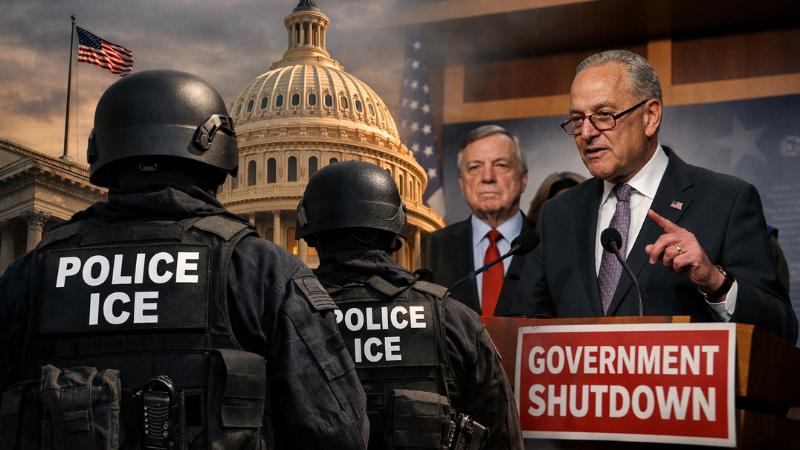
Senate Democrats signaled they are prepared to block a sweeping federal spending measure that includes funding for the Department of Homeland Security, escalating a budget standoff that could bring the federal government closer to a partial shutdown by the end of the week. The dispute centers on Democratic demands for new limits on the administration’s expanded immigration enforcement operations, which Republicans and the White House have so far resisted.
The legislation, scheduled for a key procedural vote Thursday morning, would finance Homeland Security along with several other federal agencies. Without Democratic support, the bill lacks the votes needed to advance, setting the stage for a lapse in funding at midnight Friday. Democrats have made clear that unless changes are made to immigration enforcement practices, they will withhold their backing even if it means triggering a shutdown.
Late Wednesday, there were indications that negotiations could still yield a temporary solution. According to a person familiar with the private discussions, the White House expressed openness to separating Homeland Security funding from the broader spending package. Under the idea being explored, Homeland Security would receive short-term funding while negotiations continue on Democratic demands, while other agencies covered by the bill would be funded through the end of September. The source spoke on condition of anonymity due to the sensitive nature of the talks.
The confrontation has intensified following the deaths of two protesters in Minneapolis, who were fatally shot during encounters with federal agents. The incident has sharpened Democratic criticism of immigration enforcement tactics and added urgency to their push for new restrictions. In response, Senate Democrats outlined specific conditions they want included before allowing the funding bill to move forward. These include requirements for officers to remove face coverings, clearly identify themselves, and obtain warrants before making arrests.
Democratic leaders argue that these measures are necessary to restore public trust and ensure accountability. They say support for border security and law enforcement does not extend to practices they describe as excessive or opaque. Without agreement on these points, Democrats insist they are willing to block the bill, even as the deadline to keep the government open approaches.
Republicans counter that tying immigration enforcement conditions to must-pass funding legislation risks unnecessary disruption and uncertainty for federal agencies. They maintain that existing laws already provide appropriate oversight and warn that a shutdown would have far-reaching consequences, including delayed services and furloughed workers.
The current impasse recalls a government shutdown earlier this year, when lawmakers failed to reach consensus over expiring federal health care subsidies. That standoff resulted in a 43-day shutdown after negotiations collapsed. Although a small group of moderates eventually brokered a deal to reopen the government, party leaders acknowledge that the political dynamics are different this time.
Democrats appear more unified, galvanized by recent events and determined to force changes to immigration policy through the budget process. With hours remaining before the funding deadline, the outcome remains uncertain. Negotiators on both sides continue to weigh whether a short-term compromise can avert another shutdown or whether the standoff will once again disrupt federal operations nationwide.