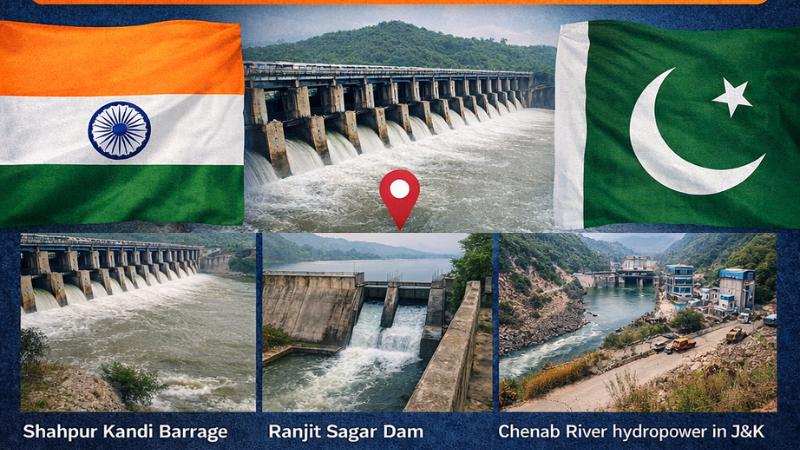
India is set to further restrict water flow to Pakistan ahead of the summer season with the completion of the Shahpur Kandi barrage on the Ravi River by March 31, 2026. The move comes at a time when tensions between the two neighbours remain high and follows India’s decision to suspend the Indus Waters Treaty after last year’s Pahalgam terror attack. With the new infrastructure in place, surplus water that previously flowed unused into Pakistan is now expected to be diverted for irrigation and domestic use within India.
The announcement was made by Jammu and Kashmir minister Javed Ahmed Rana, who said that excess water flowing into Pakistan would be stopped and redirected to benefit drought-prone districts such as Kathua and Samba. For decades, surplus water from the Ravi River continued to cross into Pakistan due to inadequate storage and regulation facilities on the Indian side. The Shahpur Kandi barrage is expected to change that dynamic, ensuring fuller utilisation of India’s share of eastern river waters under the 1960 Indus Waters Treaty.
Under the Indus Waters Treaty, brokered by the World Bank in 1960, India was granted unrestricted rights over the eastern rivers Sutlej, Beas and Ravi while Pakistan received rights over the western rivers Indus, Jhelum and Chenab. Although India has always had legal rights over the Ravi, surplus water often flowed downstream into Pakistan due to unfinished projects. The completion of Shahpur Kandi marks a significant shift in water management policy.
For Pakistan, which depends heavily on the Indus River system, the development could have serious consequences. Nearly 80 percent of Pakistan’s agricultural land relies on the Indus basin waters. Agriculture contributes roughly 25 percent to Pakistan’s GDP, making water availability crucial for crop production and food security. Major cities such as Lahore and Multan also depend on the Indus system for urban water supply. Reduced surplus flow from the Ravi, combined with accelerated Indian hydropower projects on the Chenab River and plans to resume work on the Wular barrage on the Jhelum, could intensify water stress downstream.
The Shahpur Kandi project has faced delays for nearly 46 years. Originally conceived in 1979 alongside the Ranjit Sagar Dam project, its foundation stone was laid in 1982. However, political disputes between Punjab and Jammu and Kashmir stalled progress multiple times. A breakthrough came in December 2018 when the central government brokered a fresh agreement and provided financial assistance to restart construction. Once operational from April 2026, the barrage is expected to irrigate over 32,000 hectares of land, with additional benefits for agricultural areas in Punjab.
Pakistan has raised concerns internationally, including approaching the Court of Arbitration in The Hague over what it termed the weaponisation of water. India, however, maintains that the Shahpur Kandi barrage falls fully within its treaty rights over the eastern rivers. The development signals a tougher water policy stance from New Delhi, emphasising maximum utilisation of allocated river waters within India’s territory as regional relations remain strained.