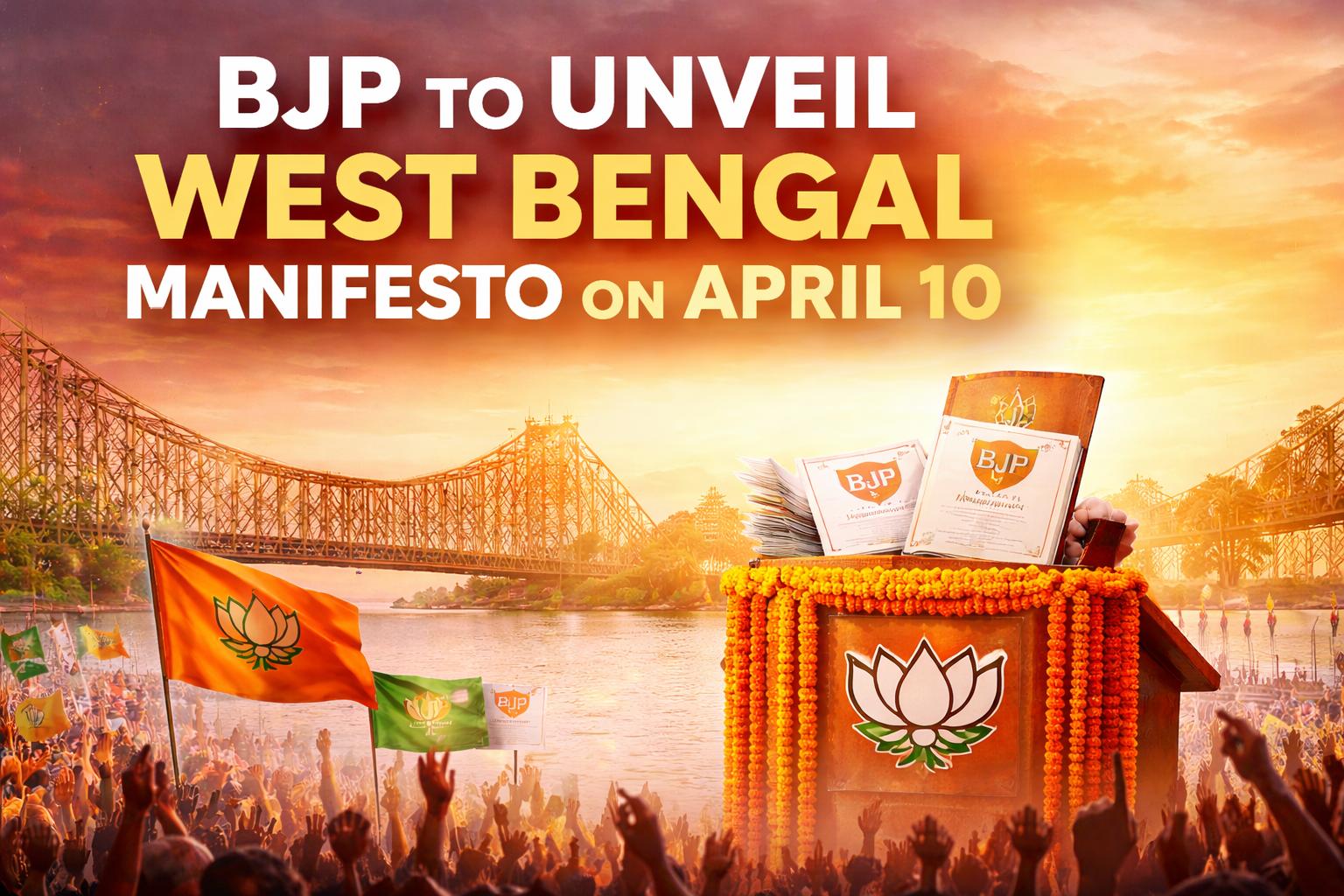
The BJP is gearing up to unveil its much-anticipated West Bengal manifesto on April 10, with Union Home Minister Amit Shah expected to lead the event in Kolkata. This manifesto is being presented as a comprehensive development agenda that will focus on addressing key concerns of various sections of society, including women, farmers, and youth. The BJP’s strategy for the upcoming elections is centered around offering welfare benefits, promoting industrial growth, and enhancing sectors like healthcare, education, and employment. The manifesto is also poised to provide a strong critique of the ruling Trinamool Congress (TMC), highlighting the BJP's vision for a more transparent, prosperous, and inclusive West Bengal.
One of the most significant proposals in the BJP's manifesto is aimed at empowering women in the state. The party plans to introduce a monthly benefit of ₹3,000 for women beneficiaries, a move aimed at addressing economic challenges and promoting financial independence. Education and healthcare will also receive a special focus, with proposals for special packages designed to improve access to quality education and healthcare services for the general population. Additionally, the manifesto includes plans for establishing new colleges, especially for women, as part of the BJP’s broader effort to improve women's education and opportunities.
The manifesto outlines several initiatives to boost industrial growth in West Bengal. These include plans to establish industrial zones that will not only foster local business but also attract new investments, contributing to the state's economic development. The BJP is promising to create a conducive environment for businesses to flourish, including initiatives to support small and medium-sized enterprises (SMEs). Alongside industrial development, there will be a focus on improving agriculture, fisheries, and agro-processing units to bolster the rural economy and create more livelihood opportunities for farmers and fishermen.
Employment opportunities for the youth are another cornerstone of the BJP’s manifesto. The party plans to introduce various skill development programs, vocational training initiatives, and job creation schemes that will help address the high levels of unemployment in the state. These initiatives are expected to empower the youth of West Bengal and create a pool of skilled professionals who can contribute to the state’s growth. The BJP also aims to provide better access to government jobs and other employment opportunities, particularly in rural areas, to ensure that the youth can find stable, well-paying jobs close to home.
In addition to these welfare and development initiatives, the BJP has also focused on addressing the concerns of various other segments of society. For example, the manifesto includes proposals for the establishment of more hospitals to improve healthcare accessibility, particularly in rural and underserved areas. A special package for the fisheries and agro-processing sectors is designed to enhance the livelihoods of people involved in these industries.
The BJP’s manifesto preparation process began in early February and concluded by the end of that month, with extensive consultations held across the state. During this period, the BJP sought input from a broad range of stakeholders, including industrialists, educators, businesspersons, teachers, doctors, students, homemakers, farmers, and members of the Bengali diaspora. The party launched an extensive outreach campaign, “Bikoshito Paschim Banga Sankalp Patra - Paramarsha Sangraha Abhiyan,” to collect public suggestions and feedback. The campaign was inclusive, with various channels like phone calls, emails, QR codes, and designated hashtags enabling people to share their concerns and ideas.
The outreach campaign also involved setting up “Akanksha Sangraha Baksho” (aspiration boxes) in districts to collect written suggestions from citizens. More than 8 lakh suggestions were received, highlighting the high level of public engagement and participation in the process. BJP leaders emphasized that the manifesto would not only address traditional concerns like unemployment, corruption, and migration but also focus on transparency, job creation, and local opportunities for the youth.
A unique feature of the manifesto preparation process was the involvement of the Bengali diaspora. Online consultations and town hall meetings were organized, allowing people from the diaspora to participate in shaping the manifesto. This was part of the BJP's effort to ensure that the views of all sections of society, both within the state and abroad, were taken into account.
BJP West Bengal president Samik Bhattacharya played an active role in encouraging citizens to contribute their ideas and concerns. He stressed that the manifesto would reflect the aspirations of the people and should address key sectors such as education, employment, healthcare, women’s empowerment, youth development, agriculture, infrastructure, culture, sports, environment, law and order, and governance. Bhattacharya also emphasized that this exercise was open to all, regardless of political affiliation, and called for a collective effort to build a developed West Bengal that remains rooted in its rich heritage.
As the BJP prepares to unveil its manifesto, the party’s leaders are hoping that the document will resonate with voters and serve as a strong foundation for the party’s electoral strategy in West Bengal. With a focus on welfare, development, and transparency, the manifesto aims to provide a clear roadmap for the state’s future. The BJP’s pitch for the upcoming elections is not only about securing political power but also about offering a vision of a prosperous and inclusive West Bengal, where the needs and aspirations of all citizens are prioritized.