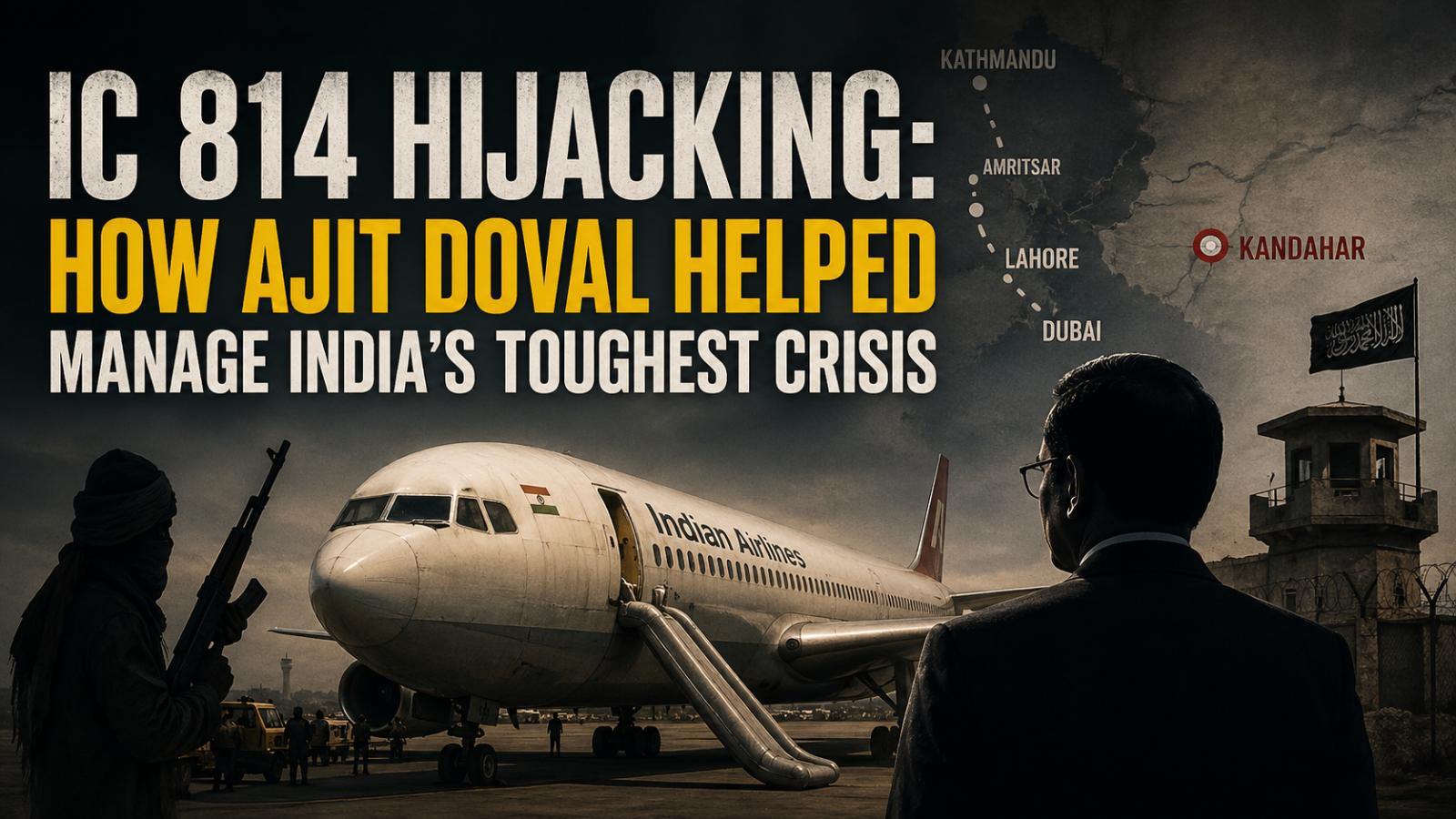
The IC 814 hijacking remains one of India’s most serious aviation crises, and the role of Ajit Doval in managing the situation from behind the scenes highlights the complexity of decisions taken under extreme pressure. The hijacking of Indian Airlines Flight IC-814 on December 24, 1999, forced India into a difficult choice between saving hostages and long-term security concerns.
The flight, traveling from Kathmandu to Delhi, was taken over mid-air by armed hijackers. What began as a routine journey quickly escalated into an international crisis as the aircraft was diverted across multiple cities before finally landing in Kandahar, Afghanistan, then under Taliban control. The situation placed India in a weak position, with limited operational control and growing risk to more than 150 passengers onboard.
Inside the aircraft, passengers faced fear, hunger, and uncertainty for seven days. Outside, the Indian government scrambled to assess options. Among the key figures involved was Ajit Doval, then a senior Intelligence Bureau officer, who played a critical role in analyzing the intentions of the hijackers and advising the crisis response team.
Doval’s task was to understand whether the hijackers were willing to negotiate or prepared to escalate violence. In a location like Kandahar, reliable intelligence was scarce, making his experience crucial in interpreting signals and guiding decision-making. The biggest question facing the government was whether to launch a rescue operation or enter negotiations.
A military rescue was considered highly risky due to Taliban presence and unfamiliar terrain. Intelligence assessments suggested that any attempt could lead to heavy casualties. This forced India to consider negotiation as the safer option, despite its long-term implications.
The hijackers demanded the release of three jailed terrorists: Masood Azhar, Ahmed Omar Saeed Sheikh, and Mushtaq Ahmed Zargar. As pressure mounted from families of hostages and time continued to run out, the government faced a deeply challenging decision.
Ajit Doval contributed by evaluating risks and helping shape negotiation strategies on the ground. His role was not public-facing but centered on assessing consequences and guiding policymakers through limited choices. The situation was not about achieving victory but about minimizing loss.
On December 31, 1999, India agreed to release the three militants in exchange for the safe return of the hostages. The passengers were freed, and the immediate crisis ended, but the decision had lasting security consequences for the country.
The IC 814 hijacking is often remembered for the concessions India made. However, it also reflects the reality of crisis management under extreme constraints, where intelligence inputs and strategic thinking play a vital role. Ajit Doval’s involvement demonstrates how critical decisions are shaped quietly, away from public view, during moments that define national security.