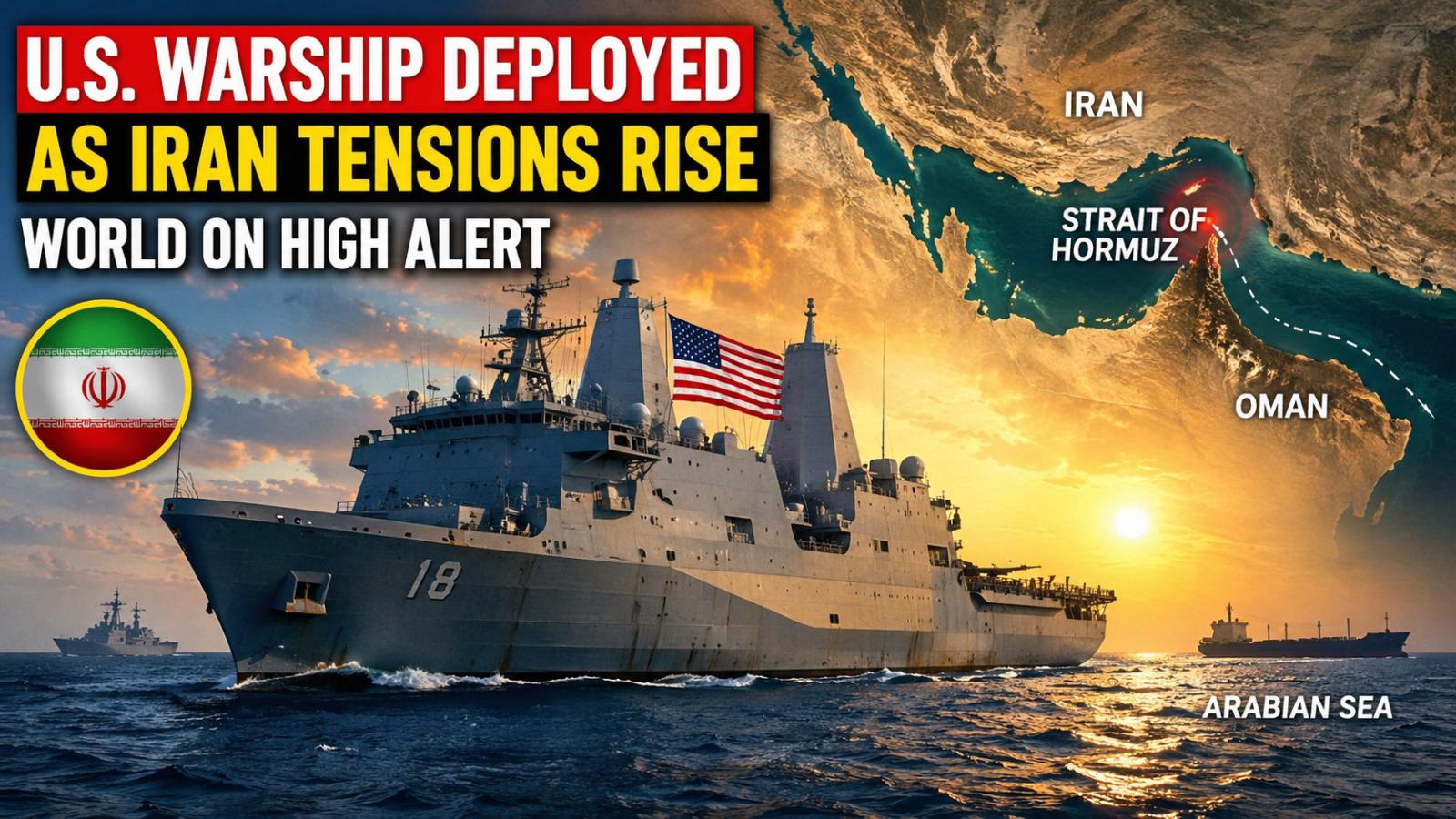
The deployment of the USS New Orleans (LPD-18) in the Arabian Sea is drawing global attention as tensions between the United States and Iran continue to escalate.
According to the U.S. Central Command, the warship has been actively involved in maritime patrol operations aimed at enforcing restrictions linked to Iran. Images released on May 2, 2026, show the vessel operating in strategic waters near one of the world’s most critical shipping lanes.
Why the Strait of Hormuz Matters
The patrols are concentrated near the Strait of Hormuz — a narrow passage that handles nearly 20% of the world’s oil supply.
Any disruption here can:
- Spike global oil prices
- Disrupt international trade
- Trigger wider geopolitical instability
U.S. Navy Steps Up Enforcement
CENTCOM reports that 48 vessels have been redirected in just 20 days, showing a clear escalation in enforcement activity.
The U.S. Navy is focusing on:
- Monitoring shipping routes
- Preventing restricted trade flows
- Maintaining regional maritime security
This signals a shift from passive monitoring to active control of key sea lanes.
Diplomatic Talks Stall as Trump Reacts
At the same time, diplomatic tensions are rising. Former U.S. President Donald Trump publicly rejected a new proposal from Iran.
Speaking from the White House, Trump stated that:
- The terms offered were “not acceptable”
- Iran’s leadership appears divided
- Military action remains a possibility, though not preferred
This adds uncertainty to already fragile negotiations between Washington and Tehran.
What This Means for the World
The situation is no longer just regional — it has global consequences.
Key risks include:
- Energy market instability
- Increased military presence in West Asia
- Potential escalation into conflict
The Arabian Sea is now a focal point of a broader geopolitical standoff.