Cockroach Janta Party’s sudden viral rise has made founder Abhijeet Dipke a social media sensation, but his parents fear the political satire platform may land him in trouble.
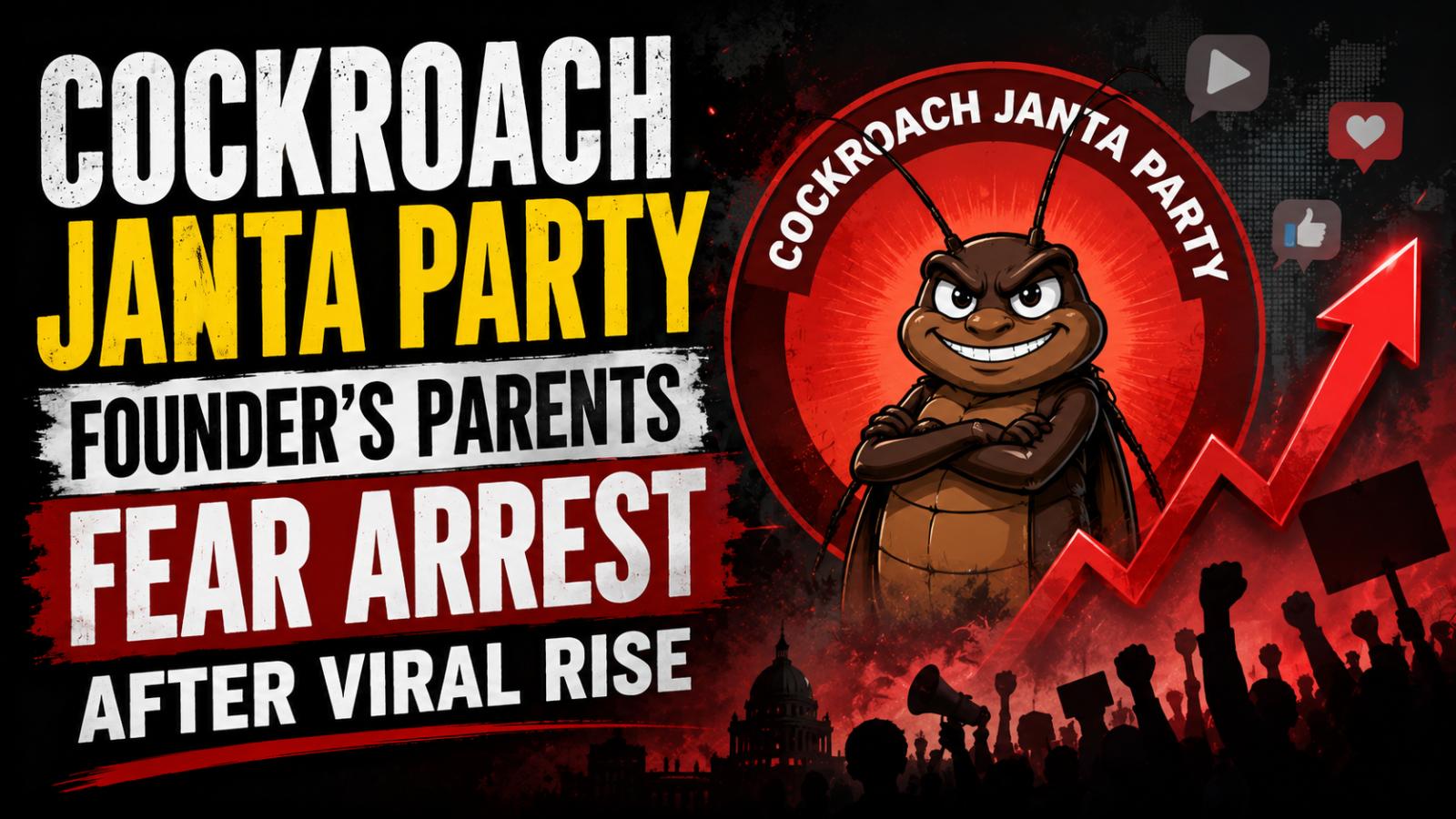
The sudden rise of the satirical digital platform Cockroach Janta Party has turned its founder Abhijeet Dipke into a social media talking point, but back home in Maharashtra, his parents are losing sleep over what this unexpected fame could bring next. The platform, popularly known as CJP, has gained massive attention online within days of its launch, drawing millions of followers with its sharp memes, political satire and youth-focused commentary.
Abhijeet Dipke, a Boston University student who was earlier associated with the Aam Aadmi Party, founded the platform after a controversy involving remarks attributed to Chief Justice of India Surya Kant. The controversy began after the terms “parasites” and “cockroaches” were reportedly used while addressing a matter linked to a lawyer’s plea for senior designation. Though the Chief Justice later clarified that he had been misquoted and that his remarks were aimed at people entering the legal profession through fake and bogus degrees, the episode triggered a wave of online reactions.
Out of that moment came the Cockroach Janta Party, using the insect as its symbol and turning outrage into satire. Within a short span, the platform caught fire on social media, especially among young users frustrated by issues such as unemployment, examination paper leaks, education failures and political accountability. Its content uses graphics, animations, mock manifestos and charter-style demands to package serious political issues in a humorous but pointed format.
Parents worried as CJP becomes viral
For Abhijeet’s parents, Bhagwan and Anita Dipke, the rapid rise of their son’s platform has brought more fear than celebration. Speaking to a Marathi news channel, they said they were not keen on their son entering politics and were deeply worried about the consequences of his growing visibility.
Bhagwan Dipke said that politics today naturally creates fear, especially when a young person becomes famous for sharp public commentary. He added that Abhijeet himself had expressed fear in an interview that he could be arrested after returning to India. For the family, this possibility is enough to cause sleepless nights. Bhagwan said he has not slept properly for the past two nights because he is anxious about what could happen to his son.
His mother, Anita Dipke, said she wants Abhijeet to stay away from politics and focus instead on building a stable career. She said the family simply wants him to return home safely. Whether he continues in politics may ultimately be his decision, but she made it clear that she does not support his political path. Her concern is not just about public criticism, but about the unpredictable risks that can come with political visibility in India.
Anita said Abhijeet studied in Chhatrapati Sambhajinagar before moving to Pune for higher education. Engineering, she said, proved difficult for him, and he later shifted towards mass media. Bhagwan added that Abhijeet chose to study journalism abroad because his sister was already there. The family had hoped he would eventually take up a job in Pune or Delhi instead of moving into political activism or satire.
The parents said they first came to know about the Cockroach Janta Party from a neighbour. Later, one of their grandchildren told them that Abhijeet had gained more social media followers than many prominent public figures in the country. Anita also recalled that even when he had earlier worked with the Aam Aadmi Party, she had advised him that their family was not involved in politics and that he should pursue a regular job.
Political satire finds young audience
The popularity of Cockroach Janta Party shows how fast political satire can travel in the age of social media. Instead of functioning like a traditional political party, CJP appears to be using humour, memes and youth language to comment on serious public issues. This is one reason the platform has quickly connected with students, first-time voters and young internet users.
Much of its content focuses on problems that directly affect the younger generation. Unemployment, education quality, exam paper leaks and lack of accountability are not new concerns, but CJP has repackaged them in a format that is easy to share and understand. The mix of satire and political messaging has helped the platform stand out in a crowded online space.
However, the same viral nature that has made CJP popular has also raised concerns. In India’s charged political climate, satire can quickly become controversial. A platform that mocks power, institutions or political failures may attract both support and backlash. That is exactly what appears to be worrying Abhijeet Dipke’s parents. For them, social media fame is not just a sign of success; it is also a possible source of legal and political trouble.
The case also highlights a wider trend in Indian politics, where young voices are increasingly turning to digital-first platforms instead of traditional party structures. Memes, short videos, animated explainers and online campaigns are shaping political discussions, especially among urban and student communities. A satirical page can now grow faster than many formal youth organisations because it speaks in the language of the internet.
Still, the rise of CJP raises practical questions. Is it a serious political movement, a satire platform, or a protest brand built for social media? Can online anger be converted into real civic action? And can a young founder handle the pressure that comes with sudden national attention? These questions remain open.
Cockroach Janta Party has achieved what most political campaigns struggle to do: it has captured public attention quickly. But behind the viral numbers and trending memes is a worried family in Chhatrapati Sambhajinagar, hoping that their son’s online fame does not bring real-world trouble.
Abhijeet Dipke’s story reflects both the power and risk of digital politics. Social media can turn a student into a national talking point within days, but it can also expose that person to scrutiny, backlash and fear. As CJP continues to grow, its founder’s parents remain anxious, caught between their son’s rising public profile and their own desire for him to choose a safer, quieter path.