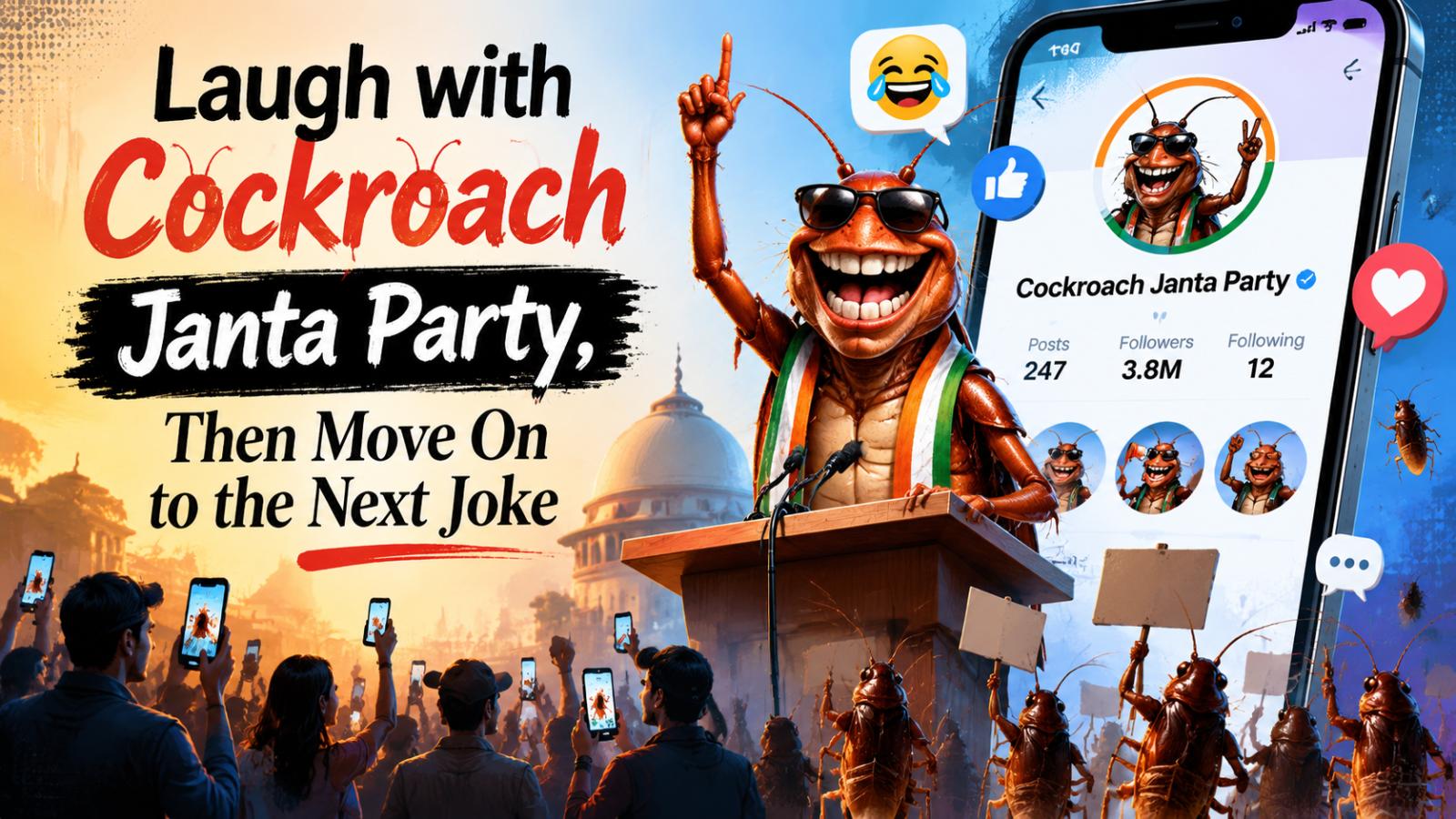
The Cockroach Janta Party, a viral Instagram phenomenon, has captured India’s social media attention, surpassing BJP in followers and sparking discussion on youth culture.
The Rise of Cockroach Janta Party
The Cockroach Janta Party has emerged as a viral social media phenomenon in India, quickly capturing the attention of the country’s youth. Originating as a satirical response to controversial remarks from public figures, the account gained notoriety for its humorous content, poking fun at political and social issues. Within days of its launch, the party’s Instagram account—now banned in India—surpassed the BJP in followers, highlighting the unprecedented reach of online satire and youth engagement in political commentary. The founder, while initially anonymous, has appeared on television channels to discuss the movement, emphasizing the party’s commentary on society and the rights of Generation Z.
Cultural Satire and Digital Mobilization
The movement is a reflection of how humor and social media engagement have become central to political discourse among India’s younger generation. Analysts describe this as a symptom of 21st-century mass psychosis, where collective social angst often manifests as viral comedy and cultural critique rather than sustained political action. Historical parallels can be drawn to global youth-driven movements such as the 1968 student protests, Occupy Wall Street, and the Arab Spring, where cultural expression and satire preceded—but often did not result in—long-term political change. In India, similar patterns are observed in digital campaigns, memes, and youth mobilization around symbolic issues, offering entertainment and engagement without substantial systemic impact.
The Dynamics of Youth Engagement
The Cockroach Janta Party demonstrates the digital age’s potential for rapid audience capture. The movement appeals to Gen Z users, who are adept at navigating Instagram, Twitter, and other social media platforms. The party’s popularity stems from its ability to offer a humorous take on serious issues, creating a sense of community among followers. However, experts note that such digital movements often lack strategic planning and organizational depth, which limits their effectiveness in producing real-world political outcomes. The phenomenon underscores the modern youth’s preference for cultural engagement and satire as a form of commentary rather than active, sustained political activism.
Politics, Satire, and the 21st Century
The article situates the Cockroach Janta Party within a broader global trend where outsiders, comedians, or satirical figures capture public imagination. Examples include Barack Obama’s youth-driven mobilization, the election of Donald Trump, and protest movements led by outsider candidates in Europe and Latin America. These cases illustrate the recurring pattern of cultural and symbolic activism, where entertainment and satire act as temporary reliefs for political dissatisfaction but rarely result in long-term policy change. In India, similar dynamics are seen with movements that go viral online, capturing public attention and creating temporary media buzz while failing to effect structural transformation.
Limitations and Implications
While the Cockroach Janta Party succeeds in generating online engagement and discussion, the movement’s ephemeral nature is evident. As with previous youth-led cultural initiatives, the movement may fizzle within weeks or months without a concrete political strategy. Experts argue that sustainable political change requires coordinated effort, grassroots organization, and long-term planning—elements that are typically absent in meme-driven online movements. By focusing on humor and viral content, the movement highlights the digital generation’s reliance on cultural commentary as a form of political expression, illustrating both the creativity and limitations of contemporary youth activism.
The Cockroach Janta Party exemplifies the intersection of digital culture, youth activism, and political satire in 21st-century India. While it provides entertainment and a platform for social critique, it also underscores the challenges of converting online energy into tangible political change. The movement’s popularity demonstrates the power of social media to shape discourse and reflect public sentiment, but its longevity and impact on real-world politics remain uncertain. As a cultural phenomenon, the party highlights the ways in which satire, humor, and viral engagement are increasingly central to youth participation in political and social issues.