Iran begins formal mourning for Khamenei
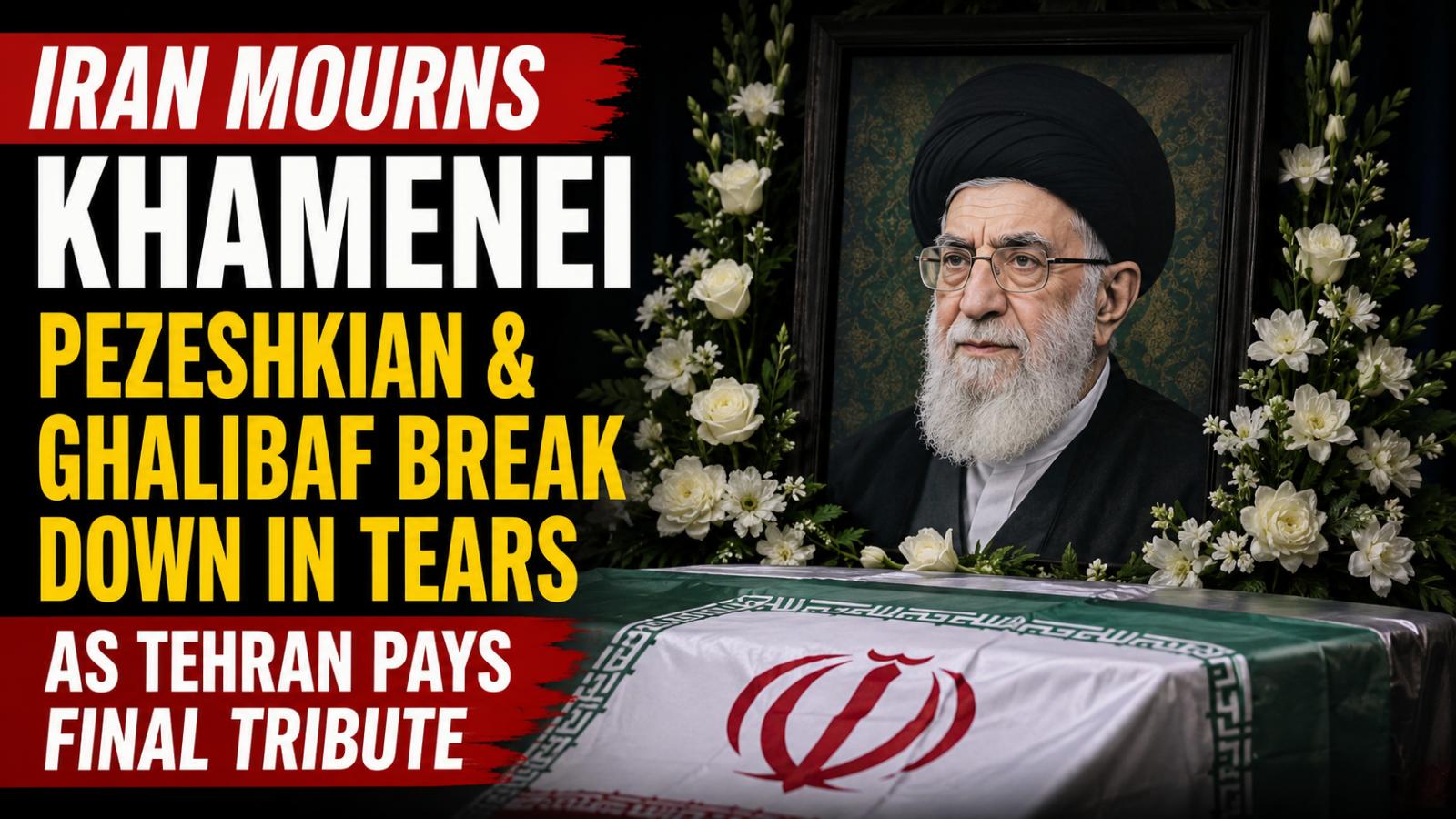
Iran opened major funeral ceremonies for Supreme Leader Ayatollah Ali Khamenei, nearly four months after he was killed in US-Israeli strikes on February 28. The ceremony in Tehran became a major moment of public mourning and political symbolism, with President Masoud Pezeshkian and Parliament Speaker Mohammad Bagher Ghalibaf seen visibly emotional as senior officials gathered to pay their final respects. Khamenei, who led the Islamic Republic from 1989 until his death at 86, was honoured with ceremonies planned across several days as authorities sought to project continuity after weeks of conflict.
Khamenei’s coffin was displayed in a formal funeral setting, draped in the flag of the Islamic Republic, with religious symbols placed on top. The funeral followed a pause in fighting after an interim truce linked to Iran and the United States, allowing the ceremonies to move forward after earlier delays. Officials used the event not only as a religious and national farewell but also as a show of state resilience at a sensitive moment for Iran’s political system.
Mojtaba Khamenei absence draws attention
The absence of Mojtaba Khamenei, who was chosen as Iran’s new supreme leader after his father’s death, drew attention during the ceremonies. His succession marked a major transition in Iran’s leadership and came during one of the most turbulent periods for the Islamic Republic. Reports have said Mojtaba has not appeared publicly in new images since being wounded in the same strike that killed his father, adding further scrutiny to the leadership change.
Foreign delegations attend Tehran ceremony
Foreign dignitaries from several countries attended the funeral, underlining Iran’s effort to display international support despite regional tensions. Among those present were officials from Russia, Pakistan, Iraq and other partner countries, while India was represented by Minister of State for External Affairs Pabitra Margherita and Bihar Governor Lt. Gen. (Retd.) Syed Ata Hasnain. Delegations from neighbouring states, parliamentary bodies and international organisations also joined the ceremonies.
The presence of senior foreign officials gave the funeral a diplomatic dimension beyond domestic mourning. For Tehran, the gathering offered a platform to signal that the Islamic Republic remains politically active and regionally connected despite the shock of Khamenei’s death and the strain of recent fighting.