Sonam Wangchuk ended his 26-day hunger strike after receiving written assurances on Parliament discussion of the NEET paper leak and examination reforms. The Centre also indicated that peaceful protesters may not face legal action, while the wider student agitation continues.
Sonam Wangchuk Ends 26-Day Fast After Centre Assurances
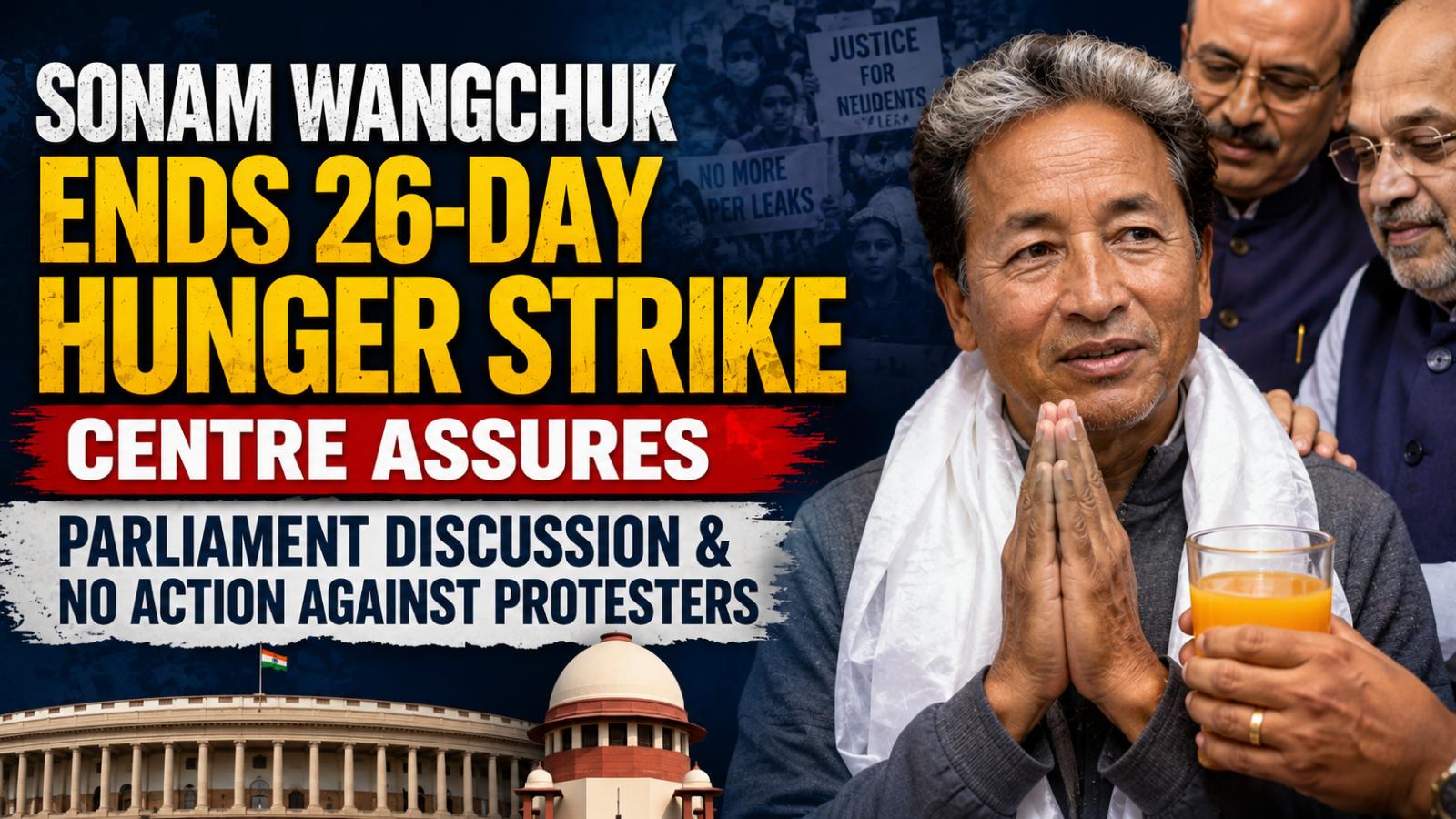
Activist Sonam Wangchuk ended his 26-day hunger strike shortly after midnight on Friday after receiving written assurances from the Centre concerning the NEET-UG paper leak, examination reforms and the treatment of peaceful protesters.
Wangchuk broke his fast at Medanta Hospital in Gurugram in the presence of Union Health Minister JP Nadda, Union Minister Jitendra Singh and representatives of the Apex Body of Leh-Ladakh. His wife, Gitanjali Angmo, was also present as the ministers offered him juice.
Sonam Wangchuk Fast Ends After Written Commitments
In a video message released after ending the fast, Wangchuk said he had insisted that the government provide its commitments in writing. He said two days of detailed negotiations were required before an agreement could be reached.
According to Wangchuk, the communication indicated that the government would facilitate a discussion in Parliament on examination accountability, the alleged NEET-UG paper leak and broader reforms needed to strengthen India’s competitive examination system.
He also said the Centre was positive about not initiating legal action against people who participated peacefully in the protests, including those involved in the July 20 march towards Parliament. Reports on the negotiations also said the government would consider support for families affected by the controversy.
The precise wording and legal scope of each assurance will remain important. A commitment to consider an issue or hold a parliamentary discussion does not automatically amount to a final policy decision, compensation package or withdrawal of every existing case.
NEET Paper Leak Accountability Remains Central Demand
Wangchuk joined the student-led agitation at Jantar Mantar on June 28 and began an indefinite fast demanding accountability for alleged irregularities in competitive examinations.
The movement called for a transparent investigation, stronger safeguards against question-paper leaks, comprehensive examination reforms and protection for students participating in peaceful demonstrations.
Wangchuk’s fast became one of the most visible symbols of the protest. His health deteriorated during the agitation, and he was shifted from the protest site for hospital treatment before being transferred to Medanta Hospital.
Around 65 Members of Parliament from different political parties had reportedly visited Wangchuk or appealed to him to end the fast. He said their assurance that examination-related concerns would be raised in Parliament also influenced his decision.
Peaceful Protesters Receive Assurance on Legal Action
Protection from punitive action against peaceful protesters was one of Wangchuk’s principal conditions for withdrawing the hunger strike. He had earlier written to the government seeking guarantees for students and young people involved in the movement.
The assurance is particularly significant following clashes and police action during the July 20 protest march. Protest groups have demanded that no peaceful participant face criminal proceedings merely for joining the agitation. Prime Minister Narendra Modi later urged Wangchuk to follow medical advice, regain his health and return gradually to his regular activities.
CJP Protest Continues Despite End of Hunger Strike
The Cockroach Janta Party welcomed Wangchuk’s decision and expressed relief that he had ended the fast. However, the group said its demonstrations would continue until its remaining demands were addressed, including the resignation of Union Education Minister Dharmendra Pradhan.
The movement continues to seek stronger accountability for examination failures, compensation for affected families, withdrawal of action against peaceful demonstrators and structural reforms intended to protect future candidates.
Wangchuk’s decision has opened a possible route for dialogue, but it has not ended the wider agitation. Protest organisers and government representatives are expected to continue discussions while Parliament considers the paper leak controversy and proposed examination reforms.