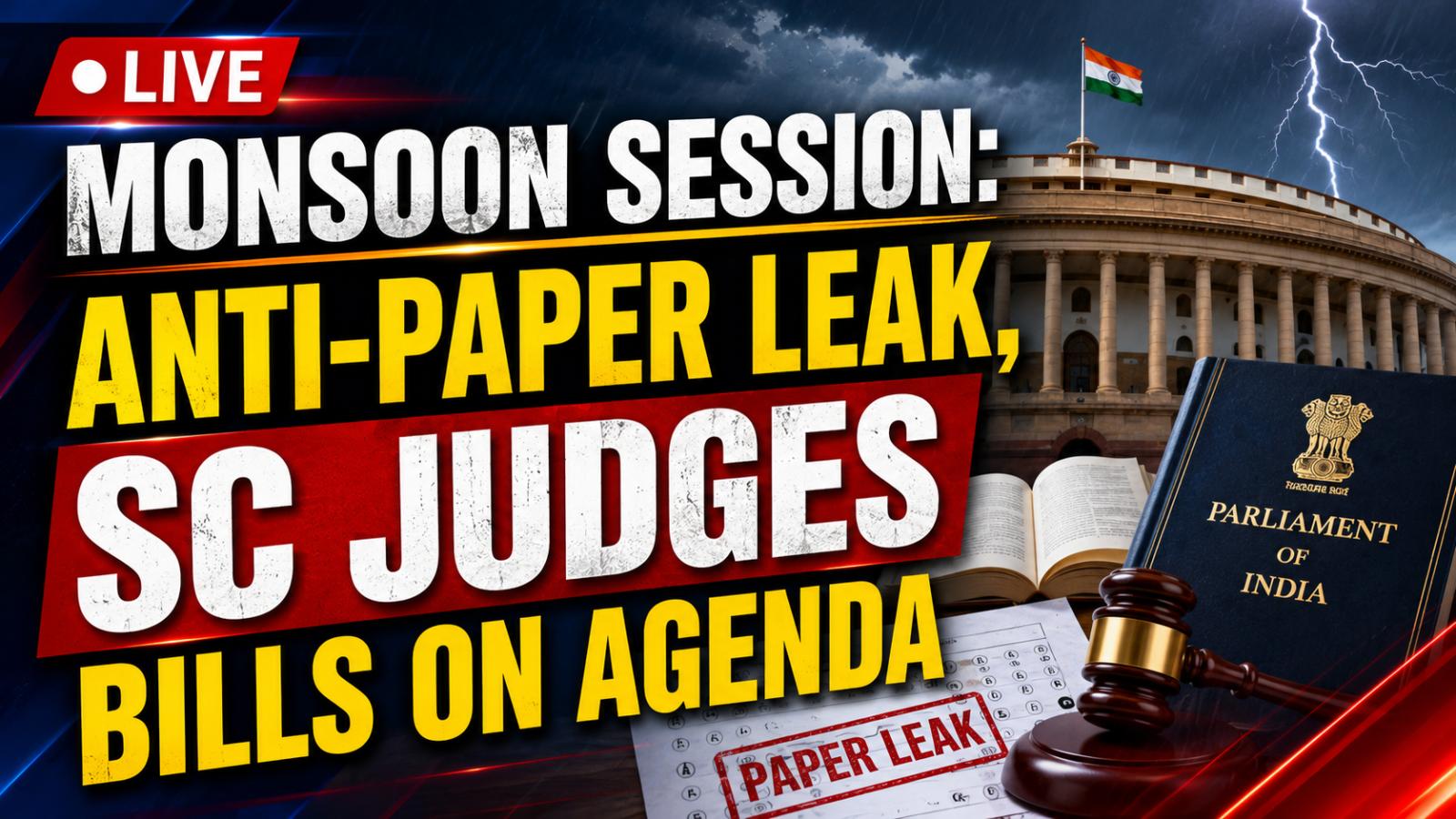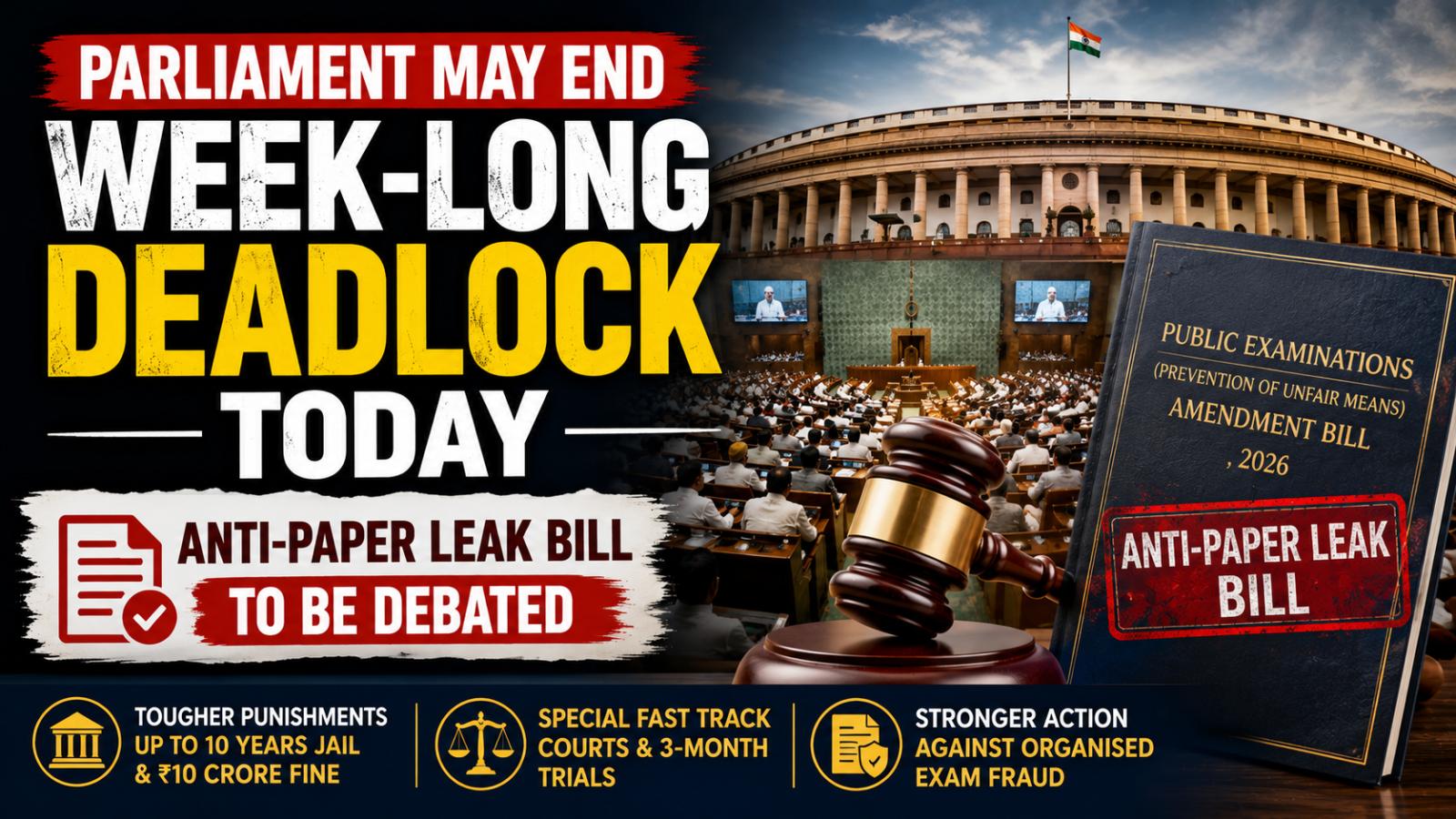
The Lok Sabha is expected to debate the anti-paper leak amendment bill after Speaker Om Birla’s discussions with political parties helped ease a week-long parliamentary deadlock. The debate follows Dharmendra Pradhan’s resignation and continuing Opposition demands for accountability over alleged police action against protesting students.
Parliament Deadlock May End After Speaker’s Outreach
Parliament could return to substantive legislative business on Tuesday as the Lok Sabha prepares to discuss the Public Examinations (Prevention of Unfair Means) Amendment Bill, 2026.
Proceedings in both Houses had been repeatedly disrupted since the Monsoon Session began on July 20, with Opposition parties protesting over the NEET paper leak controversy and the alleged use of excessive police force against students.
Lok Sabha Speaker Om Birla held consultations with floor leaders from the ruling alliance and Opposition parties after Monday’s proceedings ended without a debate. Political parties subsequently agreed to participate in a detailed discussion on the proposed legislation. A dedicated six-hour period was offered for the debate, with additional time reportedly available if required.
The agreement could bring an end to the first major parliamentary impasse of the Monsoon Session and allow MPs to debate examination security, accountability and the government’s response to the NEET controversy.
Anti-Paper Leak Bill Proposes Tougher Penalties
Union Minister Jitendra Singh introduced the amendment bill in the Lok Sabha on Monday. It seeks to strengthen the Public Examinations (Prevention of Unfair Means) Act, 2024, which covers examinations conducted by bodies including the UPSC, SSC, Railway Recruitment Boards, IBPS and National Testing Agency.
For individuals using unfair means, the proposed minimum prison term would increase from three to five years, while the maximum sentence would rise from five to 10 years. The maximum fine would increase from Rs 10 lakh to Rs 50 lakh.
Service providers involved in offences could face fines of up to Rs 5 crore and an eight-year ban from conducting public examinations. Those responsible for organised examination crime could face imprisonment of seven to 10 years and a fine of up to Rs 10 crore. The bill also permits the Centre to constitute a Special Task Force and requires investigations to be completed within two months.
Opposition Demands Statement On Police Action
Opposition parties have said they support stronger measures against examination fraud in principle but want the government to address allegations of police excesses against students first.
Protests intensified following demonstrations led by the Cockroach Janata Party and other student groups in Delhi and several cities. Opposition MPs have demanded a statement from Union Home Minister Amit Shah on the police response during the protests.
Congress president Mallikarjun Kharge maintained that the Opposition was prepared to discuss the legislation but wanted the government to answer questions about the treatment of demonstrators.
The government has accused Opposition parties of blocking legislation intended to protect students. Parliamentary Affairs Minister Kiren Rijiju appealed to MPs to participate, arguing that young people across the country wanted Parliament to discuss reforms to the examination system.
Debate Becomes First Test After Pradhan’s Exit
The discussion will be the first major parliamentary debate on examination reforms since Dharmendra Pradhan resigned as Education Minister following nationwide protests over the NEET controversy.
The bill proposes Special Fast Track Courts for day-to-day hearings, completion of trials within three months of filing a chargesheet and High Court appeals within 30 days. Appeals should, as far as possible, be decided within three months.
The government is expected to present these provisions as evidence of its commitment to protecting the integrity of public examinations. Opposition parties are likely to argue that tougher punishments must be accompanied by institutional accountability, transparent investigations and answers over the police response to student protests.