The Lok Sabha passed the anti-paper leak amendment bill by voice vote amid uproar over Rahul Gandhi’s allegations concerning police action against students.
Lok Sabha Passes Anti-Paper Leak Bill
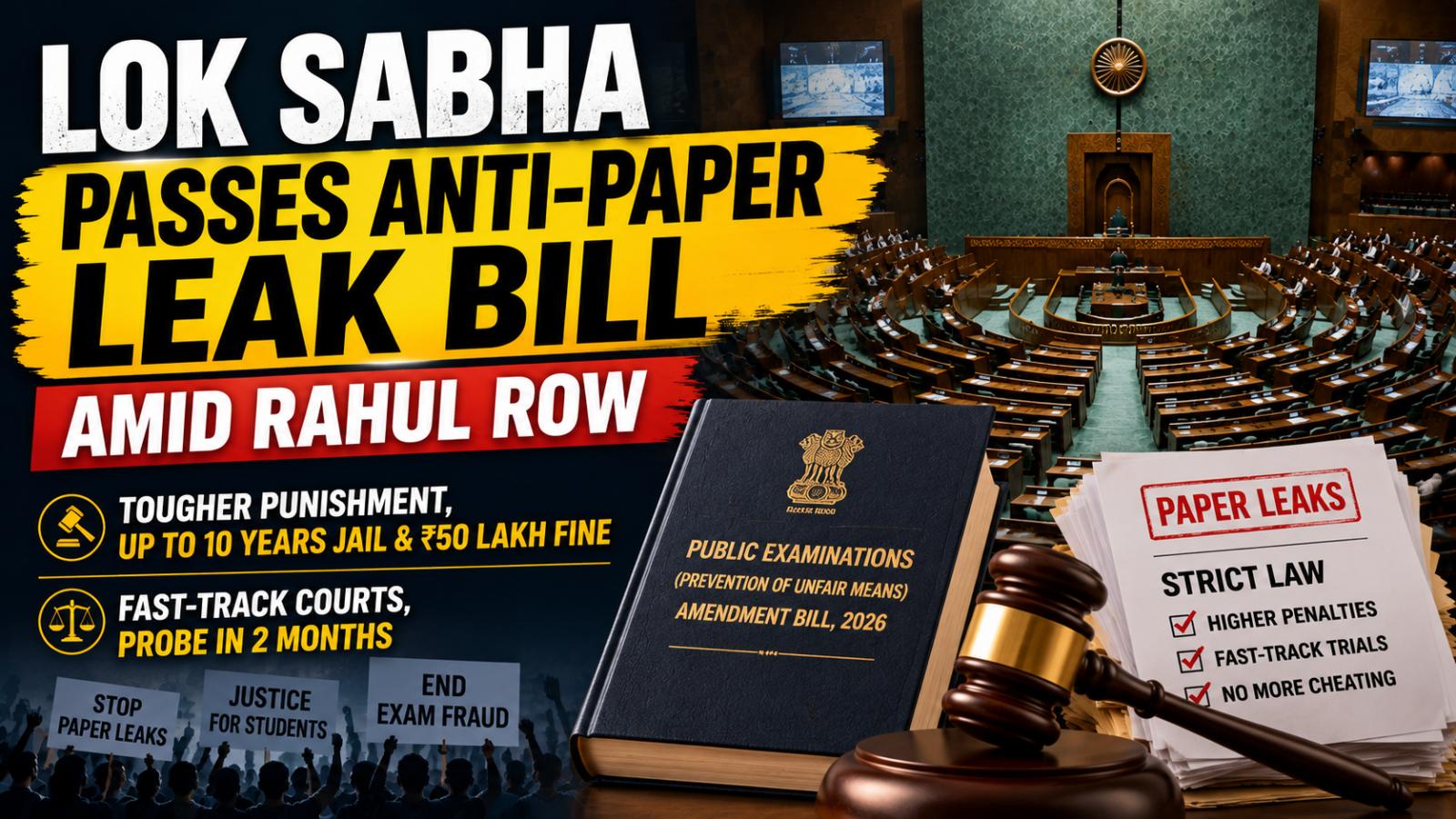
The Lok Sabha on Wednesday passed the Public Examinations (Prevention of Unfair Means) Amendment Bill, 2026, by voice vote amid Opposition sloganeering and repeated disruptions. The legislation, introduced by Union Minister Jitendra Singh on July 27, will now require approval from the Rajya Sabha before being sent for presidential assent.
The Bill seeks to strengthen the Public Examinations Act enacted in 2024 after continuing concerns over question-paper leaks, organised cheating and other malpractices affecting major recruitment and entrance examinations. It covers examinations conducted by authorities including the UPSC, SSC, Railway Recruitment Boards, banking recruitment agencies and the National Testing Agency.
Lok Sabha Approves Tougher Exam Fraud Penalties
Under the amendment, a person found guilty of using unfair means may face imprisonment ranging from five to 10 years and a fine of up to ₹50 lakh. The existing law provides imprisonment of three to five years and a fine of up to ₹10 lakh.
The maximum fine for a service provider involved in examination malpractice rises from ₹1 crore to ₹5 crore. Officials in charge of such service providers may face five to 10 years in prison and a fine of ₹5 crore. For organised crime, the minimum punishment increases to seven years, while the minimum fine rises to ₹10 crore. Service providers found guilty may also be barred from conducting public examinations for eight years instead of four.
Lok Sabha Bill Sets Fast Investigation And Trial Deadlines
The legislation provides for state governments and Union Territory administrations to designate Sessions Courts as Special Fast Track Courts for examination-related offences. Proceedings are expected to continue on a day-to-day basis, with trials targeted for completion within three months of the charge sheet being filed.
Investigating agencies will be required to complete probes within two months. The Centre may also constitute a Special Task Force where necessary, while states and Union Territories can appoint special public prosecutors. Appeals will go before a two-judge High Court bench and should, as far as possible, be decided within three months.
Lok Sabha Sees Rahul Gandhi-Government Clash
The Bill’s passage followed a heated exchange after Leader of the Opposition Rahul Gandhi alleged that Home Minister Amit Shah had authorised force against students during the CJP-led demonstration at Delhi’s Jantar Mantar. Gandhi referred to allegations that protesters were struck by pellets during the police action.
Treasury bench members demanded evidence, while Parliamentary Affairs Minister Kiren Rijiju objected to the allegation. Speaker Om Birla reminded members that charges made inside the House must be supported by facts.
Responding for the government, Jitendra Singh rejected Gandhi’s allegation and said no order to fire had been issued. He maintained that only tear gas was used and argued that an order to open fire could be authorised by a magistrate, not independently by police officers. The competing claims over the July protest remain politically disputed.
The amendment follows weeks of student protests over alleged examination irregularities and demands for stronger accountability. While the government says the tougher law will protect candidates and restore confidence in public examinations, its effectiveness will depend on timely investigations, secure examination systems and consistent prosecution of offenders.