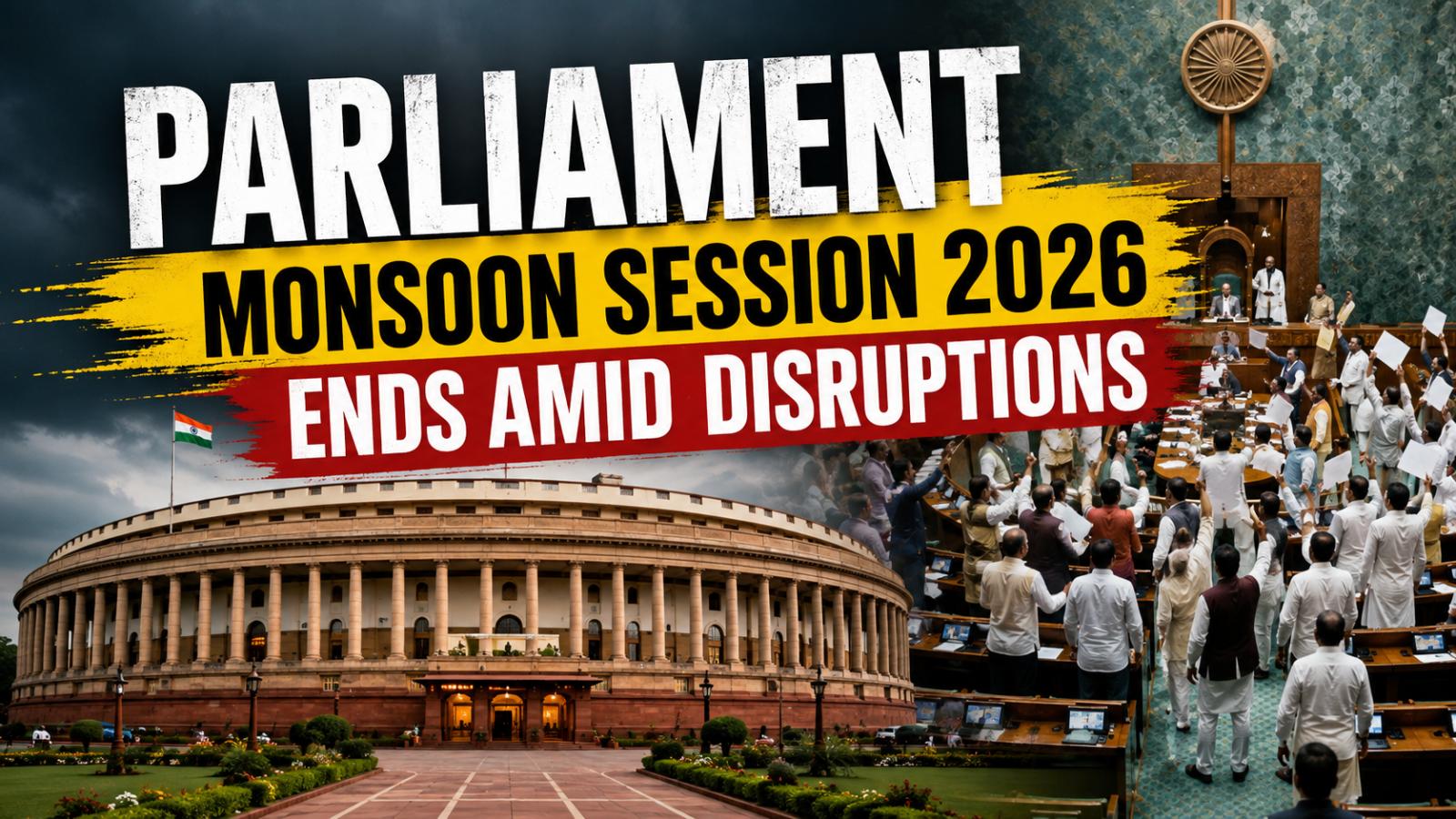
India's Parliament Monsoon Session 2026 ended on August 13 after weeks of Parliament disruptions driven by student protests, the Ram temple row and demands for government answers. PRS Legislative Research said Lok Sabha worked for only 15% of its scheduled time and Rajya Sabha for 33%, while legislative scrutiny and Question Hour were heavily affected.
Parliament disruptions dominate the session
The Monsoon Session ran from July 20 to August 13, with both Houses meeting for 19 days. Proceedings were repeatedly interrupted as Opposition MPs pressed the government over police action against students and alleged irregularities involving donations to the Ayodhya Ram Temple.
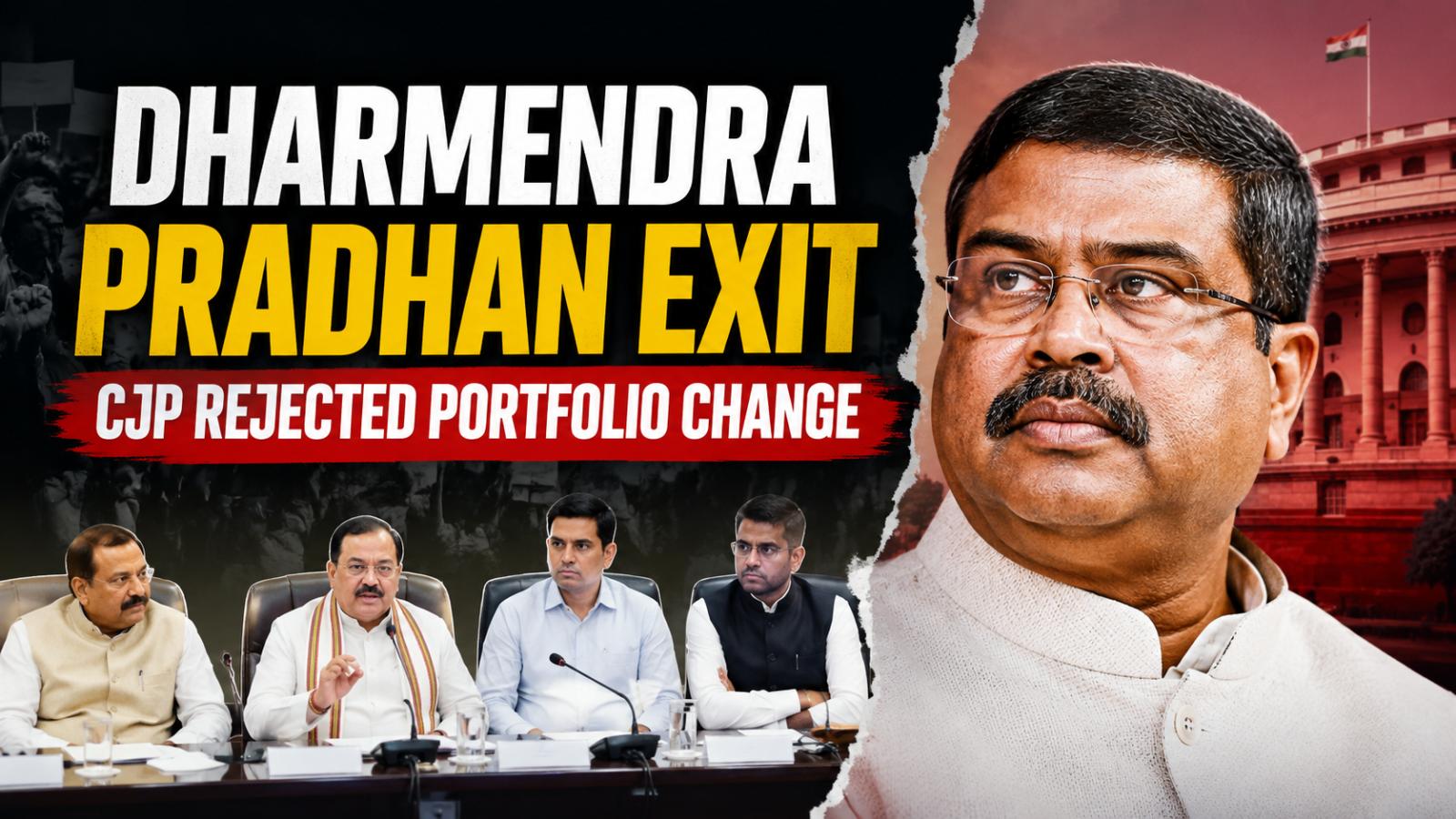
The confrontation followed the July 20 Parliament march associated with the Cockroach Janta Party protest at Jantar Mantar. Students were demanding action over examination irregularities and the resignation of then Education Minister Dharmendra Pradhan. Reports said police and security personnel used force during the protest, with pellet injuries later becoming a major political issue.
Student protests fuel Opposition demands
Opposition parties demanded a statement from Union Home Minister Amit Shah over the police action. The issue remained active inside Parliament, with MPs repeatedly raising concerns about the treatment of protesters.
The Opposition also sought discussions over alleged irregularities involving Ram Temple donations in Ayodhya. Protests over both issues contributed to repeated adjournments in Lok Sabha and Rajya Sabha during the final weeks of the session.
Ram temple row adds to parliamentary deadlock
The Ayodhya row became another major source of confrontation between the government and Opposition. Opposition MPs demanded greater scrutiny of allegations concerning temple donations and valuables, while parliamentary proceedings continued to lose working time.
PRS data shows the scale of the disruption. Lok Sabha conducted only a small fraction of its scheduled business, while Rajya Sabha functioned for roughly one-third of its allotted time.
Bills passed despite limited debate
The session introduced 12 new Bills. Eleven eventually cleared both Houses, while the Indian Statistical Institute Bill, 2026 remained pending. The legislation passed included amendments dealing with public examinations, national honour, births and deaths registration, Supreme Court judge strength, MSMEs, taxation, tribunals, banking evidence, mining, Kerala's proposed name change and cooperative development.
Legislative scrutiny, however, was limited. PRS reported that nine of the 11 Bills passed by Lok Sabha were cleared without any MP other than the minister participating in the discussion. The Public Examinations Amendment Bill was the major exception, receiving nearly 11 hours of Lok Sabha discussion involving 48 MPs.
Question Hour severely affected
Question Hour was not completely absent, but disruptions reduced it dramatically. PRS recorded only nine minutes of Question Hour in Lok Sabha, where two questions received oral answers. Overall, Question Hour functioned for about 1% of its scheduled time in Lok Sabha and 12% in Rajya Sabha.
The session therefore ended with a substantial legislative workload completed but limited parliamentary scrutiny. With repeated adjournments, restricted debate and little time for questions, the Parliament Monsoon Session 2026 highlighted continuing concerns over House productivity and the space available for meaningful government-Opposition debate.